
Metallurgical Coke
Blast-furnace, foundry and nut coke by CSR, ash and size
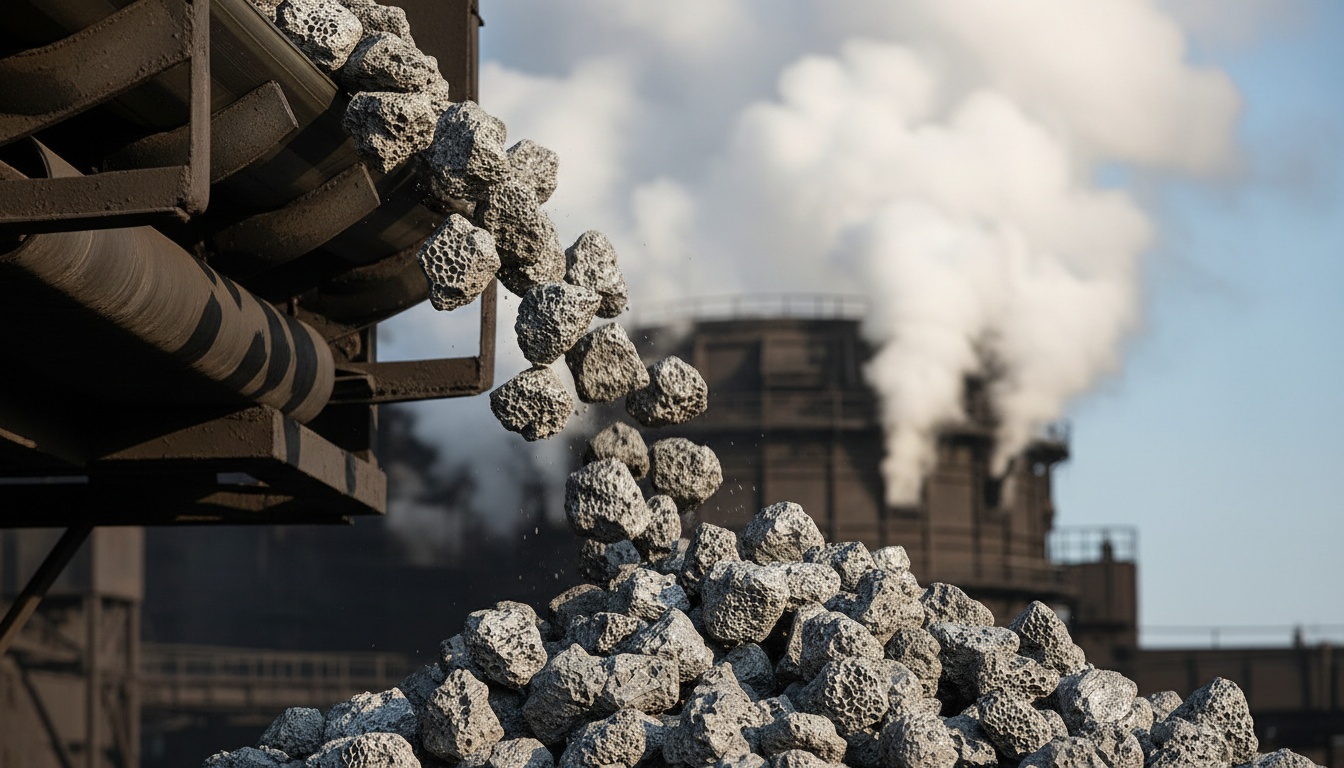
Metallurgical coke is coking coal that has already been through the oven, so the buyer inherits the coke plant's blend decisions and checks the result. The sheet leads with ash (10–12.5% for blast-furnace coke, ≤ 10% for premium and foundry grades), because every point of ash is slag the furnace has to melt and flux; fixed carbon (≥ 86%, often 87–89%); sulphur (0.6–0.8%); volatile matter (≤ 1.5%, a sign of full carbonisation); total moisture (≤ 6% for dry-quenched, 5–8% wet-quenched); and phosphorus (≤ 0.04%). Then the mechanical numbers — CSR 60–68 and CRI 22–30 for blast-furnace coke, M40 and M10 drum indices — and size. Blast-furnace coke is 25–80 mm; nut coke 10–25 mm is charged with the ore burden; foundry coke for cupolas is larger, 80–150 mm or 90+ mm, and is bought on low reactivity, low sulphur and high fixed carbon because the coke sits in direct contact with the melt. Ferro-alloy and phosphorus furnaces want a reactive, low-phosphorus coke in a tighter size band. UN Comtrade 2025 export declarations under HS 2704 show the merchant coke trade: Indonesia 7.15 million MT at an average USD 202/MT, the USA 0.90 million MT at USD 409/MT, Canada 0.20 million MT at USD 387/MT and India 0.13 million MT at USD 266/MT. India's own 2025 import declarations, 3.78 million MT in total, show where the price sits landed: Indonesia 1.76 million MT at USD 234/MT CIF, Poland 0.75 million MT at USD 339, China 0.49 million MT at USD 230, Colombia 0.41 million MT at USD 262 and Japan 0.35 million MT at USD 307. The USD 100/MT spread between Indonesian and Polish coke into the same market is the spread between blast-furnace grades on ash and CSR, not a freight artefact.
You buy merchant coke rather than coking coal when you have no coke ovens — a merchant blast furnace, a foundry, a ferro-alloy or silicon-metal smelter, a lead or zinc sinter plant, a rockwool cupola — or when your own ovens are down or short. That is a structurally different buyer from the integrated steelworks that buys coking coal, and the two markets move separately: coke tracks coking coal with a lag and a conversion margin, and merchant coke exporters run their ovens on coal they buy in. CBIL is a commodity brokerage company and brokers blast-furnace, nut and foundry coke from Indonesian, Chinese, Colombian, Polish and US producers and trader positions against SGS or Intertek certification of ash, fixed carbon, sulphur, volatile matter, moisture, phosphorus, CSR/CRI, drum indices and size distribution. Parcels are structured in Supramax and Panamax lots on FOB and CFR terms, with breakbulk or containerised jumbo bags for foundry coke where the tonnage does not justify a vessel; because CBIL also runs a chartering desk (LaycanDesk), freight can be quoted alongside the cargo. Send your ash ceiling, CSR floor and size band and we will work the offer to them.
Need the ship as well? Our chartering desk prices coal and petcoke bulk freight on LaycanDesk.
Indicative reference
$230–340 USD / MT
as at September 2026
Reference level only — not an offer, and reviewed quarterly. Levels shown are as at September 2026. Firm pricing is quoted per RFQ, subject to volume, terms and inspection.
Typical Specification
Specifications are indicative and adjusted to the agreed contract and destination requirements. Final spec confirmed on COA / SGS.
Available Grades
Applications
- Blast-furnace ironmaking
- Foundry cupolas
- Ferro-alloy & silicon-metal furnaces
- Lead & zinc sinter plants
- Rockwool & mineral-wool cupolas
Category
Petroleum & Energy
Incoterms
FOB · CFR
Pricing basis
USD / MT
Inspection
SGS / Intertek at load port
Metallurgical Coke — buyer questions
Why is Polish coke USD 100/MT dearer than Indonesian coke into the same port?
Because they are different products for different furnaces. UN Comtrade's 2025 Indian import declarations show Indonesian coke at USD 234/MT CIF and Polish at USD 339/MT. The premium buys lower ash, a higher and more consistent CSR and tighter sizing from ovens fed on Australian and US premium coals; a large, high-PCI blast furnace pays it to protect permeability. A smaller furnace or a ferro-alloy plant with a looser burden may find the cheaper grade does the job. Ask which furnace it is going into before asking the price.
What is the difference between foundry coke and blast-furnace coke?
Size, reactivity and sulphur. Foundry coke is much larger (80–150 mm, or 90 mm and above), made from a lower-volatile blend coked slowly, so it is dense and unreactive; in a cupola it burns steadily in contact with the iron and must not push sulphur into the melt, so sulphur is held to 0.6–0.7% or below and ash to 8–10%. Blast-furnace coke is 25–80 mm, bought on CSR/CRI and ash, and is not a substitute in a cupola. Foundry coke is priced well above blast-furnace coke and usually moves in jumbo bags or breakbulk rather than bulk.
Which surveyor tests do you certify against?
Proximate analysis (moisture, ash, volatile matter, fixed carbon), total sulphur, phosphorus, CSR/CRI to ISO 18894 or ASTM D5341, drum strength (M40/M10 or ASTM stability and hardness) and size distribution by screening, all on samples drawn at the load port by SGS or Intertek under the contract's sampling standard. Discharge-port re-analysis can be written in; the load-port certificate governs unless agreed otherwise.
What parcel sizes do you work for coke?
Supramax (50–55,000 MT) is the standard bulk lot from Indonesian and Chinese ports; Panamax where the discharge port takes it, and Handysize for smaller merchant furnaces. Foundry coke and trial lots go in 1 MT jumbo bags in containers or breakbulk. Because CBIL also runs a chartering desk, the freight leg can be quoted alongside the cargo on CFR enquiries.
Ready to source Met Coke?
Send your quantity, specification, preferred Incoterms and destination port. We'll verify supply and respond with a workable offer — usually within one business day.
Have Met Coke to sell? Submit an offer — we'll match it against live buyer demand.