
Base Oil
Base oil supplier: Group I SN150, SN500, SN650 and bright stock, Group II N150 to N600
Base oil is sold by API group and viscosity grade. API 1509 Appendix E sorts base stocks on three numbers. Group I has less than 90% saturates and/or more than 0.03% sulphur, with a viscosity index of 80 to under 120. Group II has 90% or more saturates, 0.03% sulphur or less, and the same VI band of 80 to under 120. Group III meets the Group II saturates and sulphur limits with a VI of 120 or more. Group I is made by solvent refining and is named SN (solvent neutral): SN150, SN500, SN650. Group II is hydroprocessed and is usually named N or by the refiner's own grade: N70, N150, N500, N600. The number is the old Saybolt viscosity at 100 °F, so SN150 and N150 are roughly the same thickness. Bright stock (BS150) is the heavy residual cut of a Group I plant, made by deasphalting vacuum residue. Almost all bright stock comes from Group I plants, and closures there have tightened it.
Typical figures from refiner data sheets: ExxonMobil's AP/E Core series lists Core 150 (Group I) at 29.0-32.0 cSt at 40 °C, VI 100 minimum, flash 210 °C, pour -12 °C and colour 1.5 maximum; Core 600 at 109-116 cSt at 40 °C, VI 95 minimum, flash 246 °C, pour -6 °C, colour 4 maximum; and Core 2500 bright stock at 30.6-32.7 cSt at 100 °C, VI 95 minimum, flash 294 °C, pour -6 °C, colour 6 maximum. Chevron's Group II test data give 220R at 42.7 cSt at 40 °C and 6.6 cSt at 100 °C, VI 106, and 600R at 108 and 12.2 cSt, VI 103, both with sulphur under 10 ppm and saturates above 99%. CBIL is a commodity brokerage company and brokers Group I and Group II base oils from refineries in South Korea, Singapore, the USA, Spain, Germany, Saudi Arabia (Red Sea side), India, Taiwan and Thailand, and from UAE blending hubs. Origin is proven by the refinery COA and a certificate of origin that both name the producing refinery; a lot blended or re-exported from a UAE hub must show where the base oil was refined. Parcels move in bulk on parcel tankers, in ISO tanks, in flexitanks of about 20-22 t per 20-ft container, or in new steel drums of 180-210 kg. Each lot ships against the refinery COA and SGS or Intertek inspection at the load port. Send the grade, API group, quantity, packing, destination port and payment terms, and the enquiry is screened and worked against them. Figures above are typical values from the ExxonMobil AP/E Core base stocks product data sheet, Chevron's Group II/II+ base oils test data and API 1509 Appendix E; the lot COA governs.
Need the ship as well? Our chartering desk prices chemical parcel tanker chartering on LaycanDesk.
Excluded origins are not offered, including product re-exported, blended or re-processed through a third country. Every lot moves with a certificate of origin naming the producing plant, mine or grower country, and nothing is quoted before the seller and loading point are known.
Indicative reference
Per MT, on grade and origin USD / MT
as at September 2026
Reference level only — not an offer, and reviewed quarterly. Levels shown are as at September 2026. Firm pricing is quoted per RFQ, subject to volume, terms and inspection.
Grade ladder
Base Oil grades at a glance
| Grade | API group | Typical figures | Page |
|---|---|---|---|
| Group I ladder (SN150 to BS150) | Group I | Saturates < 90% and/or S > 0.03% · VI 80 to < 120 (API 1509) | Group I Base Oil (SN150, SN500, Bright Stock) |
| SN150 light neutral | Group I | KV40 29.0-32.0 cSt · VI ≥ 100 · flash ≥ 210 °C (ExxonMobil Core 150) | SN150 Base Oil |
| SN500 / SN600 heavy neutral | Group I | KV40 109-116 cSt · VI ≥ 95 · flash ≥ 246 °C (ExxonMobil Core 600) | SN500 Base Oil |
| Bright stock 150 (BS150) | Group I | KV100 30.6-32.7 cSt · VI ≥ 95 · flash 294 °C (ExxonMobil Core 2500) | Bright Stock 150 (BS150) |
| N70 to N600 | Group II | S ≤ 0.03% · saturates ≥ 90% · 600R KV100 12.2 cSt, VI 103 (Chevron) | Group II Base Oil (N70, N150, N500, N600) |
| 4, 6 and 8 cSt | Group III | VI ≥ 120 · Ultra-S 4 KV100 4.27 cSt, VI 124 (S-OIL) | Group III Base Oil (4 cSt, 6 cSt, 8 cSt) |
Products in this range
Base Oil we source and broker
Each product below is supplied to its own specification and grading. Open one for full specs, grades and typical applications — or send an RFQ covering several at once.
Group I Base Oil (SN150, SN500, Bright Stock)
The solvent-refined ladder: SN150, SN500/SN600 and bright stock 150
SN150 Base Oil
Light neutral solvent stock for low-viscosity blends
SN500 Base Oil
The volume neutral stock for engine & industrial oils
Bright Stock 150 (BS150)
Bright stock 150 specifications, uses and supply for blenders
Group II Base Oil (N70, N150, N500, N600)
Hydroprocessed low-sulphur base oils for modern engine oils
Group III Base Oil (4 cSt, 6 cSt, 8 cSt)
Hydrocracked, isodewaxed VI 120+ base stocks for synthetic-labelled engine oils
Typical Specification
Specifications are indicative and adjusted to the agreed contract and destination requirements. Final spec confirmed on COA / SGS.
Available Grades
Applications
- Engine-oil blending
- Gear, hydraulic and industrial oils
- Greases
- Marine lubricants
- Metalworking and process oils
Category
Petroleum & Energy
Incoterms
FOB · CFR · CIF
Pricing basis
USD / MT
Inspection
SGS / Intertek at load port
Base Oil — buyer questions
Should I buy Group I or Group II base oil?
Group I where the finished oil is a mineral industrial, gear or monograde engine oil and colour and oxidation life are not gating, and wherever you need bright stock. Group II, at 0.03% sulphur or less and 90% saturates or more, where the formulation names it or needs oxidation stability. Group III, with a viscosity index of 120 or more, goes into synthetic-labelled engine oils.
Why is Group I and bright stock supply tight?
Solvent-refining plants keep closing. European Group I capacity has fallen by more than half in a decade, to about 4 million t/yr. Bright stock is hit hardest because it comes almost only from Group I plants, and a Group II plant does not make it.
How is base oil packed and shipped?
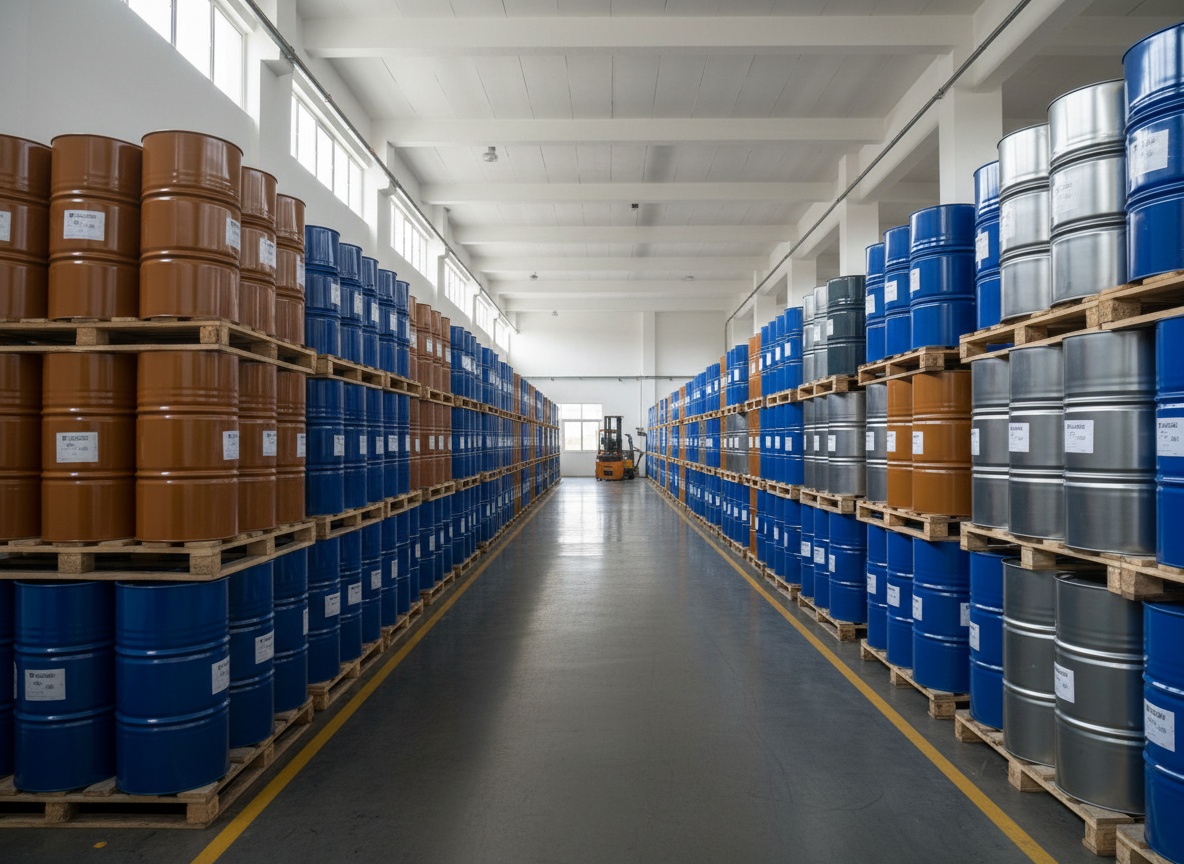
In bulk parcel tankers for blenders with tank farms, in ISO tanks, in flexitanks of about 20 to 22 t per 20 ft container, and in new steel drums of 180 to 210 kg. The pack follows the buyer's storage and monthly volume.
How is the origin of a base oil proven?
By the refinery certificate of analysis and a certificate of origin that both name the producing refinery. A lot blended or re-exported from a hub such as Fujairah must still show where it was refined.
Ready to source Base Oil?
Send your quantity, preferred Incoterms and destination port. Qualified requirements receive a workable offer against verified supply.
Have Base Oil to sell? Submit an offer — we'll match it against live buyer demand.