
Feed Barley
Bulk feed barley by test weight, moisture and screenings
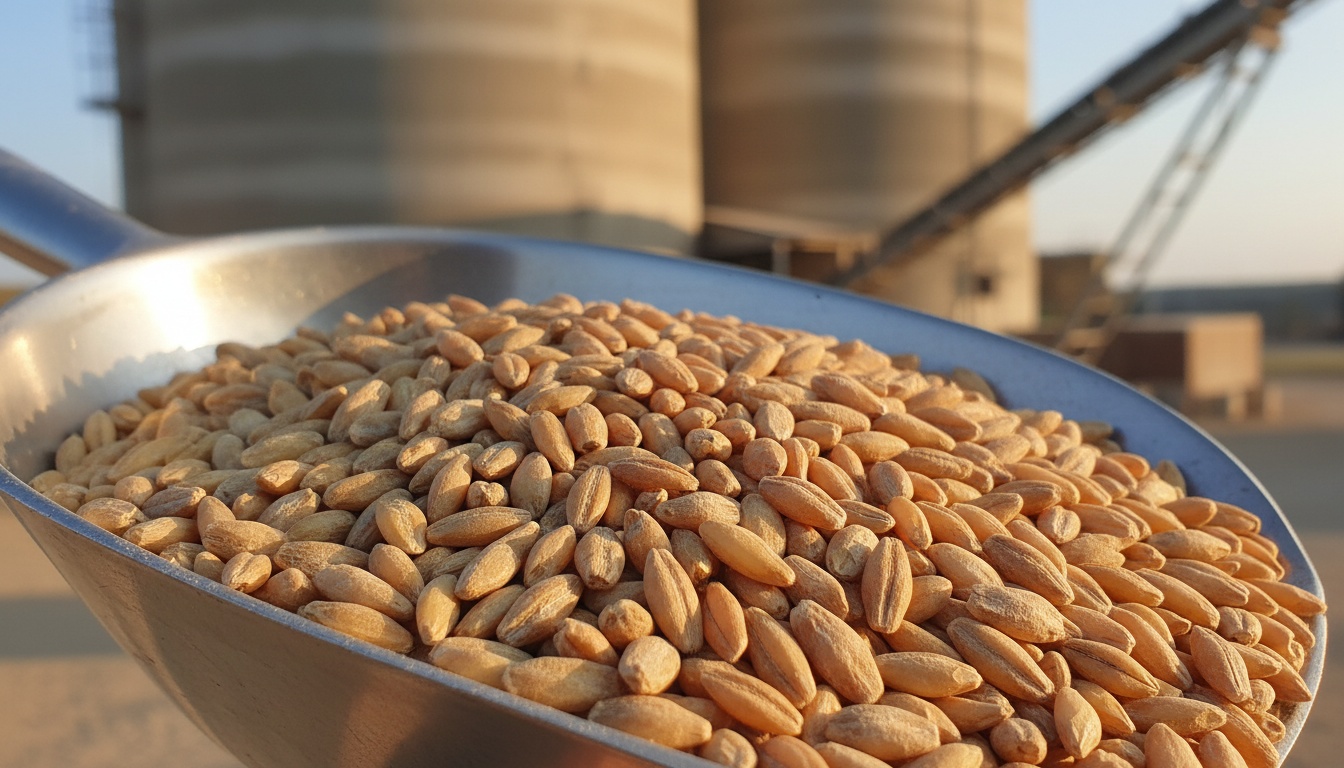
Feed barley is the cheapest energy grain on the water and the one the Gulf runs on: it is fed whole or lightly crushed to sheep, goats and camels across Saudi Arabia, Kuwait and the UAE in a way no other grain is, which is why the specification is short and physical. Test weight (bulk density) comes first, 62–65 kg/hl for good feed barley and 60 kg/hl the usual rejection floor; moisture 12.5% max for Australian and Argentine, up to 13.5–14.5% for Canadian and Kazakh; screenings (material through a 2.2 mm or 2.5 mm slotted sieve) 5–10% max; foreign material 2–3% max; and a plain, sound, sweet-smelling sample free of live insects. Protein is not bought on feed barley, though it is analysed, and a feeder will often take a lower test weight at a discount. UN Comtrade 2025 export declarations under HS 1003 place Australia at 8.94 million MT at an average USD 242/MT, Argentina at 2.75 million MT at USD 226, Canada at 2.42 million MT at USD 246 and Kazakhstan at 1.75 million MT at USD 184. Australia's own 2025 destination list shows the split between the feed and malting trades: China 6.52 million MT at USD 239/MT, then Saudi Arabia 0.59 million MT at USD 233, Japan 0.54 million MT at USD 246, Mexico 0.32 million MT, Viet Nam 0.22 million MT, Thailand 0.16 million MT, the UAE 0.14 million MT and Kuwait 0.09 million MT — the Saudi, UAE and Kuwait tonnage being feed barley almost entirely.
The buyer is a Gulf importer or feed authority, a Southeast Asian or Japanese compound feed mill, or a Kazakh-supplied miller in Central Asia and the Caucasus, and each has a different tolerance. The Gulf feeder wants a bright, plump, heavy sample that stores through a hot summer in bulk silos, so test weight and moisture are where the price is made; a feed mill grinding into a pig or poultry ration cares more about screenings and foreign material and less about how the grain looks. Black Sea and Kazakh barley is cheaper on FOB and darker; Australian barley is the reference sample for the Gulf. CBIL is a commodity brokerage company and brokers feed barley from Australian, Argentine, Canadian and Kazakh exporters and trader positions against SGS or Intertek certificate of quality and weight at the load port, with GAFTA contract terms and sampling where the buyer wants them. Parcels are structured from Handysize (25–35,000 MT) into Gulf and Red Sea ports up to Panamax for China and Saudi Arabia on FOB, CFR and CIF terms, and because CBIL also runs a chartering desk (LaycanDesk), freight can be quoted alongside the cargo. Send your test-weight floor, moisture and screenings ceilings and discharge port and we will work the origin to it.
Need the ship as well? Our chartering desk prices Danube and Black Sea coaster freight on LaycanDesk.
Indicative reference
$185–250 USD / MT
as at September 2026
Reference level only — not an offer, and reviewed quarterly. Levels shown are as at September 2026. Firm pricing is quoted per RFQ, subject to volume, terms and inspection.
Typical Specification
Specifications are indicative and adjusted to the agreed contract and destination requirements. Final spec confirmed on COA / SGS.
Available Grades
Applications
- Whole-grain sheep, goat & camel feed (Gulf)
- Compound feed for cattle, pigs & poultry
- Dairy & feedlot rations
- Feed-mill grinding & pelleting
- Malting rejects into feed
Category
Agriculture & Fertilizers
Incoterms
FOB · CFR · CIF
Pricing basis
USD / MT
Inspection
SGS / Intertek at load port
Feed Barley — buyer questions
What test weight should I specify for feed barley?
62.5 kg/hl minimum is the common Gulf contract figure, with 60 kg/hl as the rejection level below which the grain is light, shrivelled and packs less energy per tonne. Australian F1 barley is graded at 62.5 kg/hl; F2 and F3 drop to 60 and 57.5 and are priced down. If you feed whole grain to sheep and camels, hold to 62.5 or better; a feed mill grinding into a compound ration can take lighter grain at a discount without the animals noticing.
Why is Kazakh barley so much cheaper than Australian on FOB?
Because the FOB price is only part of the delivered cost. UN Comtrade 2025 export declarations put Kazakhstan at USD 184/MT against Australia at USD 242/MT, but Kazakh barley reaches a seaport by rail through Caspian and Black Sea routes, moves in smaller lots, is typically darker and higher in moisture, and is sold on different sampling and contract terms. For a buyer with a Caspian or Black Sea discharge it is the cheaper energy; for the Gulf and East Asia the Australian sample usually lands at less per tonne of feed value once freight, quality and shrinkage are counted.
Do you certify quality at the load port or the discharge port?
At the load port by SGS, Intertek or an equivalent independent surveyor, on test weight, moisture, screenings, foreign material, protein and a fumigation certificate, with the certificate governing under standard GAFTA terms. Discharge-port sampling can be written into the contract at the buyer's cost. Fumigation in the hold with phosphine is normal for Gulf and East African destinations and the certificate travels with the documents.
What parcel sizes and freight terms do you work for barley?
Handysize 25–35,000 MT for Red Sea, Gulf and East African ports with draft or silo limits; Supramax 50–55,000 MT for Dammam, Jubail and Jebel Ali; Panamax 60–70,000 MT for China. On FOB, CFR and CIF terms. Because CBIL also runs a chartering desk, the freight leg can be quoted with the cargo so you can compare a CFR offer against FOB plus your own fixture on the same day.
Ready to source Feed Barley?
Send your quantity, specification, preferred Incoterms and destination port. We'll verify supply and respond with a workable offer — usually within one business day.
Have Feed Barley to sell? Submit an offer — we'll match it against live buyer demand.