
Fatty Alcohol Ethoxylates (AEO-3, AEO-7, AEO-9)
Nonionic C12-C14 alcohol ethoxylates bought on EO number, cloud point and HLB
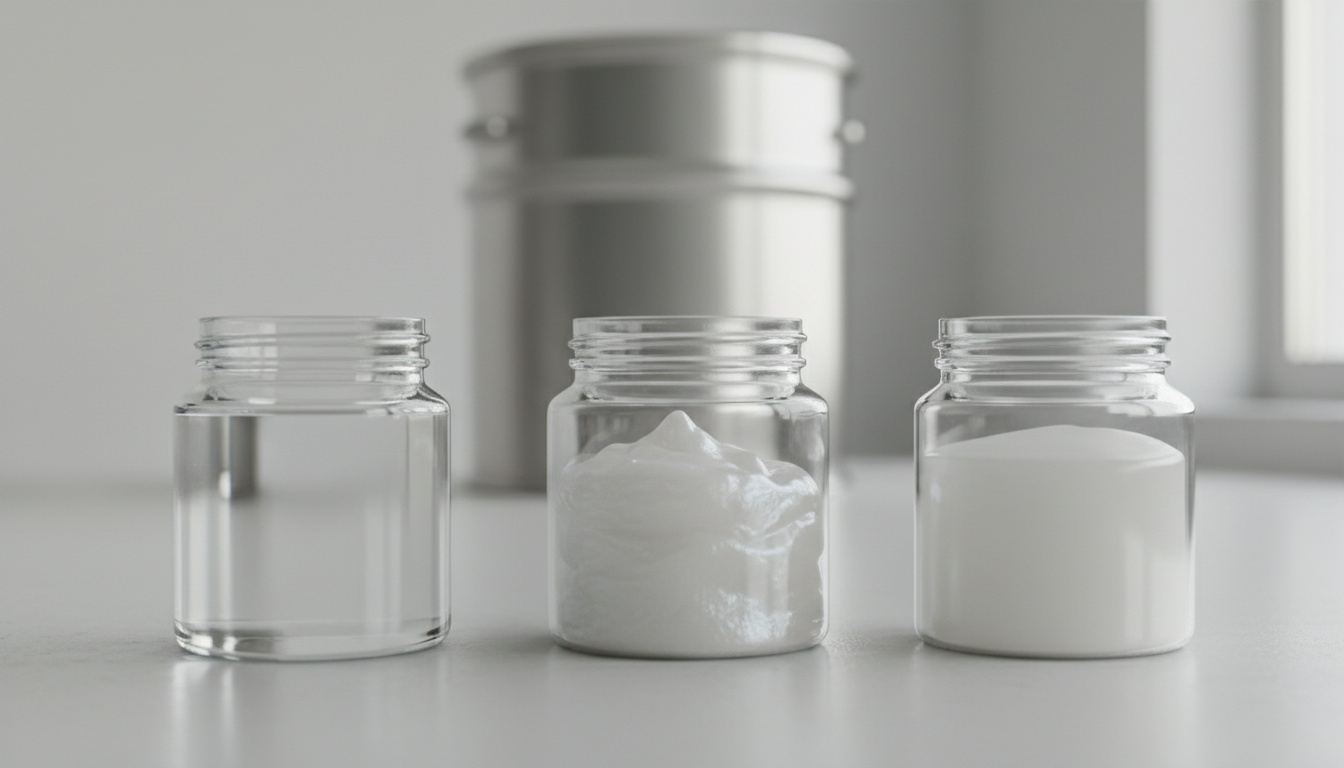
Fatty alcohol ethoxylates are made by adding ethylene oxide to a C12-C14 (lauryl-myristyl) or C12-C15 fatty alcohol, and the grade is the average number of EO units: AEO-3, 5, 7, 9, 15, 20 and 23 are the common merchant grades. The EO number sets the hydrophile-lipophile balance and therefore the job. AEO-3 is oil-soluble at an HLB of about 7-8 and is an emulsifier for agrochemical concentrates and metalworking fluids, and the intermediate that is sulphated into SLES. AEO-7, at an HLB of about 11-12 and a cloud point of about 50-60 °C in a 1% solution, is the balanced wetting and detergency grade for hard-surface cleaners, textile scouring and CIP systems. AEO-9, at an HLB of about 13 and a cloud point of about 75-85 °C, is the water-soluble workhorse of liquid laundry and dishwash detergents and emulsion polymerisation. Producers list AEO-3 to 7 as colourless liquids and AEO-9 and above as white pastes or solids, and warn that cloud point depends on the test method and medium, so the buyer's own formulation test decides. The alcohol comes from palm kernel or coconut oil in natural grades, or from ethylene or paraffin in synthetic grades; Malaysian producers make ethoxylates from palm-kernel alcohol, and buyers who need it specify a halal certificate from the producer. Alcohol ethoxylates replaced nonylphenol ethoxylates in most detergent formulations because they biodegrade readily. Under HS 2022 they sit in 3402.42, non-ionic organic surface-active agents.
UN Comtrade 2024 export declarations under HS 3402.42 total USD 5.85 billion and about 1.85 million MT across 98 reporters, all nonionic surfactants together: Germany USD 998 million, China USD 901 million and 518,000 MT, the USA USD 811 million and 197,000 MT, the Netherlands USD 510 million and 220,000 MT, Belgium USD 309 million, Italy USD 257 million, Japan USD 249 million, India USD 189 million and 90,000 MT, France USD 183 million, Singapore USD 171 million, Spain USD 152 million, Malaysia USD 122 million and 91,000 MT and the Republic of Korea USD 109 million. Those are declared export values, not offers. AEO grades are generally not classified as dangerous goods for sea transport, though they cause serious eye damage and are harmful to aquatic life, so the producer's current safety data sheet is checked before booking. They move in 200 kg drums, 1,000 kg IBCs or bulk ISO tanks, and the higher-EO pastes may need heating to pump. CBIL is a commodity brokerage company and brokers fatty alcohol ethoxylates against the producer's certificate of analysis per lot (EO number, hydroxyl value, cloud point, water, pH, colour), safety data sheet, certificate of origin, REACH registration for EU imports and a halal certificate where the producer holds one, on FOB, CFR and CIF terms. Price is per MT on grade and pack; minimum orders are confirmed per product and pack. Send the EO grade, natural or synthetic basis, packing, tonnage and discharge port, and the enquiry is screened and worked against it.
Excluded origins are not offered, including product re-exported, blended or re-processed through a third country. Every lot moves with a certificate of origin naming the producing plant, mine or grower country, and nothing is quoted before the seller and loading point are known.
Indicative reference
Per MT, on grade and pack USD / MT
as at September 2026
Reference level only — not an offer, and reviewed quarterly. Levels shown are as at September 2026. Firm pricing is quoted per RFQ, subject to volume, terms and inspection.
Typical Specification
Specifications are indicative and adjusted to the agreed contract and destination requirements. Final spec confirmed on COA / SGS.
Available Grades
Applications
- Liquid laundry and dishwash detergents
- Hard-surface and industrial cleaners
- Textile scouring and wetting
- Agrochemical emulsifiable concentrates
- Emulsion polymerisation and metalworking fluids
Category
Petroleum & Energy
Incoterms
FOB · CFR · CIF
Pricing basis
USD / MT
Inspection
SGS / Intertek at load port
Fatty Alcohol Ethoxylates (AEO-3, AEO-7, AEO-9) — buyer questions
How do I choose between AEO-3, AEO-7 and AEO-9?
By the job. AEO-3 (HLB about 7-8) is oil-soluble and emulsifies oils; AEO-7 (HLB about 11-12) balances wetting and detergency for hard-surface and textile cleaning; AEO-9 (HLB about 13) is the water-soluble grade for liquid laundry and dishwash detergents. The cloud point rises with the EO number, from about 50-60 °C for AEO-7 to about 75-85 °C for AEO-9.
Are fatty alcohol ethoxylates palm-based?
Natural grades are made from palm-kernel or coconut alcohol; synthetic grades from petrochemical alcohols. Malaysian producers ethoxylate palm-kernel alcohol, and a halal certificate is specified from the producer where the buyer needs it.
Who exports nonionic surfactants?
UN Comtrade 2024 export declarations under HS 3402.42 total USD 5.85 billion across 98 reporters, led by Germany, China, the USA, the Netherlands and Belgium, with India and Malaysia each declaring about 90,000 MT. The code covers all nonionic surfactants, not ethoxylates alone.
How are they packed and are they dangerous goods?
In 200 kg drums, 1,000 kg IBCs or bulk ISO tanks. Producer safety data sheets generally list them as not regulated for sea transport, though they cause serious eye damage; the current SDS is checked before booking.
Ready to source Fatty Alcohol Ethoxylates?
Send your quantity, specification, preferred Incoterms and destination port. Qualified requirements receive a workable offer against verified supply.
Have Fatty Alcohol Ethoxylates to sell? Submit an offer — we'll match it against live buyer demand.
More in Detergent Raw Materials: LAB, LABSA & SLES
Linear Alkylbenzene (LAB) for Detergent Sulphonation
C10-C13 LAB bought on molecular weight, bromine index and 2-phenyl content, in chemical-tanker parcels and ISO tanks
LABSA 96% (Linear Alkylbenzene Sulphonic Acid)
Linear alkylbenzene sulphonic acid at 96% active matter, class 8 corrosive, in HDPE drums, IBCs and ISO tanks
SLES 70% (Sodium Lauryl Ether Sulphate, 2EO and 3EO)
Sodium lauryl ether sulphate paste at 70% active, 2EO and 3EO, bought on active matter and 1,4-dioxane