
Sultanas
Turkish Type 9 & 10 dipped sultanas by colour standard
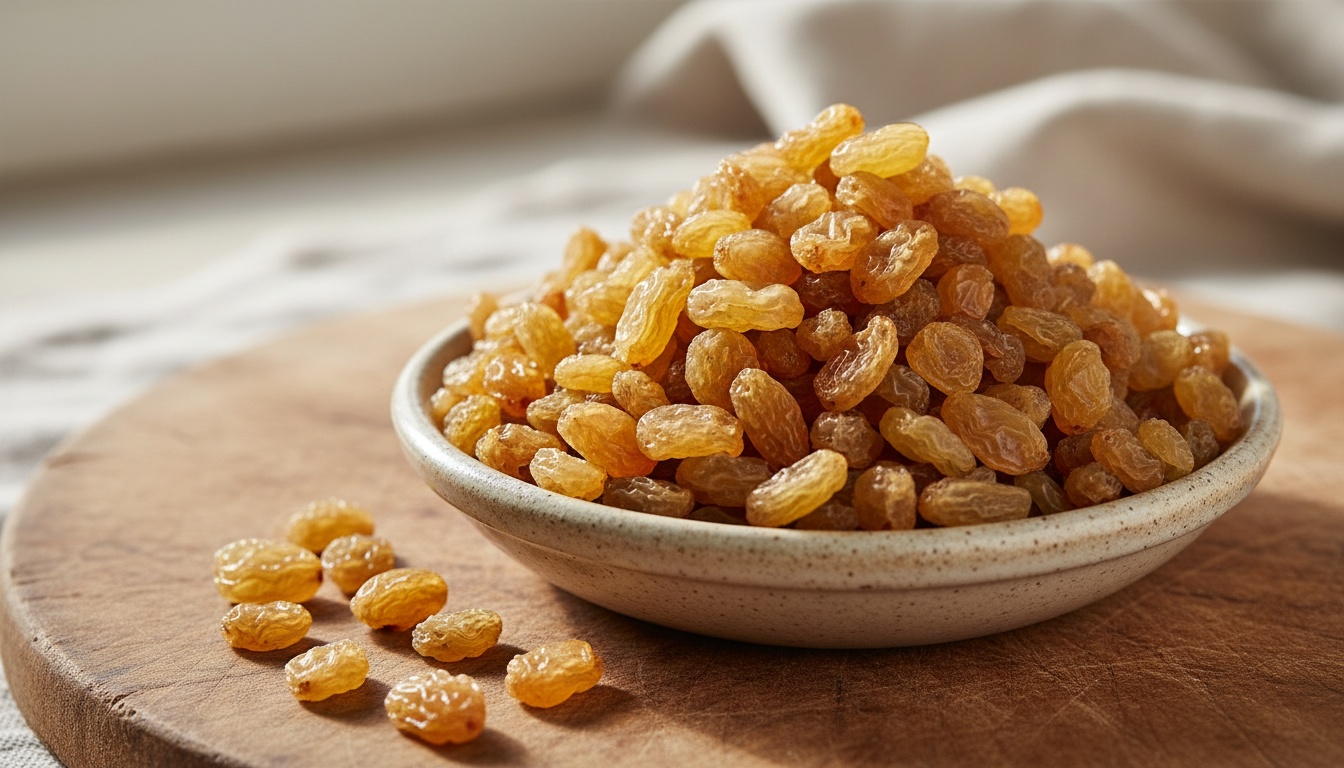
A sultana is its own product with its own grading language, not a synonym for a raisin. It is made from the seedless white Sultana grape, dipped in an oil-and-potassium-carbonate emulsion that cracks the waxy cuticle so water leaves the berry in days instead of weeks, then sun-dried and usually lightly sulphured. The result is a smaller, softer, sweeter, tangier berry that rehydrates faster in a dough than a golden or black raisin does — which is why plant bakeries and cereal lines specify it by name. CBIL arranges Turkish sultanas from the Aegean (Manisa and İzmir) graded against the official Turkish colour standard — Type 8 through Type 10, where a higher number means a lighter, more uniform berry and a materially higher price — alongside South African and Australian sultana supply. Beyond colour type, the contract turns on berry count (roughly 220–280 per 100 g for the bolder grades), moisture at 13–16%, sugar at 68–74% dry basis, capstem count, and Sortex class. SO₂ is arranged at ≤ 1,000 ppm for general trade, ≤ 500 ppm for tighter retail programmes, or SO₂-free where clean-label demands it — accepting that unsulphured sultanas darken toward Type 8 and below across shelf-life.
Pick sultanas over golden raisins when texture and behaviour matter more than a bright amber colour: the berry's thinner skin and lower firmness mean better mouthfeel in fruited loaves, hot cross buns, scones, muesli, granola and cereal, and less risk of the hard nuggets a low-moisture golden leaves in a bake. Pick golden instead when you need that specific bright tunnel-dried colour on a visible berry, or green when berry length is the selling point, or black when nothing needs to be seen at all. Turkey dominates world sultana supply and the Aegean crop sets the price curve for the entire raisin complex, so forward-contracting ahead of the August–September harvest usually beats buying spot into a short year. Lots ship against SGS or Intertek certification of colour type, moisture, SO₂ ppm, sugar, foreign matter, capstems, mould and damage and pesticide residue to destination MRLs, with phytosanitary documentation, in 10 kg and 12.5 kg lined cartons or 14 kg bags, dry or reefer container, on FOB, CFR and CIF terms.
Excluded origins are not offered, including product re-exported, blended or re-processed through a third country. Every lot moves with a certificate of origin naming the producing plant, mine or grower country, and nothing is quoted before the seller and loading point are known.
Indicative reference
$1,700–2,150 USD / MT
as at September 2026
Reference level only — not an offer, and reviewed quarterly. Levels shown are as at September 2026. Firm pricing is quoted per RFQ, subject to volume, terms and inspection.
Typical Specification
Specifications are indicative and adjusted to the agreed contract and destination requirements. Final spec confirmed on COA / SGS.
Available Grades
Applications
- Plant bakery & fruited loaves
- Muesli, granola & breakfast cereal
- Retail packing
- Snack & trail mixes
- HORECA
Category
Agri-Foods, Spices & Nuts
Incoterms
FOB · CFR · CIF
Pricing basis
USD / MT
Inspection
SGS / Intertek at load port
Sultanas — buyer questions
What is the difference between a sultana and a golden raisin?
Different grape and different process. A sultana comes from the seedless white Sultana grape, is dipped in an oil-and-potash emulsion and sun-dried — giving a smaller, softer, sweeter, tangier berry that rehydrates quickly in a dough. A golden raisin is alkaline-dipped, sulphured and tunnel-dried specifically to hold a bright amber colour. If you want texture in a bake, sultana. If you want colour on a visible berry, golden.
What do Turkish sultana Types 8, 9 and 10 actually mean?
They are the official Turkish colour standard, matched against physical reference samples. Higher number, lighter and more uniform berry, higher price. Type 10 is the top of the retail market; Type 8 is darker and perfectly sound for bakery and cereal where the berry is not scrutinised. Do not buy Type 10 for a fruited loaf — you will not see the difference in the finished product.
When should I contract sultanas rather than buying spot?
Turkey dominates world sultana supply and the Aegean crop harvests in August–September, which sets the price curve for the whole raisin complex. If you have predictable annual volume, forward-contracting ahead of the harvest window is generally cheaper than chasing spot into a short crop, because there is very little buffer stock in the chain.
Do sultanas need reefer stowage?
It depends on the lane and the season. Sultanas at the upper end of the 13–16% moisture band will clump and can sweat in a hot dry container across a long transit, particularly through the Red Sea in summer. For those lanes we arrange reefer at a set temperature; for shorter or cooler routings a dry container with proper lining is usually sufficient and cheaper.
Ready to source Sultanas?
Send your quantity, specification, preferred Incoterms and destination port. Qualified requirements receive a workable offer against verified supply.
Have Sultanas to sell? Submit an offer — we'll match it against live buyer demand.