
Granular Urea N46%
N46% granular urea | 2–4 mm, SGN 200–300 for broadacre & plantations
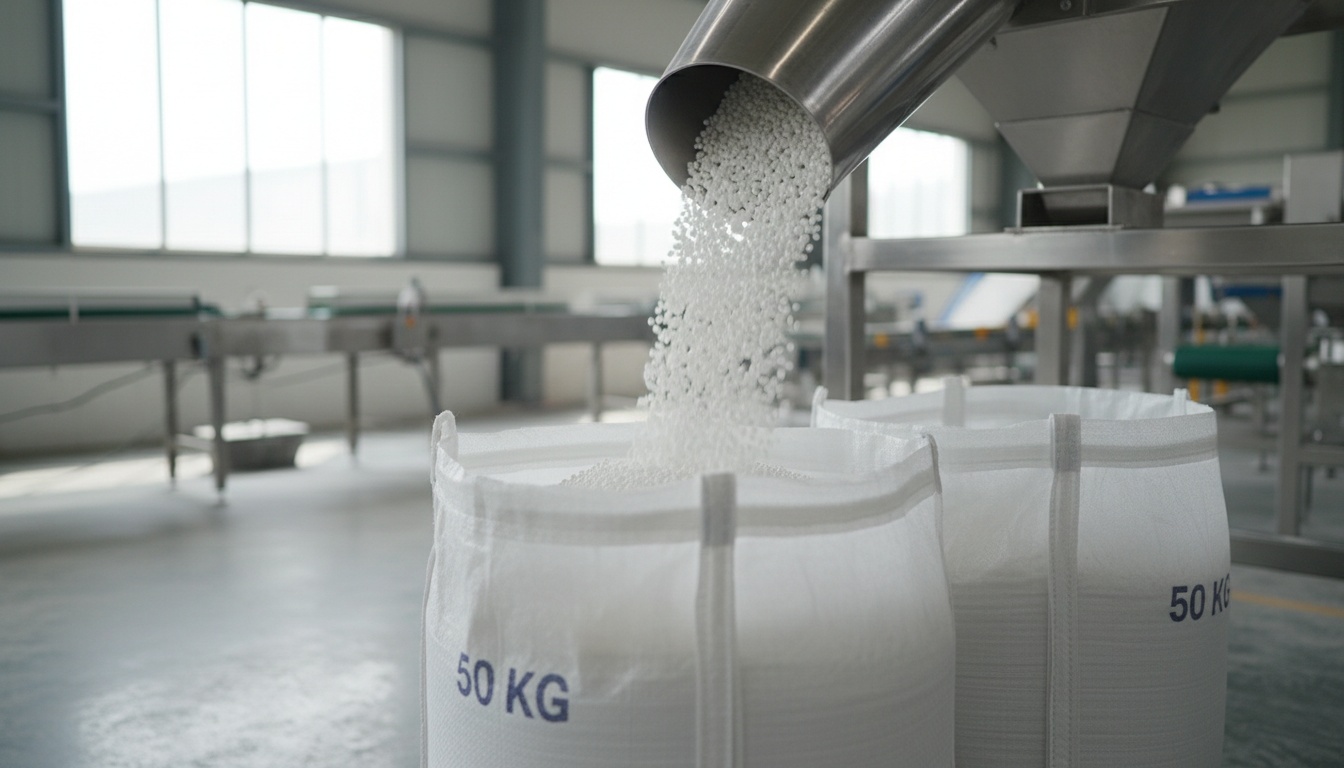
Granular urea for Southeast Asian plantation cycles (oil palm, rubber, sugarcane) and Indian Rabi planting is brokered from three origins: Mediterranean and Red Sea hubs in Egypt (Abu Qir Fertilizers at Alexandria, MOPCO at Damietta port, and Alexfert), deepwater Arabian Sea and Gulf of Oman terminals in Oman (Port of Sohar and Duqm), and Algerian Mediterranean production centres (Sorfert and AOA at Arzew/Bethioua). Cargoes move in Supramax and Handysize bulk vessels (25,000–55,000 MT), heavy-duty 50 kg woven polypropylene (PP) bags with 50-micron polyethylene (PE) inner liners, and 1 MT UV-stabilised jumbo bags (FIBCs), backed by mandatory SGS or Intertek inspection at load port verifying nitrogen content, biuret, moisture, and mechanical sizing.
Agricultural performance and blending integrity depend directly on rigorous physical parameters. Our granular urea is strictly screened to a Size Guide Number (SGN) of 200–300 (typically SGN 240–280 with Uniformity Index UI ≥ 50), with ≥ 90–95% of granules tightly sized between 2.0 and 4.0 mm, moisture capped at ≤ 0.5%, and crushing strength maintained at 2.5–3.5 kgf (25–35 N) on a 2.8 mm granule. Granules are surface-conditioned with specialized formaldehyde / urea-oil anti-caking coatings to eliminate caking and dust generation over long-haul tropical voyages and multi-stage handling. This matched sizing prevents particle segregation when bulk-blending with DAP, MAP, MOP, and ammonium sulphate, while enabling uniform 24–36 m mechanical broadcast spreading without streaking. In commercial agriculture, our granular urea provides rapid, volatilisation-mitigated nitrogen top-dressing for Southeast Asian oil palm estates (sustaining fresh fruit bunch yields and crown leaf area), sugarcane ratoon vegetative flushes, rubber plantations, and broadacre wheat, rice, and maize crops. Available on FOB, CFR, and CIF terms with fixed laycan windows.
See also: Urea CFR Thailand · Urea CFR Durban and Richards Bay · Urea CFR New Zealand · Urea CFR Mombasa · Urea & DAP CFR Uruguay (Nueva Palmira)
Need the ship as well? Our chartering desk prices bagged fertilizer and urea freight on LaycanDesk.
Excluded origins are not offered, including product re-exported, blended or re-processed through a third country. Every lot moves with a certificate of origin naming the producing plant, mine or grower country, and nothing is quoted before the seller and loading point are known.
Indicative reference
$380–460 USD / MT
as at September 2026
Reference level only — not an offer, and reviewed quarterly. Levels shown are as at September 2026. Firm pricing is quoted per RFQ, subject to volume, terms and inspection.
Typical Specification
Specifications are indicative and adjusted to the agreed contract and destination requirements. Final spec confirmed on COA / SGS.
Available Grades
Applications
- Southeast Asian oil palm & rubber plantation top-dressing
- Sugarcane ratoon vegetative flush & furrow application
- Indian Rabi planting (wheat, mustard, maize broadacre)
- Precision bulk NPK dry blending (zero segregation with DAP/MOP/AS)
- Mechanical broadcast spreading (24–36 m throw width)
- Thai importer-distributors (rice, cassava, sugarcane, plantations)
- Kenyan and South African private importers and distributors
- New Zealand farmer co-operatives (pasture)
Category
Agriculture & Fertilizers
Incoterms
FOB · CFR · CIF
Pricing basis
USD / MT
Inspection
SGS / Intertek at load port
Granular Urea N46% — buyer questions
Where does CBIL's urea load?
Our urea loads in Egypt (Abu Qir in Alexandria, MOPCO at Damietta port, and Alexfert), Oman (Sohar and Duqm, on the Gulf of Oman and the Arabian Sea) and Algeria (Arzew). Each cargo is contracted with the primary producer named, and freight is quoted on the actual load port.
Why is SGN (Size Guide Number) and crushing strength critical for blending with DAP and MOP?
Bulk blending fails when granule sizes differ: smaller particles settle to the bottom during transit, causing severe nutrient segregation and uneven crop striping across the field. Our granular urea features an SGN of 200–300 (median 2.4–2.8 mm) with a Uniformity Index above 50, perfectly matching the physical dimensions of granular DAP (18-46-0), MAP, and MOP (0-0-60). A minimum crushing strength of 2.5–3.5 kgf prevents granule attrition into fine dust during mechanical blender augering and long-haul road haulage.
How are cargoes protected against humidity and caking during tropical voyages?
Urea is strongly hygroscopic (critical relative humidity of ~72% at 30 °C). For bagged consignments into humid Southeast Asian, Indian, and African ports, we supply UV-stabilised woven polypropylene bags fitted with hermetically sealed polyethylene (PE) inner liners (minimum 50 microns) or coated 1 MT jumbo bags. Bulk vessel cargoes receive a specialised surface conditioning treatment (fatty amine / polymer coating) combined with moisture strictly capped at ≤ 0.5% at load port to guarantee free-flowing discharge.
What role does granular urea play in oil palm and sugarcane plantation agronomy?
Oil palm and sugarcane have enormous nitrogen uptake demands during their active vegetative growth and ratoon cycles. Granular urea provides a dense, 46% N source that can be mechanically broadcast around the palm weeded circle (piringan) or along sugarcane cane inter-rows at 24–36 metre widths without dust drift. The large, hard granule hydrolyses progressively under soil moisture, reducing volatilisation losses compared to fine prills on tropical mineral and peat soils.
Who buys urea in Thailand, and what changed in 2026?
Thailand imported 2.54 million MT of urea in 2025 and took 57% of it from inside the Gulf (Saudi Arabia 42%, Qatar 11%). The Strait of Hormuz has been severely restricted since 28 February 2026. Supply runs through licensed importer-distributors, among them Chia Tai and Thai Central Chemical, who bag for the rice, cassava, sugarcane and plantation trade. Importers hold a licence from the Department of Agriculture under the Fertiliser Act B.E. 2518 and register each product. In March 2026 Malaysian granular was offered at about USD 650/MT FOB. CBIL quotes Egyptian, Algerian and Omani urea CFR Thailand in Handysize and Supramax lots.
Who buys urea in Kenya and South Africa?
Kenya imported about 214,000 MT of urea in 2025, 72% from inside the Gulf, mostly Qatar. The government subsidy programme buys through National Cereals and Produce Board (NCPB) consignment tenders; the 2025-2026 tender put top-dressing urea for the 2026 long rains at about 600,000 bags (about 30,000 MT), delivered bagged to NCPB depots via Mombasa. South Africa imported about 859,000 MT in 2025, 49% from inside the Gulf; importers such as Omnia have spread their buying across other origins since March 2026, and every fertiliser sold there must be registered under Act 36 of 1947. Cargoes land at Durban and Richards Bay. The tender sets the size and timing of the Kenyan market; CBIL does not bid in government or state-enterprise tenders and supplies private importers and distributors in both countries with Egyptian, Algerian and Omani urea.
Who buys urea in New Zealand?
New Zealand imported about 496,000 MT of urea in 2025, 55% from Saudi Arabia. Two farmer co-operatives, Ballance Agri-Nutrients and Ravensdown, buy almost all of it; after transit collapsed Ravensdown bought Brunei urea and Ballance spread purchases over several regions with longer lead times. Their spring 2026 list prices were about NZD 1,280–1,289/MT. Cargoes are usually split across several discharge ports. CBIL quotes granular urea from outside the Gulf CFR New Zealand.
Ready to source Granular Urea?
Send your quantity, specification, preferred Incoterms and destination port. Qualified requirements receive a workable offer against verified supply.
Have Granular Urea to sell? Submit an offer — we'll match it against live buyer demand.