
Certified Green & Renewable Ammonia (Zero-Carbon NH₃)
Electrolytic hydrogen & green Haber-Bosch | Maritime bunker fuel & RED II compliance
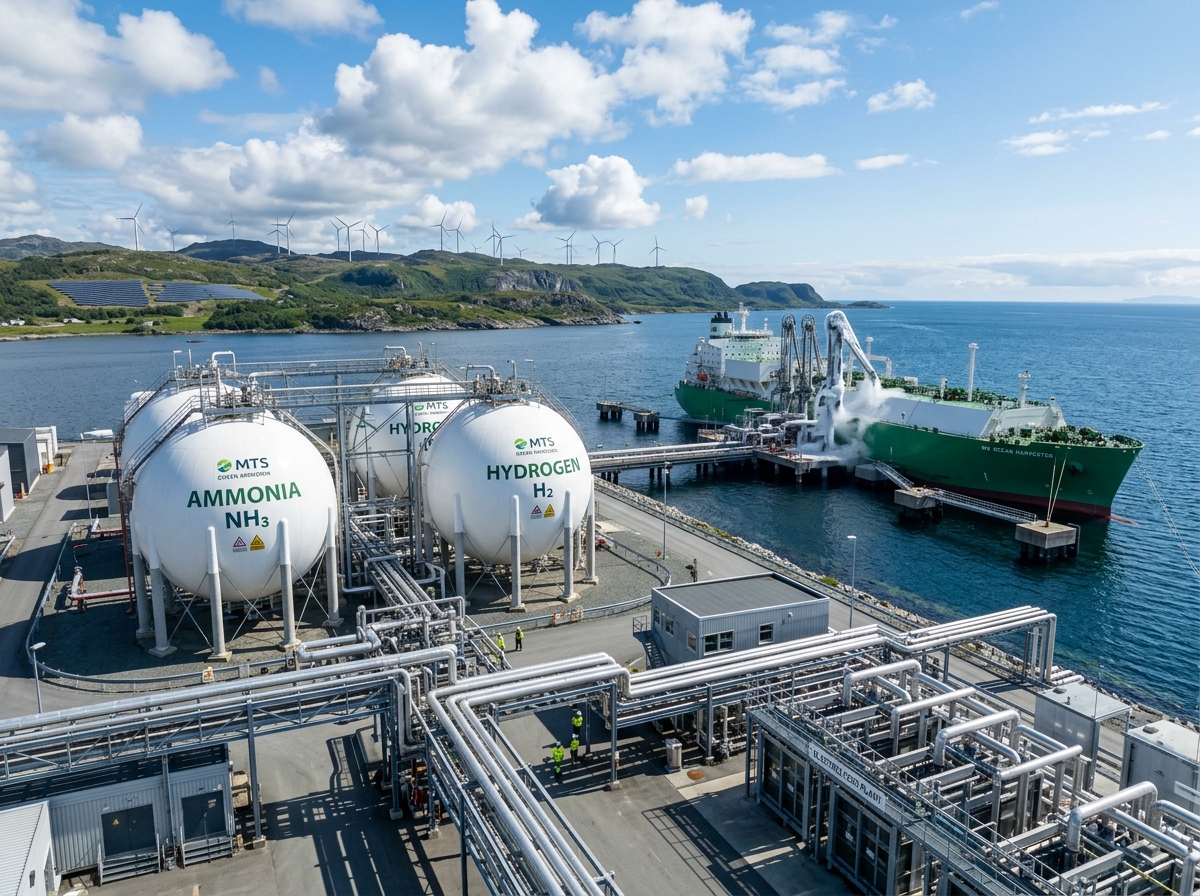
Green ammonia represents the decarbonization bridge for heavy marine shipping, baseload clean energy generation, and zero-carbon fertilizer synthesis. While conventional grey ammonia produces 1.8 to 2.4 MT of CO₂ per tonne of NH₃ through steam methane reforming of natural gas, green ammonia eliminates fossil hydrocarbons entirely. Water is split into green hydrogen via industrial proton exchange membrane (PEM) or alkaline water electrolysis powered exclusively by grid-connected or off-grid solar and wind farms, before being synthesized with cryogenic nitrogen in an electrified Haber-Bosch synthesis loop. The resulting product is chemically identical to conventional anhydrous ammonia (purity ≥ 99.8%) but carries an independently verified carbon intensity below 0.40 kg CO₂ equivalent per kg NH₃, fulfilling the strictest lifecycle thresholds of the European Union Renewable Energy Directive (RED II / RED III) and RFNBO regulations.
CBIL brokers off-take agreements, trial cargoes, and multi-year supply allocations from pioneering commercial green ammonia facilities in the Middle East (Oman and Saudi green hydrogen corridors), Northern Europe, and North Africa. Consignments are accompanied by digital Guarantee of Origin (GO) certificates and ISCC PLUS mass-balance documentation, confirming the renewable electricity source, water footprint, and greenhouse gas abatement ratio. Cargoes are structured in specialized fully refrigerated liquefied gas carriers (5,000 to 25,000 MT) for dual-fuel commercial bunkering trials at major bunkering roadsteads (Rotterdam, Singapore, Gibraltar, Fujairah) and for direct blending into low-carbon ammonium nitrate and urea production complexes. Quotations are structured on fixed fee or index-linked green premium models on FOB, CFR, and CIF terms.
Need the ship as well? Our chartering desk prices gas carrier chartering on LaycanDesk.
Excluded origins are not offered, including product re-exported, blended or re-processed through a third country. Every lot moves with a certificate of origin naming the producing plant, mine or grower country, and nothing is quoted before the seller and loading point are known.
Indicative reference
$750–980 USD / MT
as at September 2026
Reference level only — not an offer, and reviewed quarterly. Levels shown are as at September 2026. Firm pricing is quoted per RFQ, subject to volume, terms and inspection.
Typical Specification
Specifications are indicative and adjusted to the agreed contract and destination requirements. Final spec confirmed on COA / SGS.
Available Grades
Applications
- Next-generation zero-emission maritime bunker fuel (two-stroke ammonia engines)
- Thermal power station co-firing (replacing coal up to 20% in Japan & Korea)
- Production of zero-carbon green fertilizers (green CAN, green urea, green DAP)
- Chemical hydrogen carrier for transoceanic clean energy transportation
- Industrial decarbonization of mining explosives and nylon precursor synthesis
Category
Agriculture & Fertilizers
Incoterms
FOB · CFR · CIF
Pricing basis
USD / MT
Inspection
SGS / Intertek at load port
Certified Green & Renewable Ammonia (Zero-Carbon NH₃) — buyer questions
What certifications authenticate green ammonia as zero-carbon?
Green ammonia must be accompanied by audited third-party proof of sustainability under recognised international certification schemes, primarily ISCC PLUS, CertifHy, or TÜV Rheinland. These certificates trace the hourly matching of renewable electricity (PPA from specific wind/solar assets), verify that no fossil methane was utilized in the reforming process, and calculate the well-to-gate greenhouse gas intensity to ensure it meets the EU RFNBO threshold of a 70% greenhouse gas reduction compared to the fossil fuel baseline.
How does ammonia perform as a maritime bunker fuel compared to LNG and methanol?
Ammonia is a completely carbon-free molecule (NH₃), meaning combustion in marine engines emits zero carbon dioxide (CO₂), sulfur oxides (SOx), or soot particulates. While LNG and biomethanol still contain carbon atoms, green ammonia solves the maritime net-zero challenge entirely. Engine manufacturers (MAN Energy Solutions, WinGD) have commercialized two-stroke ammonia marine engines, and CBIL coordinates delivery stems into key offshore bunkering hubs.
Ready to source Green Ammonia?
Send your quantity, specification, preferred Incoterms and destination port. Qualified requirements receive a workable offer against verified supply.
Have Green Ammonia to sell? Submit an offer — we'll match it against live buyer demand.