
Refrigerated Anhydrous Ammonia (NH₃ ≥ 99.5%)
Cryogenic liquid NH₃ at −33°C | Fertilizer synthesis & chemical manufacturing
Anhydrous ammonia (HS 2814.10) is the foundational building block for global nitrogenous fertilizers and synthetic organic chemistry. Liquefied under cryogenic refrigeration at -33.34°C at atmospheric pressure, or transported under moderate pressure (1.6 to 2.0 MPa) at ambient temperature in dedicated semi-refrigerated gas carriers, commercial anhydrous ammonia is traded under stringent purity standards: minimum 99.5% NH₃ by weight, maximum 0.2% to 0.5% water, and residual lubricating oil capped at ≤ 5 ppm. For downstream industrial users—such as metallurgical nitriding atmospheres, hydrogen cracking, and electronic-grade precursors—metallurgical grade is delivered at ≥ 99.98% purity with moisture under 100 ppm and dissolved non-condensable gases strictly eliminated.
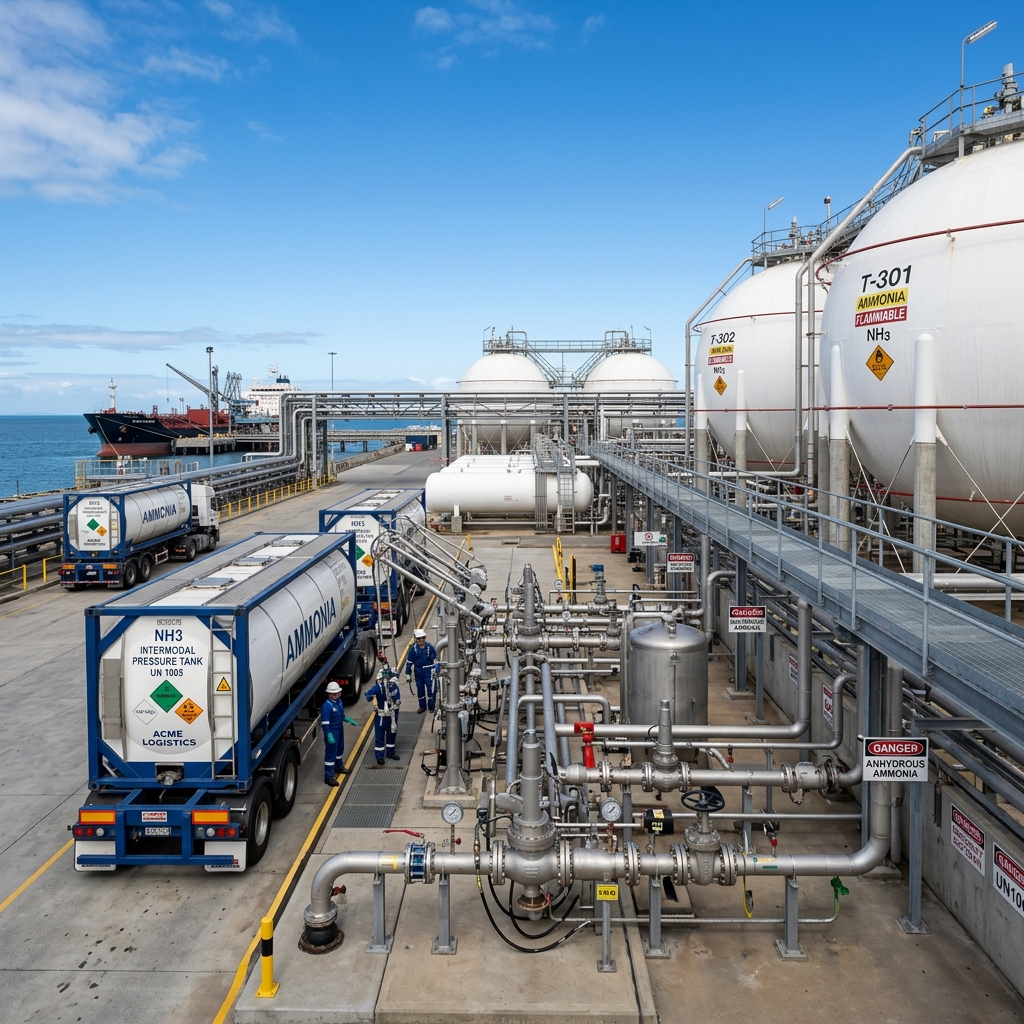
CBIL structures spot parcels and annual term offtake allocations directly from Tier-1 non-sanctioned petrochemical complexes in Oman (Port of Salalah and Sohar), Algeria (Arzew and Bethioua), and Trinidad & Tobago (Point Lisas). Shipments move in specialized LPG/ammonia tankers equipped with deepwell submerged cargo pumps, inert nitrogen padding systems, and dedicated re-liquefaction units ensuring zero boil-off loss across transatlantic and Indian Ocean voyages. Every cargo stem is independently inspected and certified at the load-port flange by SGS, Bureau Veritas, or Intertek, verifying liquid NH₃ assay, water content, oil contamination, and temperature compliance under CIF, CFR, and FOB Incoterms. For regional industrial off-takers without deepwater cryogenic receiving terminals, CBIL executes intermodal shipments in high-tensile T75 cryogenic ISO tank containers (18–20 MT payload) with comprehensive emergency response documentation.
Need the ship as well? Our chartering desk prices gas carrier chartering on LaycanDesk.
Excluded origins are not offered, including product re-exported, blended or re-processed through a third country. Every lot moves with a certificate of origin naming the producing plant, mine or grower country, and nothing is quoted before the seller and loading point are known.
Indicative reference
$380–540 USD / MT
as at September 2026
Reference level only — not an offer, and reviewed quarterly. Levels shown are as at September 2026. Firm pricing is quoted per RFQ, subject to volume, terms and inspection.
Typical Specification
Specifications are indicative and adjusted to the agreed contract and destination requirements. Final spec confirmed on COA / SGS.
Available Grades
Applications
- Diammonium phosphate (DAP) & monoammonium phosphate (MAP) production
- Urea, ammonium nitrate (AN) & ammonium sulphate (AS) synthesis
- Caprolactam (nylon 6) and acrylonitrile (acrylic fibres & ABS)
- Titanium dioxide (TiO₂) sulfate-process acid neutralization
- Industrial large-scale refrigeration (cold storage & breweries, R-717)
- Direct soil injection for agricultural nitrogen fertilization
Category
Agriculture & Fertilizers
Incoterms
FOB · CFR · CIF
Pricing basis
USD / MT
Inspection
SGS / Intertek at load port
Refrigerated Anhydrous Ammonia (NH₃ ≥ 99.5%) — buyer questions
Why is water content strictly controlled in commercial anhydrous ammonia?
In commercial-grade agricultural ammonia, a controlled residual moisture of 0.20% to 0.50% water is intentionally mandated by international transport regulations (such as US DOT and IMO code) as an active corrosion inhibitor to prevent stress corrosion cracking (SCC) in carbon-steel pressure vessels and cryogenic tanker cargo tanks. However, for metallurgical nitriding and chemical cracking applications, moisture must be strictly absent (≤100 ppm), which requires delivery in specialized dry metallurgical-grade lots.
How does CBIL manage discharge logistics for hazardous refrigerated ammonia?
Ammonia discharge requires dedicated cryogenic marine offloading arms equipped with dry-break emergency release couplings (PERCS), vapor return lines to the vessel or shore refrigeration plant, and water deluge curtain systems around the jetty manifold. CBIL works with vetted terminal operators and LaycanDesk chartering specialists to ensure that nominated gas carriers meet the receiving terminal's maximum manifold height, flange rating (typically ANSI Class 300), and boil-off gas handling capacity.
Which origins does CBIL load ammonia from?
CBIL's ammonia allocations load at Salalah and Sohar in Oman, at Arzew and Bethioua in Algeria, and at Point Lisas in Trinidad, for European, Indian and American receiving terminals. Freight and any war-risk premium are quoted on the actual route.
Ready to source Anhydrous Ammonia?
Send your quantity, specification, preferred Incoterms and destination port. Qualified requirements receive a workable offer against verified supply.
Have Anhydrous Ammonia to sell? Submit an offer — we'll match it against live buyer demand.
More in Anhydrous Ammonia