
White Mineral Oil (Liquid Paraffin, USP and Technical Grades)
Pharmaceutical, cosmetic, food and technical white oils, bought on viscosity and purity tests
White mineral oil is a base oil refined until the aromatics and sulphur compounds are gone, so it is colourless, odourless and close to inert, and it is sold to three rulebooks. The pharmacopoeias set the medicinal and cosmetic grades. The European Pharmacopoeia monograph 0239, Liquid Paraffin (Paraffinum liquidum), a purified mixture of liquid saturated hydrocarbons from petroleum, sets a viscosity of 110 to 230 mPa·s and a relative density of 0.827 to 0.890; monograph 0240, Light Liquid Paraffin (Paraffinum perliquidum), sets 25 to 80 mPa·s and 0.810 to 0.875. Both test acidity or alkalinity, readily carbonisable substances with hot sulphuric acid, solid paraffins after four hours in iced water, and polycyclic aromatics by extracting into dimethyl sulphoxide and reading the UV absorbance from 260 to 420 nm, which may nowhere exceed one third of a 7.0 mg/L naphthalene reference at 275 nm. The USP splits at the same point by kinematic viscosity: supplier USP sheets give Mineral Oil at 34.5 to 150.0 mm2/s at 40 °C and a specific gravity of 0.845 to 0.905, and Light Mineral Oil at no more than 33.5 cSt and 0.818 to 0.880. Food use in the United States runs under 21 CFR 172.878: white mineral oil, essentially paraffinic and naphthenic, refined to pass the USP tests for readily carbonisable substances and sulphur compounds and the 1962 AOAC ultraviolet absorbance specification, with limits by use, such as 0.15% in bakery products and 0.6% of a capsule or tablet. Technical white oil is the lower step, under 21 CFR 178.3620(b): Saybolt colour of +20 minimum by ASTM D156 and UV absorbance of no more than 4.0 at 280-289 nm, 3.3 at 290-299 nm, 2.3 at 300-329 nm and 0.8 at 330-350 nm, for food-contact articles rather than food.
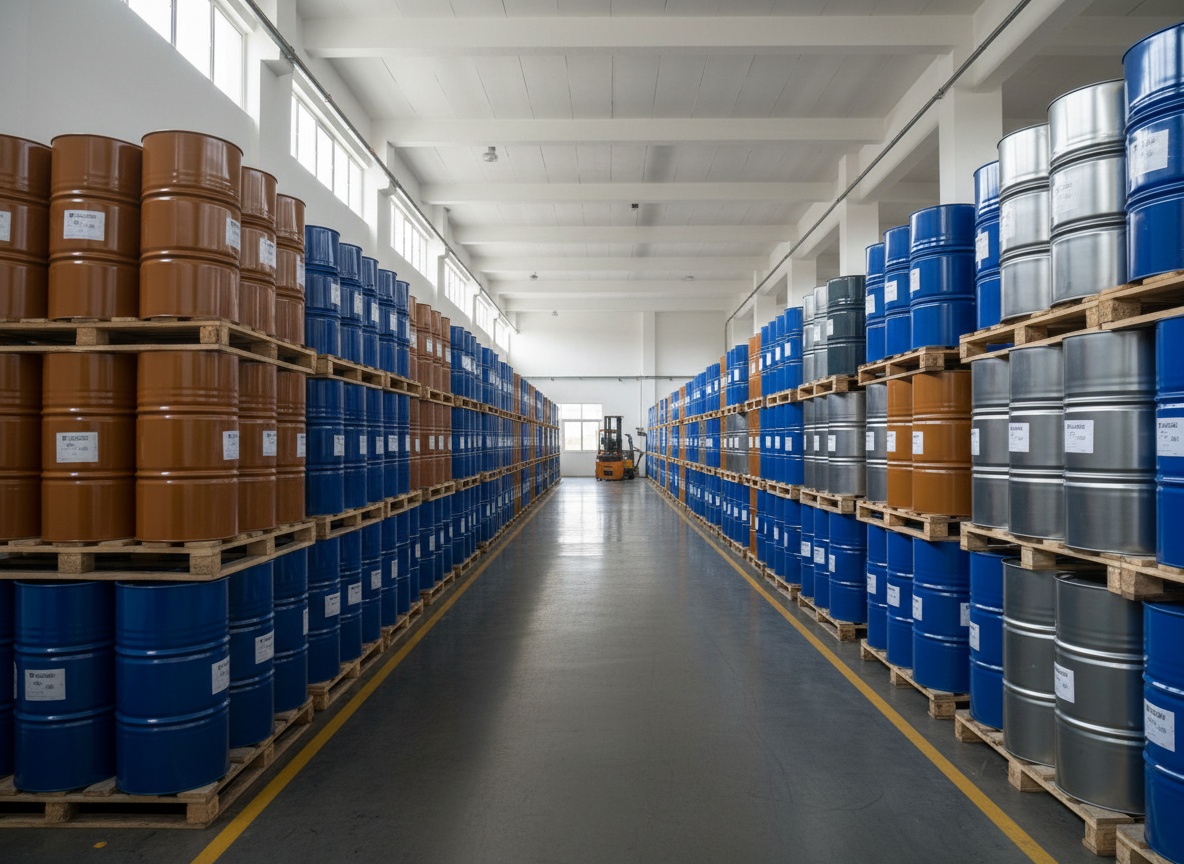
Trade names follow viscosity. Ph. Eur. and BP grades are named liquid paraffin and light liquid paraffin; US grades carry a number that is usually the viscosity in Saybolt Universal Seconds at 100 °F, so a 'White Mineral Oil 220 USP' sheet reads 209 SUS at 100 °F, 40.7 cSt at 40 °C and 6.24 cSt at 100 °C, flash point 225 °C COC, pour point -12 °C and Saybolt colour +30, and a grade number in an enquiry is checked against the sheet's cSt at 40 °C before it is matched. A buyer's certificate of analysis should show kinematic viscosity at 40 °C, density, Saybolt colour, flash point, readily carbonisable substances, sulphur compounds and the UV or PAH result for the grade's rulebook. For customs white oil sits in HS 2710.19 with the lubricating oils: the EU Combined Nomenclature gives it its own code, 2710 19 85, 'white oils, liquid paraffin', at 3.7% third-country duty, the EAC tariff has technical white oil on 2710.19.57 at 0%, and Bangladesh splits liquid paraffin in drum (2710.19.51) from other (2710.19.59). EU refiners exported 38,972 t under CN 2710 19 85 outside the EU in 2025 at an average €2,055/t, led by France (14,899 t), the Netherlands (11,038 t), Germany (4,899 t) and Belgium (4,618 t). CBIL is a commodity brokerage company and brokers white mineral oil against the producing refinery's certificate of analysis to the named monograph or regulation, a certificate of origin naming the refinery, and SGS or Intertek inspection at load. Lots move in 208-litre drums, 1,000-litre IBCs, flexitanks and ISO tanks. Send the grade and the rulebook it must meet, the viscosity at 40 °C, the quantity, the packing, the destination port and the payment terms.
Need the ship as well? Our chartering desk prices chemical parcel tanker chartering on LaycanDesk.
Excluded origins are not offered, including product re-exported, blended or re-processed through a third country. Every lot moves with a certificate of origin naming the producing plant, mine or grower country, and nothing is quoted before the seller and loading point are known.
Indicative reference
Per MT, on contract or spot basis USD / MT
as at September 2026
Reference level only — not an offer, and reviewed quarterly. Levels shown are as at September 2026. Firm pricing is quoted per RFQ, subject to volume, terms and inspection.
Typical Specification
Specifications are indicative and adjusted to the agreed contract and destination requirements. Final spec confirmed on COA / SGS.
Available Grades
Applications
- Pharmaceutical laxatives, ointments and creams
- Cosmetics: baby oil, lotions, hair and lip products
- Food release agents and protective coatings (21 CFR 172.878)
- Food-contact lubricants and polymer processing (technical grade)
- Polystyrene, rubber and adhesive plasticising
- Textile, agricultural spray and dust-control oils
Category
Petroleum & Energy
Incoterms
FOB · CFR · CIF
Pricing basis
USD / MT
Inspection
SGS / Intertek at load port
White Mineral Oil (Liquid Paraffin, USP and Technical Grades) — buyer questions
What is the difference between liquid paraffin and light liquid paraffin?
Viscosity. Ph. Eur. monograph 0239, Liquid Paraffin, sets 110 to 230 mPa·s and a relative density of 0.827 to 0.890; monograph 0240, Light Liquid Paraffin, sets 25 to 80 mPa·s and 0.810 to 0.875. The USP draws the same line between Mineral Oil and Light Mineral Oil at about 34 cSt at 40 °C. The purity tests are the same in kind: readily carbonisable substances, solid paraffins, acidity and polycyclic aromatics.
Which grade is food grade?
In the United States, white mineral oil meeting 21 CFR 172.878: refined to pass the USP tests for readily carbonisable substances and sulphur compounds and the AOAC ultraviolet absorbance specification, and used within the limits the section sets, such as 0.15% in bakery products. Technical white oil under 21 CFR 178.3620(b), at Saybolt +20 minimum, is for food-contact articles, not for food.
What does a grade number such as 220 mean?
On US white oils it is usually the viscosity in Saybolt Universal Seconds at 100 °F: one 'White Mineral Oil 220 USP' sheet reads 209 SUS at 100 °F and 40.7 cSt at 40 °C. Numbering is not standardised across producers, so CBIL matches an enquiry on the viscosity at 40 °C and the monograph named, not the number alone.
What HS code does white oil use?
HS 2710.19, with the lubricating oils. The EU gives it CN 2710 19 85, 'white oils, liquid paraffin', at 3.7% third-country duty; the EAC tariff lists technical white oil on 2710.19.57 at 0%; Bangladesh splits liquid paraffin in drum (2710.19.51) from other (2710.19.59). The national line is confirmed with the importer before shipment.
Ready to source White Mineral Oil?
Send your quantity, specification, preferred Incoterms and destination port. Qualified requirements receive a workable offer against verified supply.
Have White Mineral Oil to sell? Submit an offer — we'll match it against live buyer demand.
More in Base Oil
Group I Base Oil (SN150, SN500, Bright Stock)
The solvent-refined ladder: SN150, SN500/SN600 and bright stock 150
SN150 Base Oil
Light neutral solvent stock for low-viscosity blends
SN500 Base Oil
The volume neutral stock for engine & industrial oils
Bright Stock 150 (BS150)
Bright stock 150 specifications, uses and supply for blenders
Group II Base Oil (N70, N150, N500, N600)
Hydroprocessed low-sulphur base oils for modern engine oils
Group III Base Oil (4 cSt, 6 cSt, 8 cSt)
Hydrocracked, isodewaxed VI 120+ base stocks for synthetic-labelled engine oils