
Bitumen 60/70
The global paving grade for hot and temperate climates
Bitumen 60/70 is defined by penetration at 25°C of 60–70 dmm, a softening point of 49–56°C and ductility at 25°C of ≥ 100 cm, and it is the grade the majority of the world's highway tenders are written around. CBIL brokers it to EN 12591 (as 50/70 or 70/100 band material where the European standard applies), ASTM D946 and the Gulf and African road-authority specifications that mirror them, with flash point ≥ 250°C, solubility in trichloroethylene ≥ 99.0% and loss on heating ≤ 0.2%. The commercial variables that decide whether a lot is accepted at site are penetration, softening point and the retained penetration after RTFOT — not the brand on the drum — so every cargo we arrange ships against SGS or Intertek certification of the full spec sheet at load port.
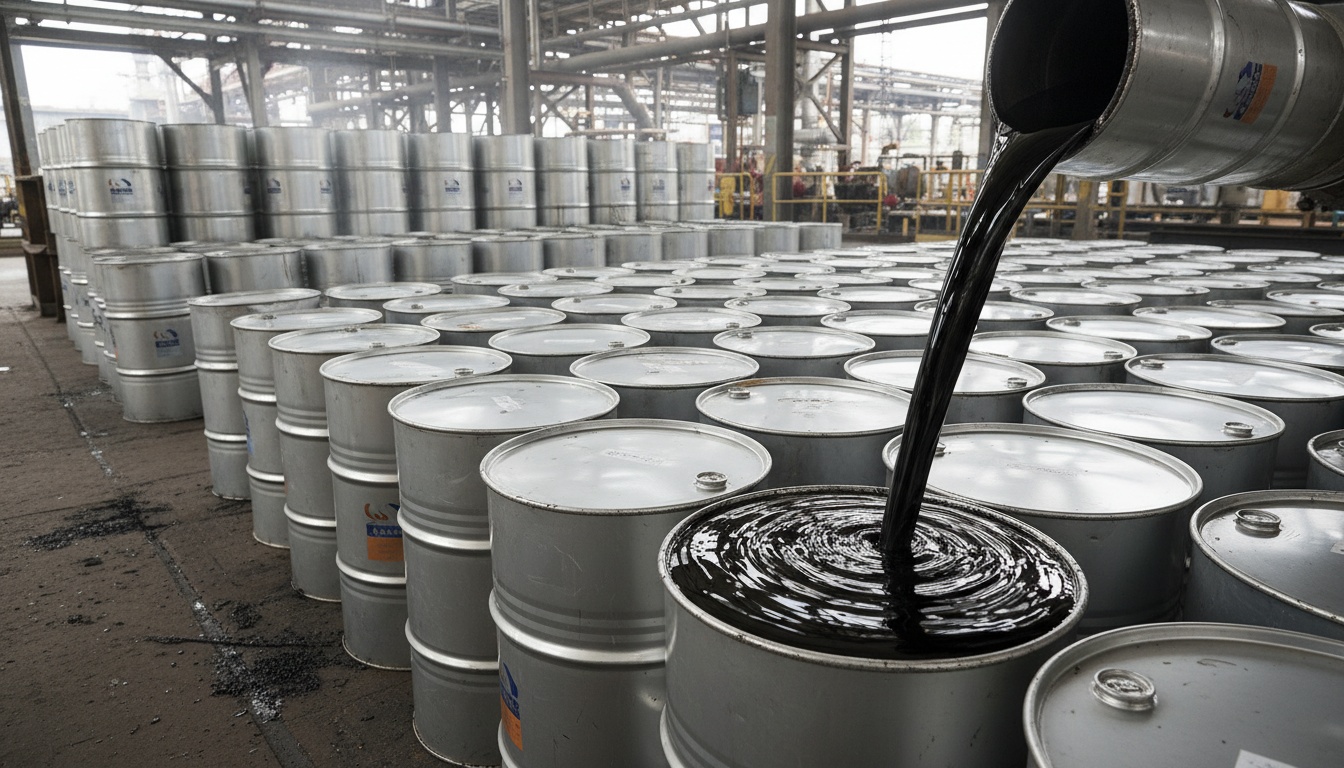
A buyer picks 60/70 over 80/100 when the service temperature is high or the traffic loading is heavy: the harder binder resists rutting in summer pavement temperatures that would push a softer grade past its shear limit. Against 40/50 it is the more workable choice — 40/50 is a hot-climate, heavy-axle specialist that pays for its rut resistance with a real low-temperature cracking risk. That makes 60/70 the default across the Middle East, South Asia, Africa and southern Europe for dense-graded asphalt, and the grade contractors specify when they want one binder to cover a whole programme. The Strait of Hormuz has been severely restricted since 28 February 2026, so UAE terminals inside the Gulf are not loading normally. Supply is structured on FOB, CFR and CIF terms from Oman, Singapore and the storage and blending terminals at Fujairah on the UAE east coast, all outside the strait, in new steel drums (150/180 kg), 300 kg jumbo bags, bitutainers or hot-bulk vessel, with documentation aligned to your destination's road-authority regime.
Need the ship as well? Our chartering desk prices bitumen tanker and drummed bitumen freight on LaycanDesk.
Excluded origins are not offered, including product re-exported, blended or re-processed through a third country. Every lot moves with a certificate of origin naming the producing plant, mine or grower country, and nothing is quoted before the seller and loading point are known.
Indicative reference
$440–470 USD / MT
as at September 2026
Reference level only — not an offer, and reviewed quarterly. Levels shown are as at September 2026. Firm pricing is quoted per RFQ, subject to volume, terms and inspection.
Typical Specification
Specifications are indicative and adjusted to the agreed contract and destination requirements. Final spec confirmed on COA / SGS.
Available Grades
Applications
- Road & highway construction
- Dense-graded asphalt & paving
- Airport runways & hardstanding
- Asphalt plant binder supply
Category
Petroleum & Energy
Incoterms
FOB · CFR · CIF
Pricing basis
USD / MT
Inspection
SGS / Intertek at load port
Bitumen 60/70 — buyer questions
Should I specify 60/70 or 80/100?
Service temperature and traffic loading decide it. 60/70 is the harder binder and holds its shape under heavy axle loads and high summer pavement temperatures, which is why it dominates the Middle East, South Asia and Africa. 80/100 is softer and more forgiving in cooler climates and in cold-weather laying windows. If your pavement design or road-authority spec names a grade, follow it — the two are not interchangeable on a compliance basis.
What certification comes with the cargo?
SGS or Intertek quality and quantity certification at load port covering penetration at 25°C, softening point, ductility, flash point, solubility and loss on heating, plus RTFOT residue results where your specification calls for them. We also arrange the certificate of origin and any road-authority-specific documentation your destination requires.
Drums, jumbo bags or bulk — which should I take?
It follows your discharge capability, not price alone. Hot-bulk vessel and bitutainer are the lowest cost per tonne but need heated storage at destination. New steel drums (150/180 kg) suit buyers without tank facilities and distributors breaking bulk. Jumbo bags at 300 kg avoid drum disposal and reheat losses but need a melting plant. Tell us what you can receive and we will structure the lot around it.
Does CBIL hold stock of 60/70?
No — CBIL is a brokerage. We do not own cargo or hold inventory. We work verified refinery and trader allocations, match them to genuine end-buyers, and structure the inspection, documentation and payment mechanism around your delivery port and schedule.
Ready to source Bitumen 60/70?
Send your quantity, specification, preferred Incoterms and destination port. Qualified requirements receive a workable offer against verified supply.
Have Bitumen 60/70 to sell? Submit an offer — we'll match it against live buyer demand.
More in Bitumen
Drummed Bitumen (New Steel Drums & Polybags)
Penetration 60/70 & 80/100 in 180 kg new steel drums and 300 kg polybags in 20ft FCLs
Bitumen 80/100
Softer penetration grade for cooler climates & surface dressing
Viscosity Grade Bitumen (VG-10 / VG-30 / VG-40)
IS 73 viscosity-graded binder for Indian & Asian road tenders
Oxidized Bitumen (Blown Grades)
Blown grades 85/25, 90/40, 115/15 for roofing & waterproofing
Bitumen Emulsion (Cationic CSS-1, CRS-2, RS/SS, K1-60/K1-70)
Cationic road emulsions by residue, viscosity and setting rate, in drums, IBCs and flexitanks
Polymer Modified Bitumen (PMB / PG 76-22 / SBS)
SBS-modified binder by softening point, elastic recovery and storage stability, hot-bulk or drummed