
Low-Fat / Reduced-Fat Desiccated Coconut (Fat ≤ 45–50%)
Defatted coconut kernel | High dietary fibre & calorie-reduced food formulations
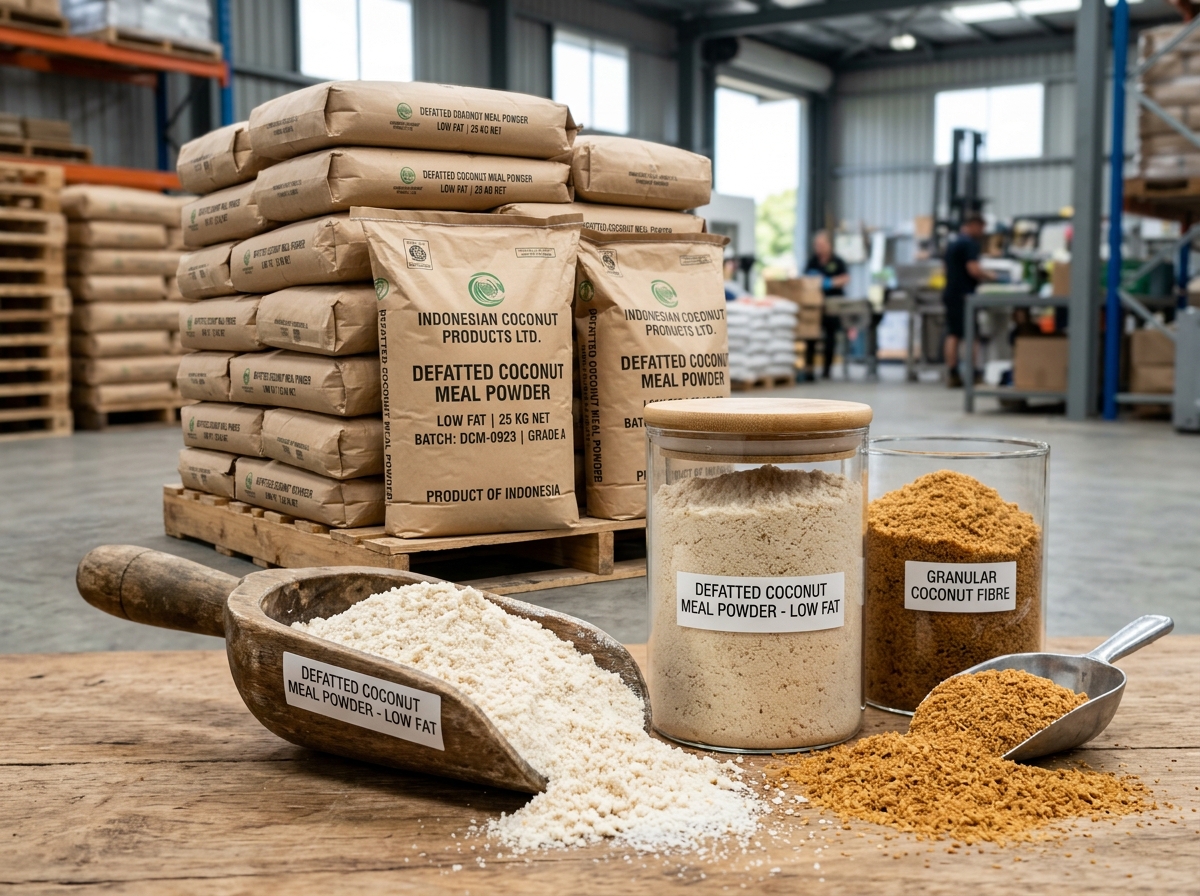
Low-fat desiccated coconut (HS 0801.11 / 2306.50) is the dried, sterilized white kernel that remains after virgin coconut oil or virgin coconut milk extraction. While high-fat grades command premium prices for their rich oil content, low-fat coconut offers an exceptional, cost-effective functional ingredient for food manufacturers formulating calorie-reduced baked goods, high-fibre nutrition bars, instant savory curry pastes, and animal nutrition blends.
During production, freshly grated coconut is expeller-pressed under controlled cold or warm mechanical conditions to extract a portion of the native oil, reducing the fat content from >65% down to a standardized 45.0% to 55.0% (or heavily defatted 35.0% to 45.0% depending on customer specification). The defatted residue is then re-milled, dried in hot-air fluidized bed driers, and sifted into fine or medium particle cuts. The resulting product retains the delicate natural coconut flavour and snow-white appearance while boosting dietary fibre content to over 15% to 20% and crude protein to 8% to 11%.
CBIL supplies low-fat desiccated coconut in containerized volumes from modern coconut processing hubs in India, Indonesia, and Sri Lanka. The material offers significantly lower susceptibility to lipid oxidation and rancidity, providing extended storage stability even in warm tropical distribution channels. Consignments are packed in 25 kg or 50 kg woven polypropylene bags with inner poly liners or multi-wall kraft paper sacks, supplied on FOB, CFR, and CIF terms.
Excluded origins are not offered, including product re-exported, blended or re-processed through a third country. Every lot moves with a certificate of origin naming the producing plant, mine or grower country, and nothing is quoted before the seller and loading point are known.
Indicative reference
$1,100–1,400 USD / MT
as at September 2026
Reference level only — not an offer, and reviewed quarterly. Levels shown are as at September 2026. Firm pricing is quoted per RFQ, subject to volume, terms and inspection.
Typical Specification
Specifications are indicative and adjusted to the agreed contract and destination requirements. Final spec confirmed on COA / SGS.
Available Grades
Applications
- Calorie-reduced, low-fat bakery and dietetic cookie formulations
- High-fibre nutrition bars, breakfast mixes, and keto-friendly meal replacements
- Instant curry pastes, dehydrated soup mixes, and savory sauce bases
- Bulk filler and texturizer for confectionery and compound coatings
- Premium pet food formulations and equine feed supplements
Category
Agri-Foods, Spices & Nuts
Incoterms
FOB · CFR · CIF
Pricing basis
USD / MT
Inspection
SGS / Intertek at load port
Low-Fat / Reduced-Fat Desiccated Coconut (Fat ≤ 45–50%) — buyer questions
Why do industrial food producers choose low-fat desiccated coconut?
Cost and nutritional balance. Low-fat desiccated coconut trades at a substantial discount (typically 25% to 35% lower) compared to high-fat virgin desiccated coconut because the extracted coconut oil has already been monetized. For manufacturers of diet cookies, high-fibre breakfast foods, or savory curry mixes where excessive coconut oil would disrupt texture or exceed target fat calories, low-fat coconut provides authentic coconut flavor and bulk fiber at a fraction of the cost.
Does low-fat desiccated coconut cake or clump during storage?
No. In fact, low-fat desiccated coconut is significantly less prone to clumping and oil bleed than high-fat grades because it has less free surface oil that can melt during elevated warehouse temperatures. It remains dry, granular, and free-flowing throughout transport.
Ready to source Low-Fat Coconut?
Send your quantity, specification, preferred Incoterms and destination port. Qualified requirements receive a workable offer against verified supply.
Have Low-Fat Coconut to sell? Submit an offer — we'll match it against live buyer demand.