
Calcium Carbide (CaC₂) & Calcium Silicon Cored Wire
Calcium carbide by gas yield and size for acetylene, desulphurisation and PVC feedstock, and CaSi lump and cored wire for ladle calcium treatment, from Chinese, Indian, South African and Brazilian producers
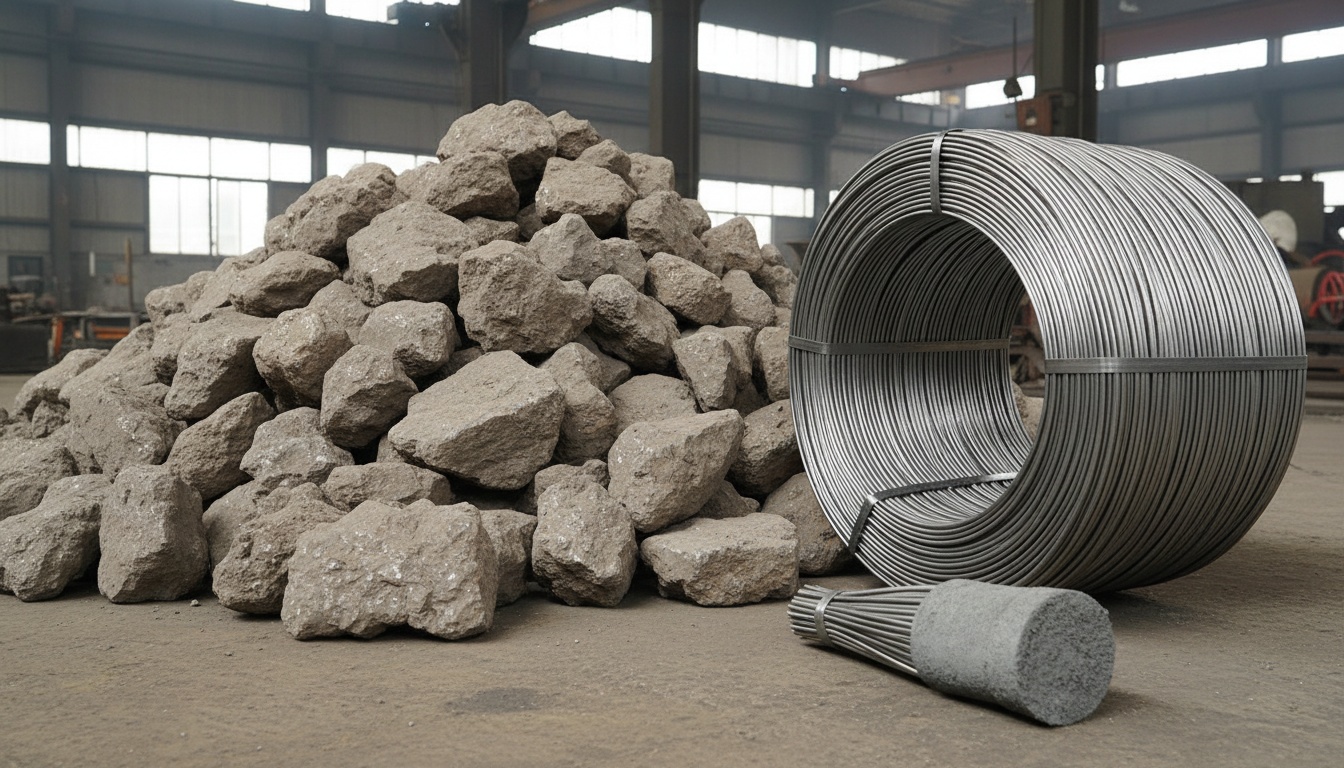
Calcium carbide is sold on how much acetylene a kilogram gives off, and on size. Technical-grade carbide is roughly 80–85% CaC₂ with the balance calcium oxide and minor sulphide, phosphide and nitride, and the Chinese standard GB 10665-2004 grades it by gas yield, which the size bands set: 25–50 mm, 50–80 mm and 80–120 mm lump reach 295–305 litres per kilogram, 15–25 mm about 280 L/kg, 7–15 mm about 270 L/kg, 4–7 mm about 260 L/kg and 1–4 mm fines about 240 L/kg, with phosphine (PH₃) and hydrogen sulphide in the generated gas limited because they poison the downstream use. The uses set the size: acetylene generators for welding, cutting and chemical synthesis take 25–80 mm lump; carbide-route PVC (acetylene to vinyl chloride), calcium cyanamide fertiliser and chloroprene rubber take plant-specific bands; steelworks and blast-furnace desulphurisation stations inject 1–4 mm or 0–2 mm carbide, often blended with lime and magnesium, into hot metal or the ladle. Carbide is a dangerous good, UN 1402, Class 4.3 (dangerous when wet), packing group I, hermetically sealed in 50 kg and 100 kg steel drums under a nitrogen or dry-air blanket, stowed under IMDG rules away from water and acids, and the receiving country's dangerous-goods import permits apply; acetylene gas yield and drum integrity are checked at destination because water ingress in transit destroys the product. Calcium silicon (CaSi) is the second product on this page: an alloy of about 28–32% calcium and 55–65% silicon (the 30/60 grade) made in submerged-arc furnaces from lime, quartz and coke, sold as 10–50 mm lump, as 0–2 mm powder, and above all as cored wire, the powder encased in 0.4–0.45 mm low-carbon steel strip at 13 mm diameter (9 mm and 16 mm on request) and fed by machine into the ladle after tapping. Calcium in the ladle deoxidises, desulphurises and modifies alumina and sulphide inclusions into liquid calcium aluminates, which is what keeps continuous-casting nozzles from clogging and gives clean, machinable steel. UN Comtrade 2024 export declarations under HS 7202.99, the ferroalloy residual heading that includes calcium silicon alongside other alloys, total USD 807 million and 253,000 MT across 56 reporting countries; HS 2849.10 declarations for carbide were not retrievable at the time of writing and are not quoted.
The buyers are acetylene fillers and industrial-gas companies, PVC and cyanamide plants on the carbide route, steel mills and foundries injecting carbide desulphuriser, and, for CaSi, secondary-metallurgy shops at every continuous-casting mill, plus cored-wire manufacturers buying CaSi powder to fill their own wire. CBIL is a commodity brokerage company and brokers calcium carbide and calcium silicon from Chinese, Indian, South African (Newcastle, KwaZulu-Natal, where the country's carbide and calcium-silicon furnaces sit) and Brazilian (Iguatama, Minas Gerais) producer and trader allocations, against the producer's certificate of analysis per lot and SGS or Bureau Veritas sampling: for carbide, gas yield by the standard method, size distribution, PH₃ and H₂S in the generated gas and drum seal inspection; for CaSi, Ca, Si, Al, C, P and S and, for cored wire, the powder fill weight per metre and strip thickness. Carbide moves as a declared Class 4.3 cargo in sealed drums palletised in 20-foot containers on FOB, CFR and CIF terms; CaSi lump and powder in 1 MT big bags and cored wire in coils of about 1–2 MT on pallets, 20–24 MT per container. Send the product, the gas yield and size band or the CaSi grade and wire diameter, monthly tonnage and discharge port, with the dangerous-goods import permit position at destination for carbide, and the enquiry is worked against current producer positions.
Need the ship as well? Our chartering desk prices South Africa to China mineral freight on LaycanDesk.
Excluded origins are not offered, including product re-exported, blended or re-processed through a third country. Every lot moves with a certificate of origin naming the producing plant, mine or grower country, and nothing is quoted before the seller and loading point are known.
Indicative reference
Per lot, on gas yield and size (carbide); on grade (CaSi) USD / MT
as at September 2026
Reference level only — not an offer, and reviewed quarterly. Levels shown are as at September 2026. Firm pricing is quoted per RFQ, subject to volume, terms and inspection.
Typical Specification
Specifications are indicative and adjusted to the agreed contract and destination requirements. Final spec confirmed on COA / SGS.
Available Grades
Applications
- Acetylene for welding, cutting and chemical synthesis
- Carbide-route PVC, calcium cyanamide and chloroprene
- Hot-metal and ladle desulphurisation (carbide injection)
- Ladle calcium treatment for castability (CaSi cored wire)
- Deoxidation and inclusion modification in clean steels
- Foundry inoculation and desulphurisation (CaSi lump)
Category
Metals & Recycled Scrap
Incoterms
FOB · CFR · CIF
Pricing basis
USD / MT
Inspection
SGS / Intertek at load port
Calcium Carbide (CaC₂) & Calcium Silicon Cored Wire — buyer questions
How is calcium carbide graded?
By gas yield in litres of acetylene per kilogram, which follows the size band. Under the Chinese standard GB 10665-2004, lump from 25 mm up gives about 295–305 L/kg, 15–25 mm about 280, 7–15 mm about 270, 4–7 mm about 260 and 1–4 mm fines about 240 L/kg. Acetylene fillers want the large lump; desulphurisation stations want the fines. Phosphine and hydrogen sulphide in the generated gas are limited by the standard and checked at destination.
What shipping rules apply to calcium carbide?
It is UN 1402, Class 4.3, dangerous when wet, packing group I. It reacts with water or moisture to give acetylene, so it is packed hermetically sealed in steel drums, typically 50 kg and 100 kg, declared as dangerous goods, stowed under IMDG rules away from water and acids, and moved with the receiving country's dangerous-goods import permit in place. Drum integrity is checked on arrival because moisture ingress in transit ruins the product and creates a hazard.
What is CaSi cored wire and why do mills use it?
Calcium silicon powder, about 28–32% calcium and 55–65% silicon, encased in a thin low-carbon steel strip at 13 mm diameter and fed by machine into the ladle after tapping. Calcium deoxidises and desulphurises and turns solid alumina and sulphide inclusions into liquid calcium aluminates, so the steel casts without nozzle clogging and machines cleanly. Wire is bought on fill weight per metre and calcium recovery; the alloy is also sold as 10–50 mm lump and 0–2 mm powder for wire plants that fill their own.
Where do calcium carbide and CaSi come from?
China is the largest producer of both by a wide margin; India has carbide and cored-wire producers supplying its own mills and export; South Africa's carbide and calcium-silicon furnaces are at Newcastle in KwaZulu-Natal; Brazil's carbide plant is at Iguatama, Minas Gerais. UN Comtrade 2024 export declarations under HS 7202.99, the residual ferroalloy heading that includes calcium silicon, total USD 807 million and 253,000 MT across 56 reporters. Carbide from any origin is sold on gas yield and size, CaSi on its assay, with the producer's certificate per lot.
Ready to source Calcium Carbide & CaSi?
Send your quantity, specification, preferred Incoterms and destination port. Qualified requirements receive a workable offer against verified supply.
Have Calcium Carbide & CaSi to sell? Submit an offer — we'll match it against live buyer demand.
More in Chrome, Nickel Ore & Ferroalloys: FeCr, FeMn, SiMn, FeSi & Silicon Metal
Chrome Ore (Chromite Lumpy & Concentrate)
Chromite lumpy, chips and concentrate by Cr₂O₃, Cr:Fe ratio and silica
Nickel Ore (Laterite Saprolite & Limonite)
Laterite saprolite and limonite by Ni, Fe, MgO and moisture — IMSBC Group A
Ferrochrome (High-Carbon & Charge Chrome)
High-carbon ferrochrome and charge chrome by Cr, C, Si, P and S in jumbo bags or breakbulk
Ferrosilicon 75 & Silicomanganese
FeSi 75 by Si, Al and C; SiMn 65/17 by Mn, Si, C and P — deoxidisers in jumbo bags
Ferromanganese (High-, Medium- & Low-Carbon)
HC FeMn 74–82% Mn and refined MC / LC grades by carbon, silicon, phosphorus and sulphur
Silicon Metal (553, 441 & 3303)
Metallurgical silicon by Fe, Al and Ca: 553 for aluminium alloys, 441 and 3303 for chemicals
Ferroniobium (FeNb 65% Standard & Vacuum Grade)
Standard 65% Nb and vacuum-grade FeNb for HSLA line-pipe steels, automotive sheet and aerospace superalloys
Vanadium Pentoxide Flake (V₂O₅ 98%) & Ferrovanadium (FeV80)
V₂O₅ flake for ferrovanadium, chemicals and flow-battery electrolyte, and FeV80 for HSLA rebar, plate and pipe, from South African and Brazilian primary producers
Ferrotitanium (FeTi 70 & FeTi 30/35)
Scrap-based FeTi 70 for stainless and special steels and aluminothermic FeTi 30/35 for carbon steel, lump and cored-wire sizings, from UK, Indian and Chinese producers