
Soap Noodles (80/20, 90/10) & Fatty Alcohols (C12-14, C16-18)
Palm and palm-kernel soap noodles bought on TFM and moisture, and lauryl-myristyl and cetostearyl alcohols, all from certified palm and coconut feedstock
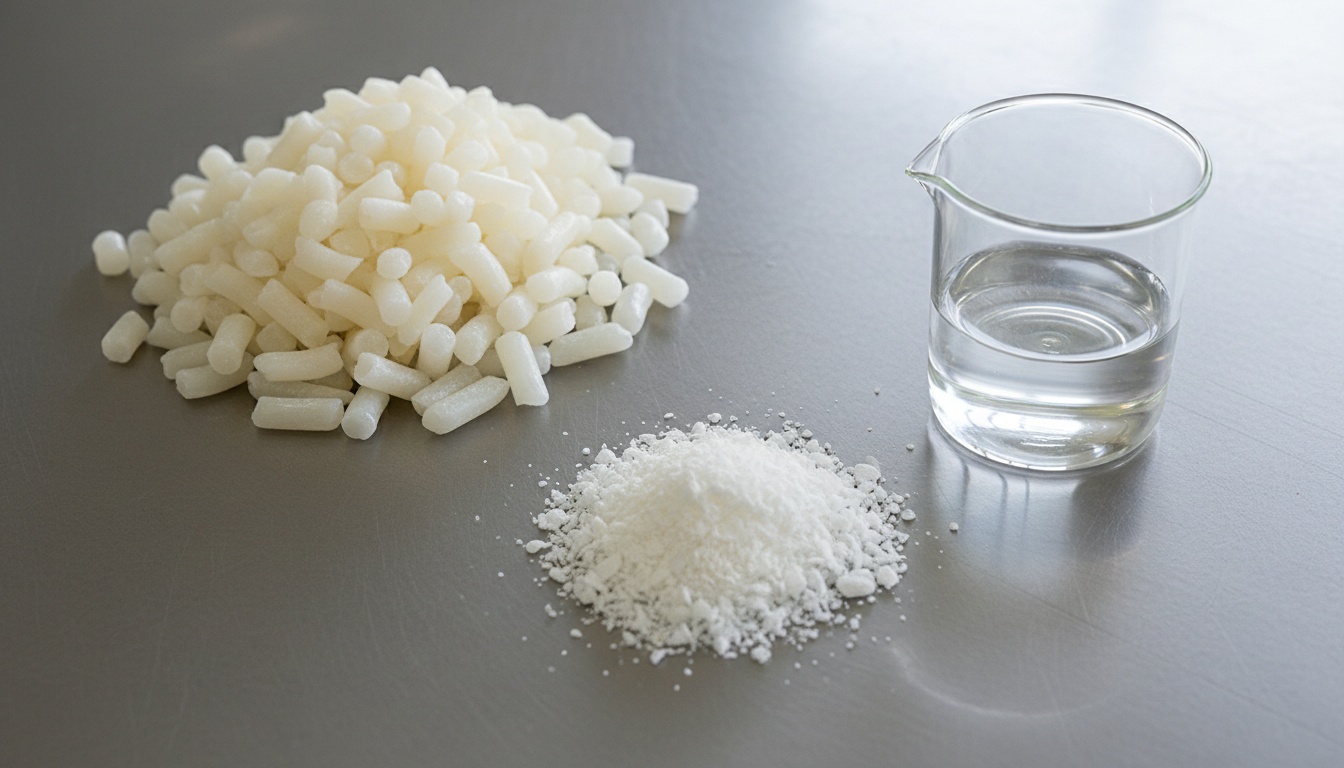
Soap noodles are the saponified, dried and extruded pellets a soap plant mills, perfumes and stamps into bars, and the name of the grade is the fat blend: 80/20 is 80% palm oil or palm stearin to 20% palm kernel oil, the global standard for toilet soap, with the palm fraction giving hardness and the lauric fraction giving lather; 90/10 uses less palm kernel oil and is the economy and laundry grade. The buyer's sheet is total fatty matter first. One Malaysian producer's published 80/20 snow-white specification runs TFM 78.5-81.5% (typical 79.3%), moisture 10.5-13.5%, free alkalinity as NaOH 0.05% max, chloride as NaCl 0.4-0.6% and glycerine 1.0% max, packed in 25 kg polypropylene-laminated bags at 800 bags (20 MT) to a 20-ft container unpalletised or 640 bags (16 MT) palletised, or in 800 kg jumbo bags, and is halal-certified by JAKIM. Premium skin bars are specified at TFM 80-82%; moisture above about 18% gives soft bars and poor stamping. Every noodle on this page is made from palm and coconut feedstock only, with no tallow, and the halal certificate names the fat source. Fatty alcohols are the same feedstock taken further: palm kernel or coconut oil is transesterified to methyl esters and hydrogenated to straight-chain primary alcohols. C12-14 (lauryl-myristyl alcohol) is the surfactant chain length for SLES, SLS and alcohol ethoxylates, and one published specification runs C12 51-57%, C14 41-47%, C16 and higher 1.9% max and total alcohol 98% min; C16-18 (cetostearyl alcohol) is the emulsifier and consistency agent for creams, conditioners and lotions and is sold by C16:C18 ratio. Pure lauryl, cetyl and stearyl alcohols sit in HS 2905.17 and industrial blends in HS 3823.70.
UN Comtrade 2024 export declarations put soap in other forms (HS 3401.20, the noodle line) at 1.61 million MT worth USD 2.06 billion: Indonesia 585,000 MT, Malaysia 306,000 MT, Poland 144,000 MT, Turkiye 49,000 MT, Spain 34,000 MT, Italy 33,000 MT, the USA 33,000 MT, the Netherlands 32,000 MT and Germany 32,000 MT. The importers show where the bar-soap plants are: India 125,000 MT, the Philippines 90,000 MT, Germany 76,000 MT, France 50,000 MT, Angola 49,000 MT, China 44,000 MT, Turkiye 32,000 MT and Malawi 30,000 MT. Under HS 2905.17 Malaysia exported 132,000 MT, Indonesia 83,000 MT, the Philippines 43,000 MT, India 14,000 MT, the USA 13,000 MT, Germany 11,000 MT and Thailand 11,000 MT, a total of 332,000 MT worth USD 577 million. Noodles ship as bagged cargo in dry containers; fatty alcohols move in drums, IBCs, ISO tanks and, for C12-14, heated bulk parcels. CBIL is a commodity brokerage company and brokers soap noodles and fatty alcohols from Malaysian, Indonesian and Philippine oleochemical plants on FOB, CFR and CIF terms, against the plant's certificate of analysis, an SGS or Intertek check of TFM, moisture and free alkali or hydroxyl value and chain distribution where the buyer wants it, a certificate of origin, the halal certificate and RSPO or MSPO chain-of-custody documents where the destination requires them. The buyer is a soap finisher in South Asia, West or Southern Africa, the Middle East or Eastern Europe buying noodles by the container, a surfactant plant buying C12-14 for sulphation and ethoxylation, or a cosmetics manufacturer buying cetostearyl alcohol. Send the grade, TFM or chain-length specification, colour, monthly volume, pack and discharge port.
Need the ship as well? Our chartering desk prices chemical and vegetable oil tanker chartering on LaycanDesk.
Excluded origins are not offered, including product re-exported, blended or re-processed through a third country. Every lot moves with a certificate of origin naming the producing plant, mine or grower country, and nothing is quoted before the seller and loading point are known.
Indicative reference
Per MT, on TFM and grade USD / MT
as at September 2026
Reference level only — not an offer, and reviewed quarterly. Levels shown are as at September 2026. Firm pricing is quoted per RFQ, subject to volume, terms and inspection.
Typical Specification
Specifications are indicative and adjusted to the agreed contract and destination requirements. Final spec confirmed on COA / SGS.
Available Grades
Applications
- Toilet and laundry bar soap finishing
- SLES, SLS and alcohol ethoxylate manufacture (C12-14)
- Creams, conditioners and lotions (C16-18)
- Pharmaceutical and cosmetic emulsions
- Private-label soap production
Category
Agriculture & Fertilizers
Incoterms
FOB · CFR · CIF
Pricing basis
USD / MT
Inspection
SGS / Intertek at load port
Soap Noodles (80/20, 90/10) & Fatty Alcohols (C12-14, C16-18) — buyer questions
What do 80/20 and 90/10 mean on soap noodles?
The ratio of palm oil or palm stearin to palm kernel oil in the fat charge. 80/20 is the toilet-soap standard: the palm fraction gives a hard bar and the 20% lauric fraction gives quick lather. 90/10 carries less palm kernel oil, lathers less and costs less, and is used for economy and laundry bars.
What TFM should I specify?
Grade 1 toilet-soap noodles are 78% TFM minimum; one Malaysian producer publishes 78.5-81.5% with a typical 79.3%. Premium and moisturising bars are specified at 80-82%. Moisture is the other half of the sheet: 10.5-13.5% on the same published grade, and above about 18% bars go soft and stamp badly.
Are the noodles tallow-free and halal?
Every grade on this page is made from palm and coconut feedstock only. The producers' halal certificates, JAKIM in Malaysia, name the fat source, and the certificate travels with the shipping documents. Buyers who need RSPO or MSPO chain of custody name it in the order.
Which fatty alcohol cut do I need?
C12-14 (lauryl-myristyl) if you are making surfactants: it is the chain length that is sulphated to SLS, ethoxylated and sulphated to SLES, or ethoxylated to non-ionics. C16-18 (cetostearyl) if you are making creams, conditioners and lotions, where it is the emulsifier and thickener; it is sold by its C16 to C18 ratio. Pure cetyl or stearyl alcohol are single cuts for pharmaceutical and cosmetic monographs.
Ready to source Soap Noodles & Fatty Alcohols?
Send your quantity, specification, preferred Incoterms and destination port. Qualified requirements receive a workable offer against verified supply.
Have Soap Noodles & Fatty Alcohols to sell? Submit an offer — we'll match it against live buyer demand.
More in Oleochemicals: PFAD, Acid Oils, Glycerine & Fatty Acids
Refined Glycerine USP / BP 99.7% (Food & Pharma Grade)
Pure plant-derived glycerol (≥99.7% min) — Kosher, Halal & RSPO certified in flexitanks and drums
Palm Fatty Acid Distillate (PFAD)
Refinery by-product bought on FFA, moisture and impurities
Crude Glycerine (Glycerol)
Biodiesel and oleochemical glycerol by content, MONG and ash
Stearic Acid (Palm-Based)
Triple- and double-pressed flakes and beads by iodine value and colour
Crude Palm Oil, POME Oil & Palm Acid Oil
Crude and residue palm grades bought on FFA, moisture and sustainability paperwork
Vegetable Acid Oil (Soapstock Acid Oil: Soy, Sun, Rape & Corn)
Acidulated soapstock from chemical refining of soy, sunflower, rape and corn oil, bought on TFM, FFA and ISCC certification
Crude Tall Oil (CTO), Tall Oil Fatty Acid (TOFA) & Tall Oil Rosin
Kraft-mill crude tall oil and its distilled fractions for alkyd resins, oilfield chemicals and renewable diesel feedstock