
PVC Resin (Suspension Grade)
Suspension PVC by K-value for pipe, profile, cable and film
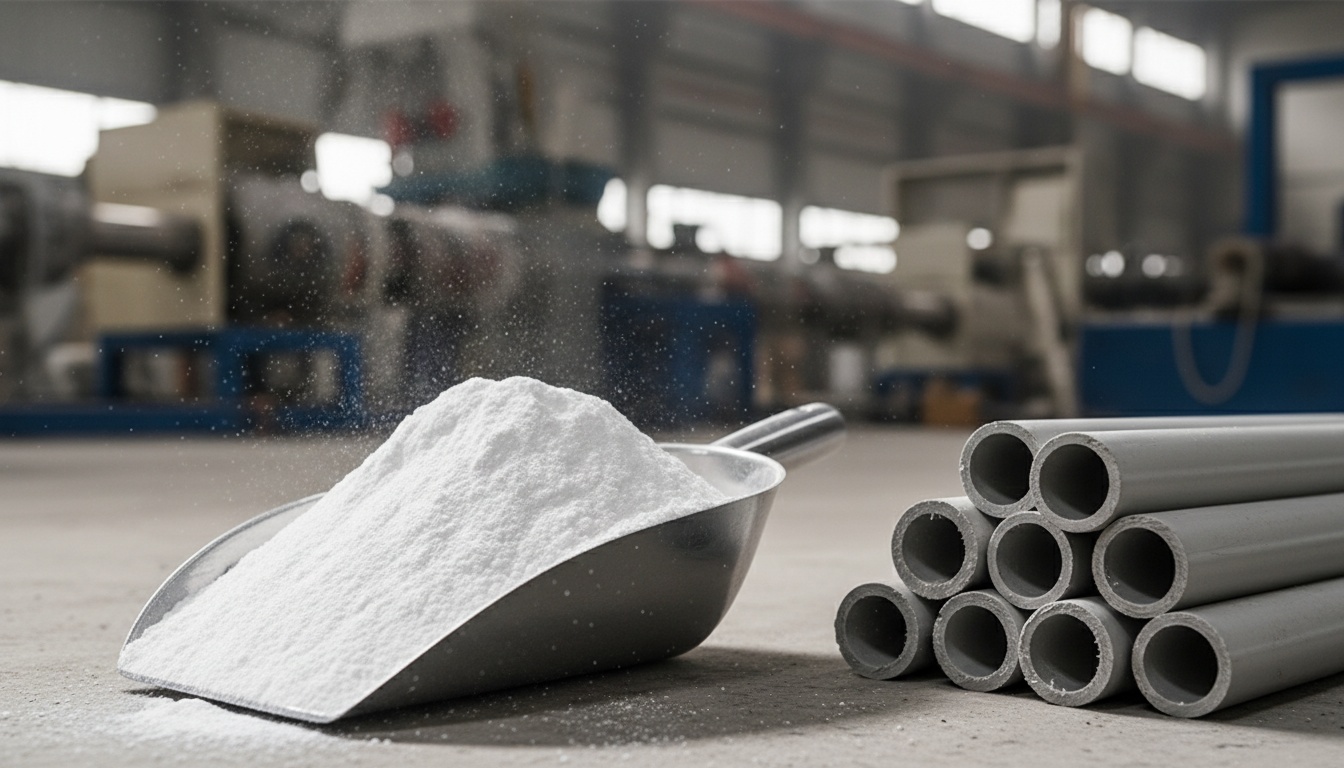
Suspension PVC (S-PVC, HS 3904.10) is a fine white powder, not a pellet, and it is graded on K-value, the viscosity number that stands in for molecular weight. K57–58 is the injection-moulding and rigid-bottle resin; K65–67 is the rigid extrusion workhorse for pressure pipe, drainage pipe, fittings and window profile, and is the grade most buyers in our markets mean when they say PVC; K70–71 is the flexible resin for cable insulation and sheathing, hose, footwear and calendered soft film, where it takes 30–60 phr of plasticiser. A datasheet then carries bulk density (0.45–0.60 g/cm³, which sets extruder output), particle size (typically 98% or more through 250 µm and no more than a few percent retained on 63 µm), volatiles (≤ 0.3%), residual vinyl chloride monomer (≤ 1 ppm, and ≤ 5 ppm for non-food grades), plasticiser absorption (for flexible grades) and fish-eyes. Ethylene-based and carbide-based (acetylene) PVC are chemically the same polymer, but carbide resin from coal-based producers tends to run higher in fish-eyes and residual impurities and is priced below ethylene-based Gulf, US and Southeast Asian resin. UN Comtrade 2025 export declarations under HS 3904 (the whole heading, which also carries compounds and copolymers) put the USA at 3.81 million MT at an average USD 1,028/MT, Thailand at 0.51 million MT at USD 964, Indonesia at 0.46 million MT at USD 665, Egypt at 0.18 million MT at USD 1,052, Saudi Arabia at 0.17 million MT at USD 809 and Canada at 0.17 million MT at USD 1,141. The US 2025 destination list separates resin from compound by price: Viet Nam 0.40 million MT at USD 666/MT, Türkiye 0.39 million MT at USD 683, India 0.11 million MT at USD 900, Egypt 0.06 million MT at USD 680 and Nigeria 0.06 million MT at USD 733 are commodity suspension resin; Canada at USD 1,134 and Mexico at USD 1,563 are compound-heavy cross-border flows.
The buyer is a pipe or profile extruder, a cable compounder, a calendering plant or a distributor, and it buys a delivered container of one K-value against the resin it runs now, because a change of resin means re-tuning the dry-blend formulation of stabiliser, lubricant, filler and impact modifier. PVC moves in 25 kg bags on pallets or 1,000–1,250 kg jumbo bags in 40-ft containers at about 24.75 MT each; the chartering desk is not the point here, and container freight is quoted through forwarders against the destination port. CBIL is a commodity brokerage company and brokers suspension PVC from the offtake traders of US, Gulf, Southeast Asian and Egyptian producers, and from trader parcels of prime and near-prime resin, against the producer's certificate of analysis and SGS or Intertek inspection at stuffing where the buyer wants it. Parcels run from a single 40-ft container to monthly programmes on FOB, CFR and CIF terms into Mersin, Alexandria, Mombasa, Karachi, Chittagong and Haiphong. Send the K-value you run, whether the application is rigid or flexible, the bulk-density band your extruder is tuned to, and the monthly volume, and we will work an origin and a landed number to it.
Need the ship as well? Our chartering desk prices part cargo and parcel space on LaycanDesk.
Indicative reference
$650–1,050 USD / MT
as at September 2026
Reference level only — not an offer, and reviewed quarterly. Levels shown are as at September 2026. Firm pricing is quoted per RFQ, subject to volume, terms and inspection.
Typical Specification
Specifications are indicative and adjusted to the agreed contract and destination requirements. Final spec confirmed on COA / SGS.
Available Grades
Applications
- Pressure, drainage & conduit pipe and fittings
- Window & door profile
- Cable insulation & sheathing compound
- Calendered rigid & flexible film and sheet
- Hose, footwear & flooring
- Rigid bottles & injection fittings
Category
Petroleum & Energy
Incoterms
FOB · CFR · CIF
Pricing basis
USD / MT
Inspection
SGS / Intertek at load port
PVC Resin (Suspension Grade) — buyer questions
Which K-value do I need?
Match the application, because K-value sets both melt viscosity and mechanical strength. K65–67 is the rigid extrusion grade for pipe, fittings and profile and is what most enquiries from pipe makers mean. K57–58 flows more easily for injection-moulded fittings and rigid bottles. K70–71 is for plasticised (flexible) compound in cable, hose and soft film, where the higher molecular weight holds the plasticiser and the mechanicals. Running K67 in an injection tool or K58 in a pressure pipe die is a rejected batch, not a substitute.
Does it matter whether the resin is ethylene-based or carbide-based?
For a pipe or profile line that runs to a pressure standard, usually yes. Both are the same polymer, but carbide (acetylene) route resin from coal-based producers tends to carry more fish-eyes, higher residual impurities and less lot-to-lot consistency, and it prices below ethylene-based Gulf, US and Southeast Asian resin. Cable and clear-film compounders are the most sensitive; some flexible and non-critical applications run carbide resin without trouble. State which route you accept on the enquiry so the offer is comparable.
Why do the same US declarations show USD 666/MT to one country and USD 1,563/MT to another?
Because HS 3904 is the whole heading and includes PVC compound and copolymers, not just suspension resin. UN Comtrade 2025 US export declarations show Viet Nam at USD 666/MT and Türkiye at USD 683 (commodity suspension resin), Mexico at USD 1,563 and Canada at USD 1,134 (cross-border flows heavy in compound). For a resin buyer the relevant reference is the first group; use the heading averages with care.
What parcel sizes and shipping terms do you work?
The unit is the 40-ft container, about 24.75 MT in 25 kg bags on pallets or 1,000–1,250 kg jumbo bags; 20-ft containers carry 17–20 MT depending on the route's road weight limits. Programmes run from one container to twenty or more a month. PVC resin is a container cargo, so our chartering desk is not involved; container freight is quoted through forwarders on CFR and CIF enquiries, or you nominate your own forwarder on FOB. Keep containers dry and out of direct sun at destination; the resin is hygroscopic enough to matter for volatiles if bags are stored badly.
Ready to source PVC Resin?
Send your quantity, specification, preferred Incoterms and destination port. We'll verify supply and respond with a workable offer — usually within one business day.
Have PVC Resin to sell? Submit an offer — we'll match it against live buyer demand.