
Millets
Pearl, foxtail, finger & the minor millets
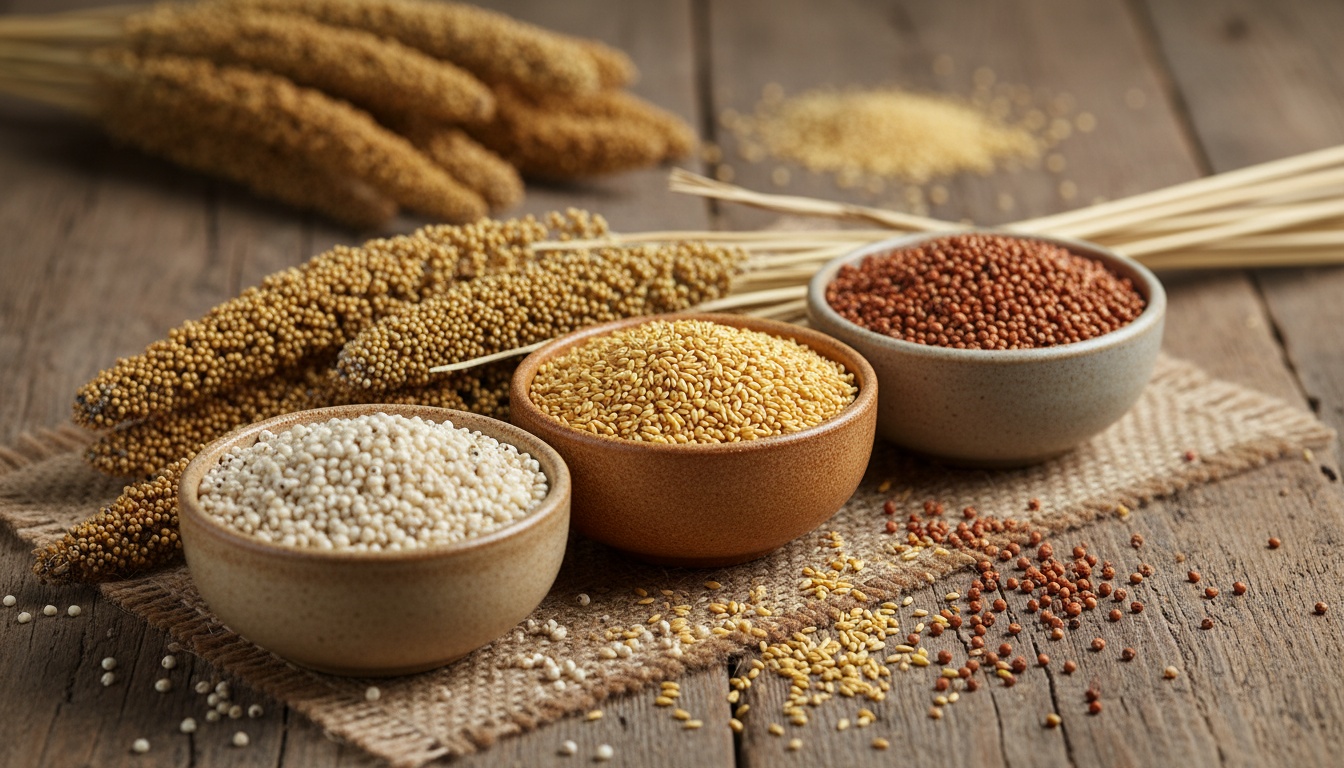
Millet is not one commodity, and treating it as one is how buyers end up with the wrong grain. Pearl millet (bajra) is the volume species — grey-green, bold seed, moving into flour milling, roti and flatbread manufacture and, in large tonnage, the bird-seed and feed trade, which is a genuinely different buyer paying a genuinely different price. Foxtail millet is the small golden grain the health-food and ready-to-cook rice-substitute trade wants, sold hulled and increasingly on a low-glycaemic-index story. Finger millet (ragi) is the reddish-brown grain milled into ragi flour for South Indian and East African staples and, separately, for infant-food manufacture, where the specification tightens sharply on aflatoxin and microbiological load. Kodo, little, barnyard and proso millet fill out the minor-millet basket for the same health-food channel, usually bought hulled and blended.
So the first question on any millet enquiry is species and form, not price. Whole millet for feed and bird-seed is bought on purity, admixture and test weight; hulled millet for human food is bought on hulling yield, broken percentage and colour, and prices well above it. Buyers come to millets rather than to sorghum or wheat when they need a gluten-free grain with a health-positioning story, and to bajra specifically when they need volume starch and a feed-economic price. Lots are machine-cleaned, destoned, gravity-separated and Sortex colour-sorted, certified by SGS or Intertek for species, purity, moisture, foreign matter, broken grain, aflatoxin and crop year, with phytosanitary and fumigation documentation. CBIL arranges 25kg and 50kg PP bags and 1 MT jumbo bags, container-load, on FOB, CFR and CIF terms.
Need the ship as well? Our chartering desk prices bagged and bulk grain freight on LaycanDesk.
Excluded origins are not offered, including product re-exported, blended or re-processed through a third country. Every lot moves with a certificate of origin naming the producing plant, mine or grower country, and nothing is quoted before the seller and loading point are known.
Indicative reference
$520–880 USD / MT
as at September 2026
Reference level only — not an offer, and reviewed quarterly. Levels shown are as at September 2026. Firm pricing is quoted per RFQ, subject to volume, terms and inspection.
Typical Specification
Specifications are indicative and adjusted to the agreed contract and destination requirements. Final spec confirmed on COA / SGS.
Available Grades
Applications
- Flour & flatbread milling
- Health food & ready-to-cook
- Infant food manufacture
- Bird seed & animal feed
Category
Agri-Foods, Spices & Nuts
Incoterms
FOB · CFR · CIF
Pricing basis
USD / MT
Inspection
SGS / Intertek at load port
Millets — buyer questions
Which millet species do I actually need?
Name the end product and the species follows. Flour milling, flatbread and bird-seed or feed volume points to pearl millet (bajra). Health-food and rice-substitute lines want hulled foxtail. Ragi flour for South Indian or East African staples, or for infant food, means finger millet. Kodo, little, barnyard and proso fill the minor-millet blends. Asking for 'millet' without a species gets you whatever the shipper is long on.
Why does hulled millet cost so much more than whole?
Hulling costs yield, and the two grades serve different buyers. Whole millet going to feed and bird-seed is bought on purity, admixture and test weight and prices accordingly. Hulled millet for human food is bought on hulling yield, broken percentage and colour, and every broken grain in the process is lost weight. Do not buy hulled for a feed application.
What tightens on infant-food grade ragi?
Aflatoxin and microbiological load, sharply. Infant-food buyers work to limits well below general food-grade tolerances, so the lot has to be pre-screened rather than tested after the fact, and the drying and storage history matters as much as the cleaning. Tell us it is infant-food destined at enquiry stage — it changes which lots we can even offer.
Ready to source Millets?
Send your quantity, specification, preferred Incoterms and destination port. Qualified requirements receive a workable offer against verified supply.
Have Millets to sell? Submit an offer — we'll match it against live buyer demand.
More in Pulses & Grains
Chickpeas
Kabuli by calibre in mm & Desi by count
Lentils
Red & green, whole and split, Laird to Eston
Pigeon Peas (Toor / Arhar)
Whole toor & toor dal from Myanmar and Tanzania
Mung Beans
Green gram by seed size, shine & sprouting grade
Kidney Beans (Rajma)
Light red, dark red & Rajma Chitra speckled
Sorghum
White food-grade & red feed-grade jowar
Black-Eyed Beans (Cowpeas)
Cream cowpeas with a black eye, sold on count per 100 g, colour and Sortex cleaning
Dried Peas (Yellow & Green)
Whole and split yellow and green peas by grade, bleach and splits, in bulk vessels and containers