
Mung Beans
Green gram by seed size, shine & sprouting grade
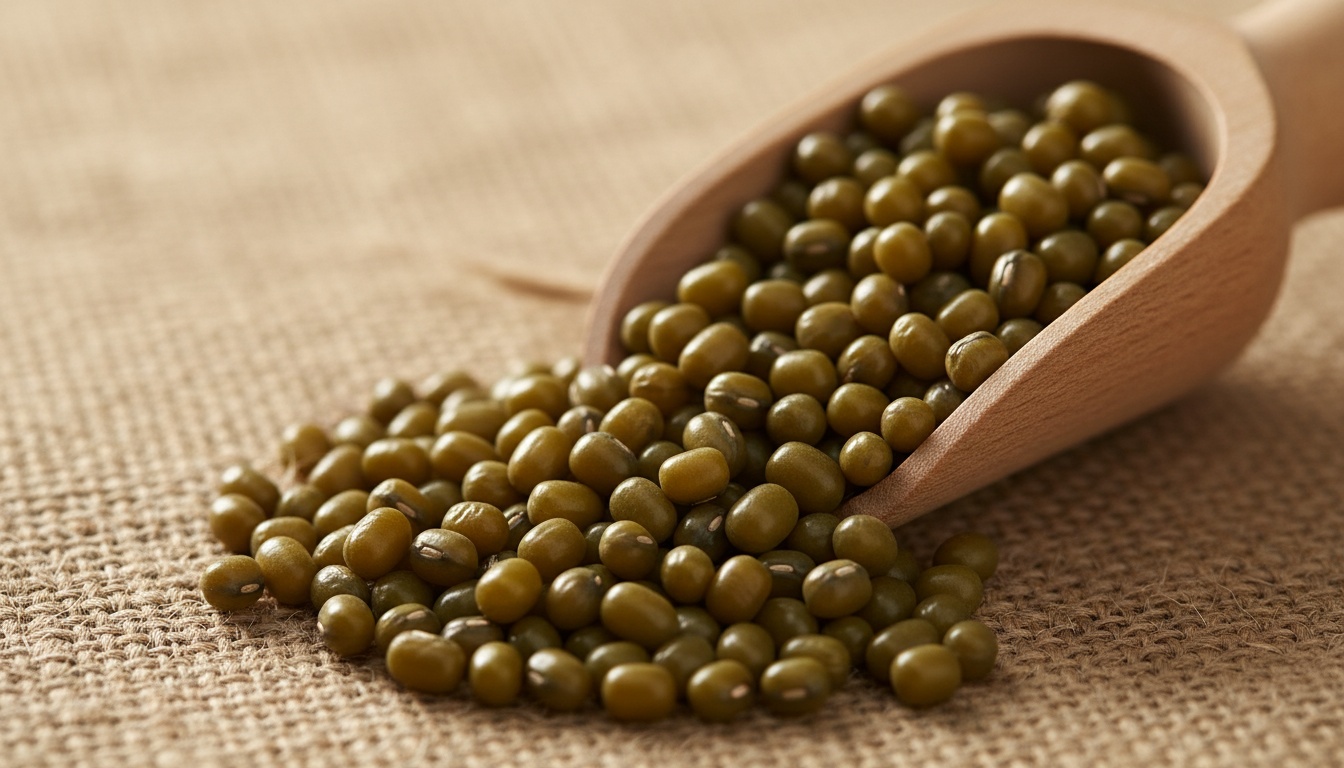
Mung beans are graded on two things buyers underrate until a shipment disappoints: seed size and shine. Size runs roughly 2.8mm, 3.0mm, 3.2mm and 3.5mm+, with the bolder grades commanding a premium; shine — the bright, glossy green of the seed coat — separates shiny from dull-class material and is what retail packers and Far Eastern buyers are paying for, because it reads as freshness on shelf. Neither can be fixed downstream. Then there is the fork that really matters: sprouting grade. Bean-sprout producers do not buy on appearance at all — they buy on germination, typically specifying ≥ 95%, and that is a function of gentle handling, drying temperature and crop age. A beautiful, bold, shiny lot that has been over-dried is worthless to a sprouter, and a lot that germinates perfectly may not be the one a retail packer wants.
Beyond whole green gram, the mill forms are moong dal chilka (split with the green skin on) and moong dal dhuli (split, skinned, the yellow washed dal), and urad — black gram, a different species traded on the same lane and often quoted alongside. Buyers pick mung over lentils or chickpeas when they need the fast-cooking, mild bean that sprouts, or the yellow washed dal that cooks light rather than heavy. Supply is machine-cleaned, gravity-separated, Sortex-sorted and destoned, certified by SGS or Intertek for size, purity, moisture, foreign matter, damaged and shrivelled seed, germination where sprouting grade is specified, and crop year, with phytosanitary and fumigation documentation. CBIL arranges 25kg and 50kg PP bags, container-load, on FOB, CFR and CIF terms.
Need the ship as well? Our chartering desk prices bagged and bulk grain freight on LaycanDesk.
Excluded origins are not offered, including product re-exported, blended or re-processed through a third country. Every lot moves with a certificate of origin naming the producing plant, mine or grower country, and nothing is quoted before the seller and loading point are known.
Indicative reference
$820–1,180 USD / MT
as at September 2026
Reference level only — not an offer, and reviewed quarterly. Levels shown are as at September 2026. Firm pricing is quoted per RFQ, subject to volume, terms and inspection.
Typical Specification
Specifications are indicative and adjusted to the agreed contract and destination requirements. Final spec confirmed on COA / SGS.
Available Grades
Applications
- Bean-sprout production
- Dal milling
- Retail packing
- Noodle & starch manufacture
- Food-service & catering
Category
Agri-Foods, Spices & Nuts
Incoterms
FOB · CFR · CIF
Pricing basis
USD / MT
Inspection
SGS / Intertek at load port
Mung Beans — buyer questions
What is sprouting grade and can I just buy a good-looking lot instead?
No, and this is the most common mistake on this line. Sprouting grade is bought on certified germination — usually ≥ 95% — which comes from gentle handling, controlled drying temperature and current crop. A bold, shiny lot that was dried too hot looks perfect and germinates poorly. If you are running a sprout line, specify germination and have it tested; appearance tells you nothing about it.
How much does seed size and shine actually change the price?
Materially. Bold 3.5mm+ shiny material carries a clear premium over 2.8mm dull-class beans, and neither size nor shine can be improved after harvest. It is worth paying for when the whole bean is visible to your customer — retail packing and Far Eastern trade — and worth skipping entirely if you are splitting it into moong dal, where the skin comes off anyway.
What is the difference between moong dal chilka and dhuli?
Chilka is split with the green skin left on — more body, more fibre, holds texture. Dhuli is split and skinned, the yellow washed dal that cooks light and soft and is what most retail and food-service khichdi and light-dal applications use. They are not interchangeable in a recipe, so name which one you mean.
Ready to source Mung Beans?
Send your quantity, specification, preferred Incoterms and destination port. Qualified requirements receive a workable offer against verified supply.
Have Mung Beans to sell? Submit an offer — we'll match it against live buyer demand.
More in Pulses & Grains
Chickpeas
Kabuli by calibre in mm & Desi by count
Lentils
Red & green, whole and split, Laird to Eston
Pigeon Peas (Toor / Arhar)
Whole toor & toor dal from Myanmar and Tanzania
Kidney Beans (Rajma)
Light red, dark red & Rajma Chitra speckled
Millets
Pearl, foxtail, finger & the minor millets
Sorghum
White food-grade & red feed-grade jowar
Black-Eyed Beans (Cowpeas)
Cream cowpeas with a black eye, sold on count per 100 g, colour and Sortex cleaning
Dried Peas (Yellow & Green)
Whole and split yellow and green peas by grade, bleach and splits, in bulk vessels and containers