
1401 Basmati Rice
≈ 7.60 mm Pusa — firm grain for Sella programmes
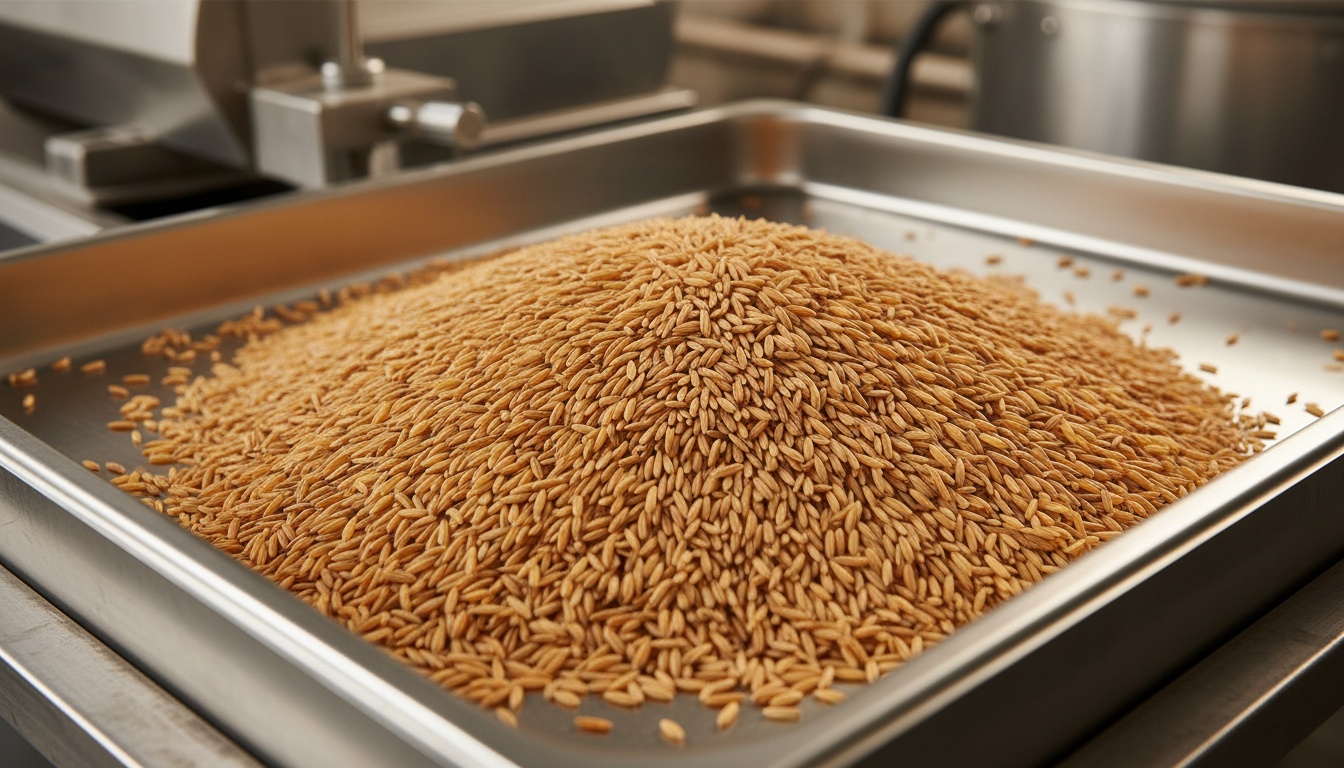
Pusa 1401 sits alongside 1509 in the value tier of the basmati family, at roughly 7.60 mm average milled length and cooking out to around 15 mm. What distinguishes it in the trade is grain firmness rather than length: 1401 holds its structure well through parboiling and milling, which is why a large share of the crop moves as Golden Sella and Steam rather than raw white, and why parboiling mills favour it for head-rice yield. It contracts on the standard basmati sheet — broken ≤ 1% or ≤ 2%, moisture ≤ 13%, variety purity ≥ 95%, ageing 12–18 months, crop year declared — and carries the same aroma family as its Pusa sibling.
Buy 1401 where the rice will be parboiled, cooked in volume and held: institutional biryani and pilaf programmes, catering, canteen and camp feeding contracts in the Gulf and South Asia, and private-label Sella lines competing on price. Its firmness is a genuine operational advantage in a kitchen serving over a long window — it resists going soft in a holding cabinet better than a softer-grained raw white. Where it does not belong is a premium display pack, where 1121 or 1718 carry the length, or a raw-white aroma-forward programme, where Traditional Basmati is the product. Between 1401 and 1509 the practical difference is narrow and often comes down to which mill has allocation at the better price in a given week; where they diverge is that 1509 arrives earlier in the season and 1401 tends to perform slightly better through a parboiling line. CBIL contracts against SGS grading of average milled length, broken, moisture, admixture and crop year at load port, in 25 kg and 50 kg PP bags, container-load, on FOB, CFR and CIF terms.
Need the ship as well? Our chartering desk prices bagged rice and sugar freight on LaycanDesk.
Excluded origins are not offered, including product re-exported, blended or re-processed through a third country. Every lot moves with a certificate of origin naming the producing plant, mine or grower country, and nothing is quoted before the seller and loading point are known.
Indicative reference
$880–1,120 USD / MT
as at September 2026
Reference level only — not an offer, and reviewed quarterly. Levels shown are as at September 2026. Firm pricing is quoted per RFQ, subject to volume, terms and inspection.
Typical Specification
Specifications are indicative and adjusted to the agreed contract and destination requirements. Final spec confirmed on COA / SGS.
Available Grades
Applications
- Institutional biryani & pilaf
- Catering & camp feeding
- Private-label Sella lines
- Parboiling mill feedstock
- Re-export
Category
Agriculture & Fertilizers
Incoterms
FOB · CFR · CIF
Pricing basis
USD / MT
Inspection
SGS / Intertek at load port
1401 Basmati Rice — buyer questions
How should I choose between 1401 and 1509?
They are close enough that price and allocation usually decide it. Both are Pusa-family value basmati around 7.60–7.90 mm. 1509 arrives earlier in the season and is the more widely quoted of the two; 1401 tends to hold up slightly better through a parboiling line and in a holding cabinet. If you are buying Sella for volume feeding, ask us for both and take the better number that week.
Why is most 1401 sold as Sella rather than raw white?
Because the grain's firmness pays off there. 1401 comes through parboiling and milling with good head-rice yield and low breakage, so mills route it to Golden and White Sella where that firmness becomes cooking tolerance. Raw white 1401 exists but the variety's commercial strength is on the parboiled side.
Is 1401 suitable for retail packing?
For price-point and private-label retail, yes — it is a genuine basmati with the aroma family intact. For a premium pack that shows the grain or advertises a length figure, no: at around 7.60 mm it will not stand next to 1121 at 8.30–8.40 mm, and a buyer comparing packs on shelf will see it immediately.
What ageing should I contract for?
Twelve months minimum with the crop year stated, same as any basmati. Under-aged grain cooks sticky and will not elongate regardless of variety or processing form. On Sella specifically, ageing also affects how the grain takes colour and how consistently it cooks, so it is worth specifying rather than assuming.
Ready to source 1401 Basmati?
Send your quantity, specification, preferred Incoterms and destination port. Qualified requirements receive a workable offer against verified supply.
Have 1401 Basmati to sell? Submit an offer — we'll match it against live buyer demand.
More in Rice
Basmati Rice
1121, Pusa & Traditional — raw, steam and Sella
1121 Basmati Rice
8.30–8.40 mm milled — the Gulf length benchmark
1718 Basmati Rice
≈ 8.0 mm — 1121 length with better field consistency
1509 Basmati Rice
7.60–7.90 mm — the value basmati, first to market
Traditional Basmati Rice
Taraori, Dehraduni & Basmati 370 — aroma over length
Parboiled Rice
Golden & white Sella, 5% and 25% broken
Long-Grain White Rice
5%, 15% and 25% broken — the volume milling grade
IRRI-6 Rice
Pakistan's volume long grain — 5% to 25% broken
IR64 Rice
The global non-aromatic benchmark — raw & parboiled
PK-386 Rice
6.8–7.2 mm Pakistani long grain, light aroma
PR-11 & PR-14 Rice
Punjab long grain, Sella-led for Africa & the Gulf
Sona Masoori Rice
South Indian medium grain — light, low starch, aged