
Rubber Process Oils (TDAE, RAE, MES, Naphthenic) & Precipitated Silica for Tyres
REACH-compliant low-PAH extender oils and highly dispersible precipitated silica for tyre and rubber compounders
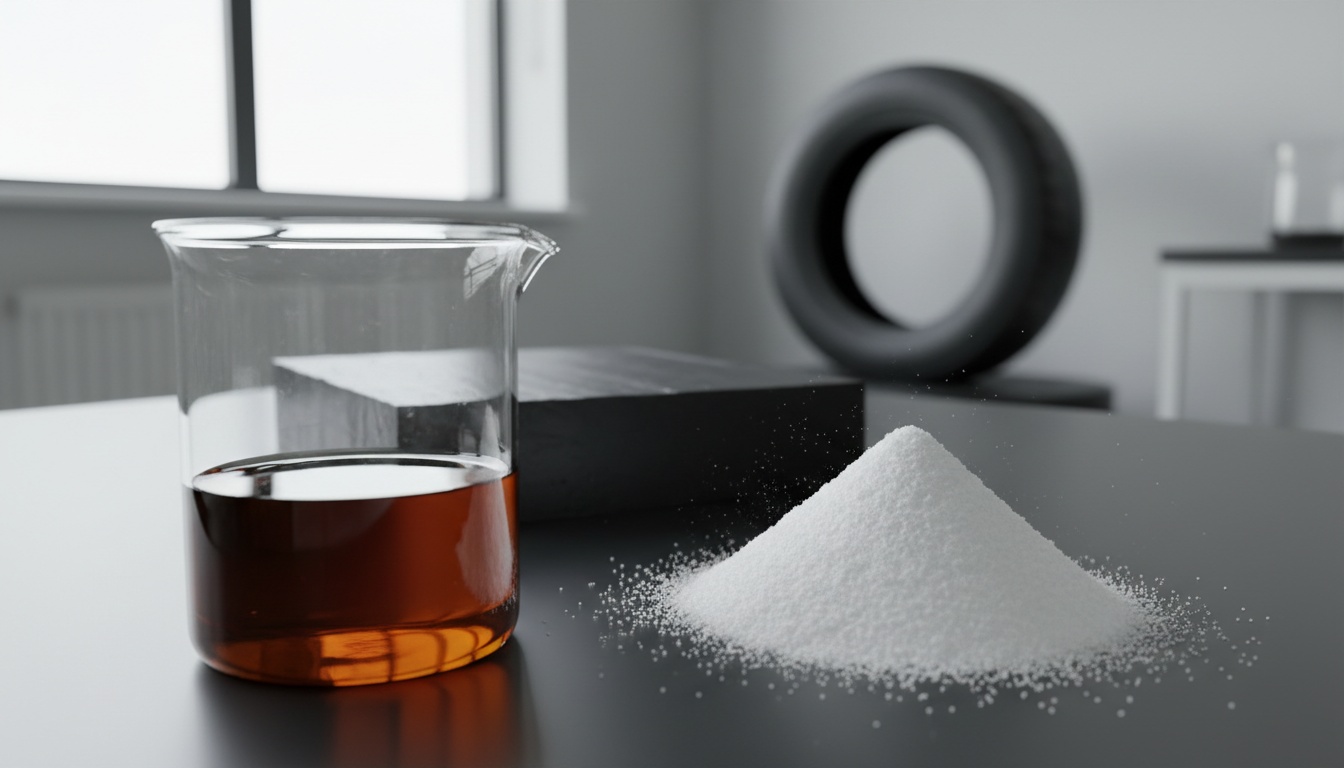
Process oil is the second largest ingredient in a tyre tread after the polymer, and the trade changed when REACH Annex XVII entry 50 restricted extender oils in tyres sold in the EU to less than 1 mg/kg benzo[a]pyrene and less than 10 mg/kg for the sum of eight listed PAHs, from 1 January 2010. The oils that pass are TDAE (treated distillate aromatic extract), RAE (residual aromatic extract), MES (mild extraction solvate) and naphthenic oils; the highly aromatic DAE oils they replaced do not. A process oil is bought on kinematic viscosity at 100 °C, aniline point, carbon-type distribution (aromatic, naphthenic and paraffinic carbon), glass transition temperature, flash and pour point, density and the PAH figures on the certificate of analysis, and the compounder matches it to the polymer: TDAE and RAE to SBR and natural rubber treads, MES to lower-aromatic compounds, naphthenic to EPDM, butyl and light-coloured goods. Process oils are MARPOL Annex I cargo and move in flexitanks of about 20-22 t, ISO tanks and 180-210 kg drums or in bulk parcels.
Precipitated silica is the second reinforcing filler, and highly dispersible silica (HDS) with a silane coupling agent is what makes the low-rolling-resistance passenger tread. It is bought on BET and CTAB surface area, loss on drying, pH, oil absorption and sieve residue, and tyre plants approve a grade on the mixing line before switching. Madhu Silica at Bhavnagar in Gujarat lists conventional, easy-dispersible and highly dispersible grades for tyres. UN Comtrade 2024 export declarations under HS 2811.22 (silicon dioxide) total about USD 3.45 billion and 2.47 million MT across 96 reporters: China USD 840 million and 1.33 million MT, Germany USD 445 million and 171,000 MT, the United Kingdom USD 294 million, Japan USD 282 million, the USA USD 281 million, France USD 198 million and 111,000 MT, Korea USD 154 million, Belgium USD 138 million, Poland USD 113 million, Taiwan USD 97 million, India USD 83 million and 86,000 MT and Thailand USD 67 million; the code also covers fumed and other silicas, so it overstates precipitated grades. The buyer is a tyre or retread plant, a footwear sole compounder, a conveyor-belt, hose or seal maker, or a rubber-chemicals distributor. CBIL is a commodity brokerage company and brokers TDAE, RAE, MES and naphthenic process oils from refiners in India, Europe and the USA, and precipitated silica from plants in India, Europe, the USA, China, Japan and Korea, on FOB, CFR and CIF terms against the producer's certificate of analysis, the refinery or plant named on it, and SGS or Intertek inspection at load where the buyer asks. Send the grade you run today, viscosity and aniline point window or BET/CTAB window, monthly volume, pack and destination.
Excluded origins are not offered, including product re-exported, blended or re-processed through a third country. Every lot moves with a certificate of origin naming the producing plant, mine or grower country, and nothing is quoted before the seller and loading point are known.
Indicative reference
Per MT, on grade and pack USD / MT
as at September 2026
Reference level only — not an offer, and reviewed quarterly. Levels shown are as at September 2026. Firm pricing is quoted per RFQ, subject to volume, terms and inspection.
Typical Specification
Specifications are indicative and adjusted to the agreed contract and destination requirements. Final spec confirmed on COA / SGS.
Available Grades
Applications
- Passenger and truck tyre treads (TDAE, RAE, HDS)
- Tyre retreading compounds
- EPDM profiles and light-coloured goods (naphthenic oil)
- Footwear soles and translucent compounds (silica)
- Conveyor belts, hoses and seals
- Silicone and technical rubber reinforcement
Category
Petroleum & Energy
Incoterms
FOB · CFR · CIF
Pricing basis
USD / MT
Inspection
SGS / Intertek at load port
Rubber Process Oils (TDAE, RAE, MES, Naphthenic) & Precipitated Silica for Tyres — buyer questions
What makes a process oil REACH-compliant?
REACH Annex XVII entry 50 restricts extender oils used in tyres placed on the EU market to less than 1 mg/kg benzo[a]pyrene and less than 10 mg/kg for the sum of eight listed PAHs, in force since 1 January 2010. TDAE, RAE, MES and naphthenic oils meet it; the old highly aromatic DAE oils do not. The PAH figures sit on the certificate of analysis of each lot.
TDAE, RAE or MES: which one?
TDAE and RAE are the aromatic-rich choices for SBR and natural rubber treads where compatibility with the polymer and wet grip matter; MES is a lower-aromatic paraffinic-naphthenic oil for compounds that need less aromaticity; naphthenic oils suit EPDM, butyl and light-coloured goods. The compounder matches viscosity at 100 °C, aniline point and carbon-type distribution to the grade already approved, and trials before switching.
What is highly dispersible silica?
Precipitated silica engineered to break down and disperse in the rubber during mixing, used with a silane coupling agent in low-rolling-resistance passenger treads. It is bought on BET and CTAB surface area, loss on drying, pH and oil absorption, and a tyre plant approves each grade on its own mixing line before it goes into a programme.
Who exports silica and how does it ship?
UN Comtrade 2024 declarations under HS 2811.22 are led by China (USD 840 million, 1.33 million MT), Germany, the United Kingdom, Japan, the USA, France, Korea, Belgium, Poland, Taiwan, India and Thailand; the code also includes fumed and other silicas. Precipitated silica has a low bulk density and ships in paper bags on pallets or jumbo bags, so the container load is confirmed per grade.
Ready to source Process Oil & Silica?
Send your quantity, specification, preferred Incoterms and destination port. Qualified requirements receive a workable offer against verified supply.
Have Process Oil & Silica to sell? Submit an offer — we'll match it against live buyer demand.
More in Rubber: Natural TSR, Latex & SBR
Natural Rubber: TSR 10, TSR 20 & RSS 3
Technically specified rubber TSR 10 and TSR 20 (STR, SIR, SMR, SVR) and ribbed smoked sheet RSS 3 in pallets
Natural Rubber Latex Concentrate (60% DRC, HA & LA-TZ)
Centrifuged 60% DRC latex, high-ammonia and low-ammonia TZ, to ISO 2004 in ISO tanks, flexibags or drums
Synthetic Rubber: SBR 1502, SBR 1712 & Polybutadiene
Emulsion SBR 1502 and oil-extended SBR 1712, and high-cis polybutadiene (BR), in bales by the container
Specialty Synthetic Rubbers: Butyl (IIR), Halobutyl (BIIR / CIIR), EPDM & NBR
Butyl and bromobutyl for inner liners and stoppers, EPDM for seals and roofing, NBR for oil-resistant goods, in bales by the container