
Sulphur Powder (Micronized)
Micronized 200–325 mesh for agriculture & rubber
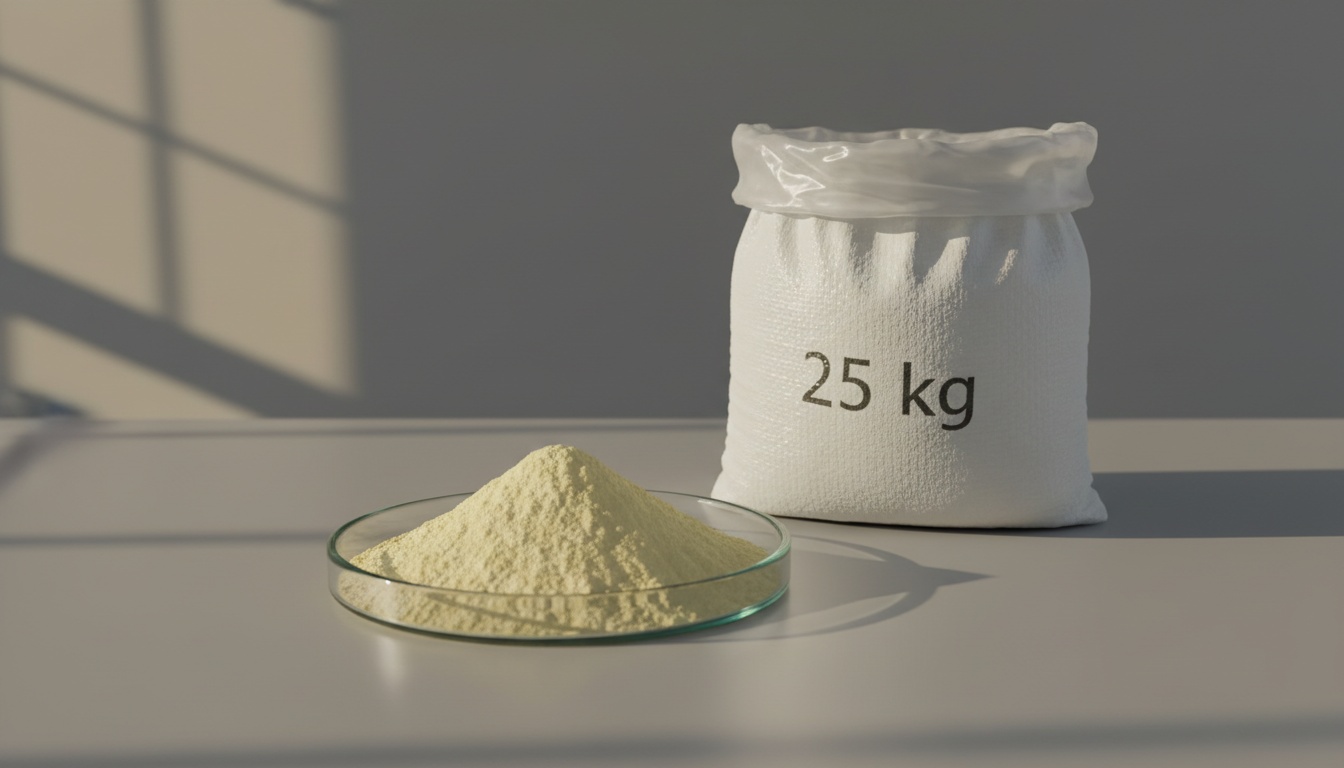
Sulphur powder is elemental sulphur milled to a controlled particle size, and unlike the bulk forms it is bought on fineness rather than on handling. Mesh is the governing number: 200 mesh (about 74 microns) is the general agricultural and industrial grade, 300 and 325 mesh (roughly 45–48 microns) are the fine grades demanded where surface area drives performance, and true micronized product runs finer still. Fineness is not vanity — for a fungicidal dust or a wettable powder the sulphur works by sublimation and contact at the leaf surface, so smaller particles mean more surface area, better coverage per kilogram applied and better suspension in a spray tank. In rubber compounding, the same fineness governs how evenly the sulphur disperses through the polymer and therefore how uniformly the batch cures. Purity runs 99.5–99.9% with moisture ≤ 0.5%, ash ≤ 0.1%, acidity ≤ 0.02% and a residue on the nominated mesh that is the real acceptance test on delivery.
You buy powder rather than granular, prilled or lump when the sulphur is applied as a solid and never melted — orchard and vineyard dusting against powdery mildew, wettable-powder and water-dispersible formulations, soil amendment on alkaline ground where sulphur is used to pull pH down, rubber and tyre compounding, and as a raw material into agrochemical formulation and specialty chemicals. It is emphatically not the product for an acid plant: you would be paying a milling premium for material you are about to melt, and handling a dust hazard for no reason. The practical caution with powder is exactly that dust — fine sulphur is readily ignitable and static-prone, so it is packed in lined PP bags, kept dry, and handled with earthing and dust control at the point of use. CBIL supplies micronized sulphur at nominated mesh against COA and SGS verification of purity, mesh residue, moisture, ash and acidity, in 25 kg and 50 kg bags and 1 MT jumbo bags on FOB, CFR and CIF terms — tell us the mesh your formulation calls for rather than asking for powder generically, because the grades are not interchangeable.
Need the ship as well? Our chartering desk prices Oman and Red Sea to India sulphur and fertilizer freight on LaycanDesk.
Excluded origins are not offered, including product re-exported, blended or re-processed through a third country. Every lot moves with a certificate of origin naming the producing plant, mine or grower country, and nothing is quoted before the seller and loading point are known.
Indicative reference
$185–320 USD / MT
as at September 2026
Reference level only — not an offer, and reviewed quarterly. Levels shown are as at September 2026. Firm pricing is quoted per RFQ, subject to volume, terms and inspection.
Typical Specification
Specifications are indicative and adjusted to the agreed contract and destination requirements. Final spec confirmed on COA / SGS.
Available Grades
Applications
- Agricultural dusting & fungicide
- Wettable powder / WDG formulation
- Soil pH reduction
- Rubber vulcanisation
- Agrochemical & specialty chemicals
Category
Petroleum & Energy
Incoterms
FOB · CFR · CIF
Pricing basis
USD / MT
Inspection
SGS / Intertek at load port
Sulphur Powder (Micronized) — buyer questions
Which mesh should I specify?
Let the application decide. 200 mesh is the workhorse for general agricultural dusting and industrial use. 300 and 325 mesh are what you want for wettable powders, water-dispersible granules and any foliar application where suspension quality and leaf coverage matter, and for rubber compounding where dispersion drives cure uniformity. Finer costs more and gains you nothing if the formulation does not need it — so nominate the mesh from your spec sheet rather than ordering powder generically.
Can I use sulphur powder in an acid plant instead of granular?
You could, but it would be an expensive mistake. Powder carries a milling premium and a serious dust-handling burden, and every bit of that value is destroyed the moment the material melts. Acid plants, DAP/MAP producers and leach circuits should be on granular or lump. Powder is for applications where the sulphur stays a solid.
How quickly does elemental sulphur act as a soil amendment?
Slowly, and deliberately so. Soil bacteria have to oxidise elemental sulphur to sulphate before a plant can use it or before it acidifies the soil, and that is temperature-, moisture- and particle-size-dependent — typically weeks to months. Finer powder oxidises faster because of surface area. If you need sulphur nutrition inside the current season, use a sulphate fertilizer; use elemental powder for sustained pH correction and long-term sulphur build.
What are the handling precautions?
Fine sulphur dust is combustible and can be ignited by static discharge, so it ships in lined PP bags kept dry and sealed, and it should be handled with bonding and earthing, dust extraction, and no ignition sources at the transfer point. Keep it away from oxidisers. This is routine in agrochemical and rubber plants but it is worth confirming your site is set up for it before ordering in volume.
Ready to source Sulphur Powder?
Send your quantity, specification, preferred Incoterms and destination port. Qualified requirements receive a workable offer against verified supply.
Have Sulphur Powder to sell? Submit an offer — we'll match it against live buyer demand.
More in Sulphur (Granular & Lump)
Lump Sulphur (Crushed)
Crushed block sulphur, 99.8% min, bulk & jumbo bags
Granular Sulphur
Formed 2–6 mm granules, low friability, deep-sea grade
Prilled Sulphur
Uniform 1–4 mm prills for bagged & blended use
Sulphur Bentonite 90%
90% S pastilles that disperse on contact with moisture
Liquid Sulphur (Molten)
Molten sulphur at 135–145°C, no forming, no dust
Insoluble Sulphur (IS 60 / IS 90 / HD Grades)
Polymeric sulphur for tyre vulcanisation, bought on insoluble content and thermal stability