
Aluminium EC Wire Rod (1350 EC Grade & 6201 Alloy, 9.5 mm)
Continuous-cast 1350 EC-grade and 6201 alloy redraw rod for conductor, cable and wire drawers, by conductivity, tensile and coil weight
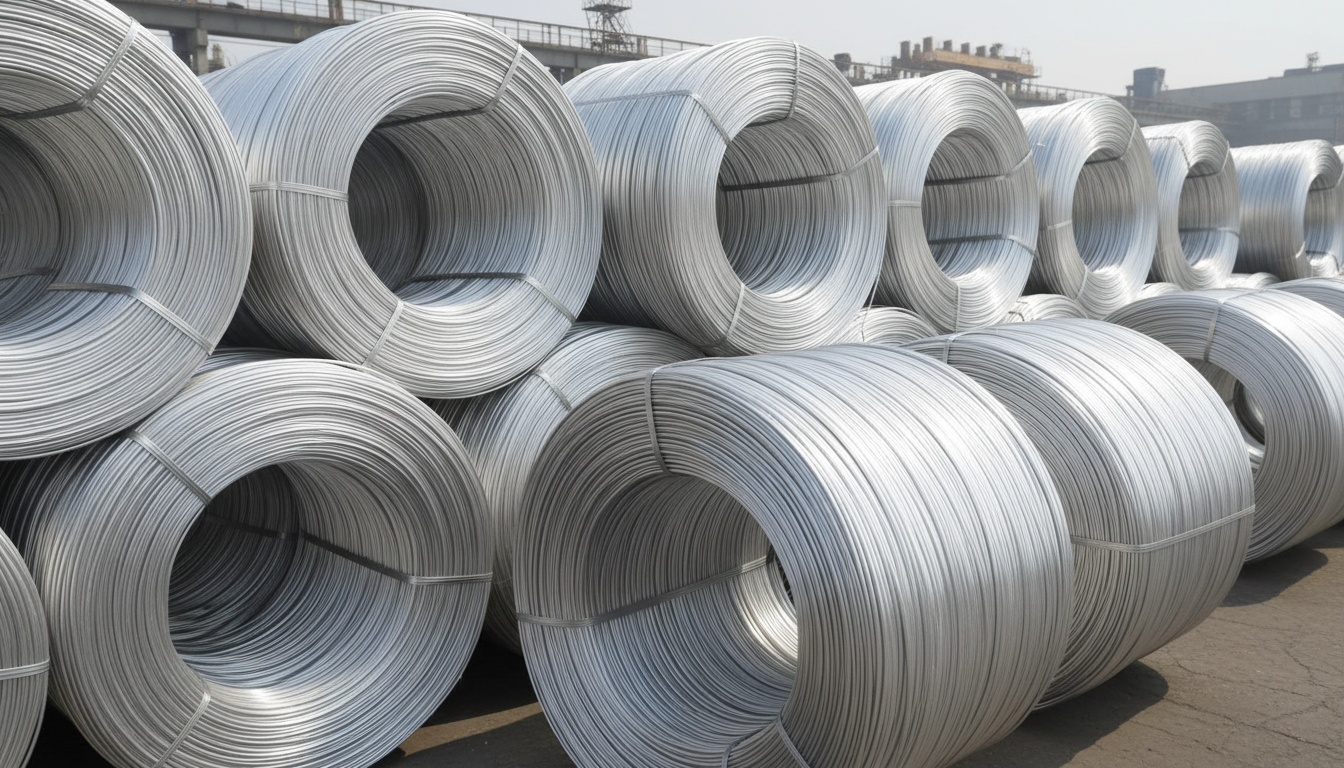
EC wire rod is the feedstock of every aluminium overhead conductor and most aluminium building wire, and it is bought on conductivity first. Aluminium 1350 (designated EC, electrical conductor, before 1975) is at least 99.5% aluminium with iron and silicon held low, and ASTM B233 covers the redraw rod from 9.52 mm (0.375 in) to 25.4 mm in diameter for drawing into conductor wire; typical rod data show 61–63% IACS depending on temper, with tensile strength around 95–130 MPa in the H12 and H14 tempers cable makers order and elongation over 200 mm reported on the certificate. Alloy 6201 rod is the magnesium-silicon alloy drawn and then solution-treated and aged to T81 for all-aluminium-alloy conductor (AAAC) under ASTM B398: in the heat-treated wire it gives tensile strength above 46,000 psi with conductivity above 52.5% IACS, so the buyer specifies the rod's chemistry and the wire properties it must reach after treatment. Nearly all commercial rod is made on continuous casting and rolling lines fed from the smelter potline or from remelt, delivered as coils of up to about 2 MT, and certified to ASTM B233, EN 1715, GB/T 6892 or the buyer's national standard with chemistry, diameter, tensile, elongation, conductivity or resistivity, and surface condition. Because the electrical properties depend on trace impurities, the buyer holds the rod mill to the chemistry, not just to the conductivity number.
Customs separates unalloyed rod (HS 7605.11, 1350 and other 1xxx rod above 7 mm) from alloyed rod (HS 7605.21, 6201 and other alloys). UN Comtrade 2024 export declarations under HS 7605.11 total about USD 3.52 billion and 1.13 million MT, with India at 172,000 MT (about USD 2,649/MT declared), Canada 155,000 MT, Malaysia 101,000 MT, Norway and Iceland following, Oman 39,000 MT, Türkiye 25,000 MT and Egypt 2,000 MT; under HS 7605.21 the total is about USD 963 million and 255,000 MT, led by the Netherlands, Canada, Malaysia (20,000 MT), India (17,000 MT) and China. India has kept a countervailing duty on aluminium wire rod above 7 mm from Malaysia since September 2021 and opened its sunset review in April 2026, so the rate at the discharge port is checked before any Malaysian rod is offered into India. CBIL is a commodity brokerage company and brokers 1350 EC and 6201 rod from smelter rod mills in India, Malaysia, Türkiye and Egypt to conductor and cable manufacturers, building-wire drawers and the stockists who serve them, against the mill test certificate (chemistry, diameter, temper, tensile, elongation, conductivity or resistivity, coil weight) stating the country of smelt and the country of cast, with no metal of excluded origin in the chain; the EU, UK and US check smelt-and-cast origin on import, and rod under HS 7605 is on the EU CBAM Annex I list, so the EU importer needs the mill's embedded-emissions data. Coils are strapped on wooden pallets or skids, film-wrapped, in 20-ft containers (about 20–24 MT per box), on FOB, CFR and CIF terms; price is agreed per MT as LME aluminium plus a conversion premium per the mill's basis. Send the alloy and temper, diameter, conductivity floor, coil weight, monthly tonnage and discharge port, and the enquiry is screened and worked against it.
Excluded origins are not offered, including product re-exported, blended or re-processed through a third country. Every lot moves with a certificate of origin naming the producing plant, mine or grower country, and nothing is quoted before the seller and loading point are known.
Indicative reference
Per MT, LME aluminium plus mill conversion premium USD / MT
as at September 2026
Reference level only — not an offer, and reviewed quarterly. Levels shown are as at September 2026. Firm pricing is quoted per RFQ, subject to volume, terms and inspection.
Typical Specification
Specifications are indicative and adjusted to the agreed contract and destination requirements. Final spec confirmed on COA / SGS.
Available Grades
Applications
- AAC, ACSR & AAAC overhead conductors
- Building wire & service cable
- Cable screening & armouring wire
Category
Metals & Recycled Scrap
Incoterms
FOB · CFR · CIF
Pricing basis
USD / MT
Inspection
SGS / Intertek at load port
Aluminium EC Wire Rod (1350 EC Grade & 6201 Alloy, 9.5 mm) — buyer questions
What conductivity should 1350 EC rod reach?
Aluminium 1350 is at least 99.5% aluminium and typical rod data show about 61–63% IACS depending on temper, with the O temper highest and H14 lowest. Cable makers usually order H12 or H14 rod at 9.5 mm and specify a conductivity floor of 61% IACS with the tensile and elongation to match. Because conductivity is set by trace impurities, hold the mill to the chemistry limits as well as the number.
When is 6201 alloy rod used instead of 1350?
For all-aluminium-alloy conductor (AAAC) and other duties needing strength without a steel core. 6201 rod is drawn to wire and then solution-treated and aged to T81; ASTM B398 wire reaches tensile strength above 46,000 psi with conductivity above 52.5% IACS. The rod is specified on chemistry and on the wire properties it must deliver after heat treatment.
Which HS codes apply and what documents travel with the rod?
HS 7605.11 for unalloyed rod above 7 mm (1350 and other 1xxx grades) and HS 7605.21 for alloyed rod (6201 and others). The mill test certificate reports chemistry, diameter, temper, tensile, elongation, conductivity or resistivity and coil weight and states the country of smelt and of cast; EU importers also need the mill's CBAM embedded-emissions data.
Are there duties I should check?
India has kept a countervailing duty on aluminium wire rod above 7 mm from Malaysia since September 2021 and opened its sunset review in April 2026, and the EU, UK and US apply smelt-and-cast origin checks on all aluminium imports. Confirm the rate for the producing mill and origin at your discharge port before contracting.
Ready to source Aluminium Wire Rod?
Send your quantity, specification, preferred Incoterms and destination port. Qualified requirements receive a workable offer against verified supply.
Have Aluminium Wire Rod to sell? Submit an offer — we'll match it against live buyer demand.
More in Aluminium Sheet, Coil & Foil
Aluminium Sheet & Coil (1050, 1100, 3003, 3105, 5052, 5083, 6061)
Rolled aluminium sheet and coil over 0.2 mm by alloy, temper, gauge and finish to EN 485 and ASTM B209
Aluminium Foil (8011, 8006, 8021, 8079, 1235, 3003)
Household, container, converter and pharma foil 0.2 mm and under, jumbo rolls by alloy, temper and gauge
Aluminium Circles & Discs (1050, 1060, 3003)
DC and CC aluminium circles for cookware, lighting and traffic signs by alloy, temper, diameter and thickness
Aluminium Tread Plate (5-Bar Chequer Plate, 3003 / 5052 / 6061)
Five-bar and diamond-pattern aluminium chequer plate to ASTM B632 and EN 1386 for vehicle floors, ship decks, stairs and platforms