
Aluminium Tread Plate (5-Bar Chequer Plate, 3003 / 5052 / 6061)
Five-bar and diamond-pattern aluminium chequer plate to ASTM B632 and EN 1386 for vehicle floors, ship decks, stairs and platforms
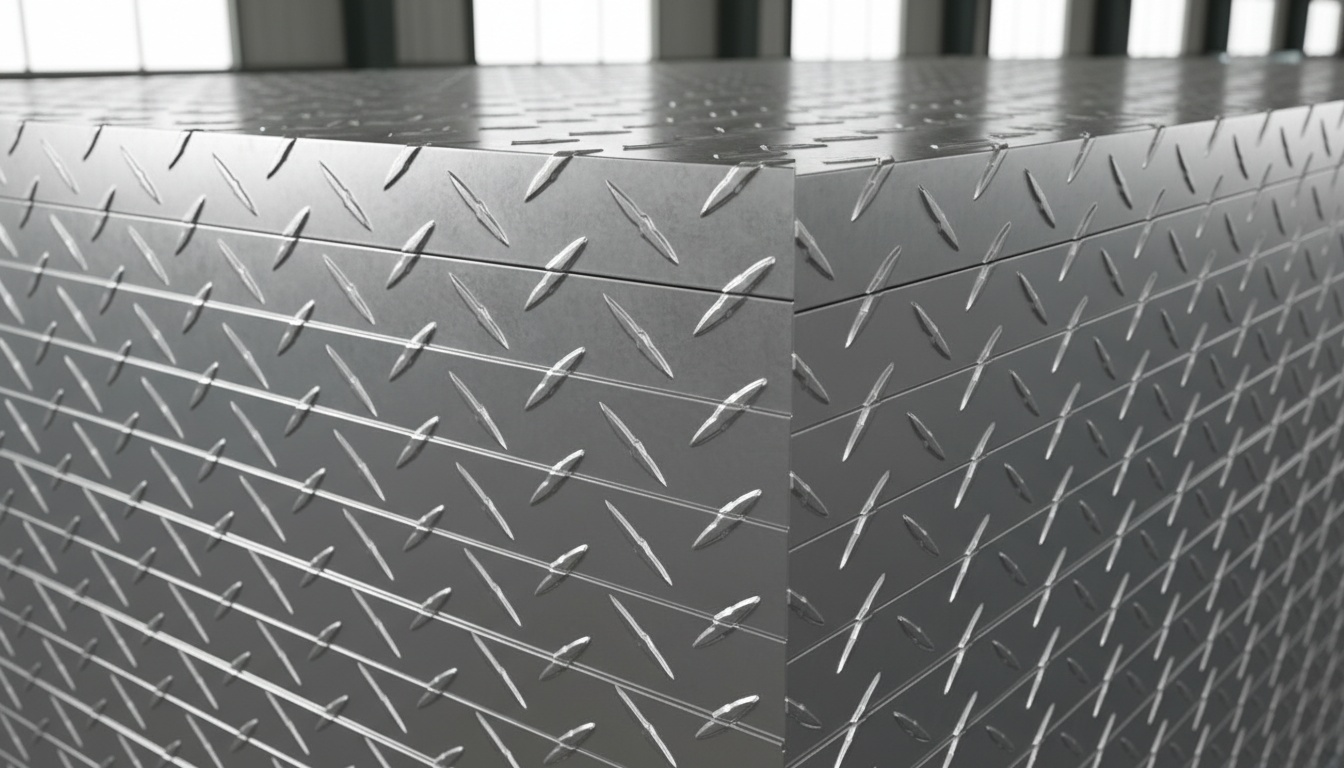
Tread plate is flat-rolled aluminium finished with a raised anti-slip pattern on one face and a smooth back: the five-bar pattern is the standard for truck and trailer floors, toolboxes, step plates and ramps, while diamond and propeller patterns are decorative and light-duty. The alloy sets the duty. 3003 is the low-cost manganese alloy for van floors, toolboxes and cladding where the plate is not structural; 5052 and the 5083 / 5086 marine grades carry more magnesium for strength, corrosion resistance and weldability on ship decks, boat and trailer floors and offshore walkways; 6061 in the T6 temper gives the stiffest plate for heavy vehicle floors, platforms and structural stair treads. ASTM B632 is the US specification for aluminium-alloy rolled tread plate, supplied in mill finish unless otherwise specified, with chemistry to the alloy limits; EN 1386 is the European specification for tread plate with a raised pattern on one side and a smooth surface on the other, intended for floor plating in vehicle construction, shipbuilding and metallic structures, covering thicknesses from 1.2 mm up to 20 mm, widths up to 2,500 mm and lengths up to 14,000 mm. The buyer specifies alloy and temper, base thickness (measured under the pattern) and pattern height, pattern type and bar orientation, sheet size, mechanical properties and surface (mill, bright, or protective film on the patterned face). On classification, tread plate is flat-rolled alloy aluminium of rectangular shape over 0.2 mm thick, which places it under heading 7606 with sheet and plate, in subheading 7606.12 for alloys; the pattern does not change the heading.
The buyers are truck-body, trailer and van-conversion builders, shipyards and boat builders, toolbox and cabinet makers, stair and platform fabricators, and the metal service centres and building-material distributors that stock chequer plate by the pallet across the Middle East, Africa, South Asia and Southeast Asia. Trade measures follow the wider flat-rolled category rather than tread plate alone: the EU has applied a definitive anti-dumping duty of up to 24.6% on Chinese aluminium flat-rolled products in coil, plate and sheet of 0.2–6 mm since 2021, with a scope review opened in 2025, and the United States has anti-dumping and countervailing orders on common alloy aluminium sheet from 18 origins including Türkiye, India, Germany and Italy since March 2021; whether a given tread-plate pattern, alloy and thickness fall inside those scopes is the importer's check at the port of discharge. CBIL is a commodity brokerage company and brokers tread plate from rolling mills in China, Türkiye, India and the EU to those buyers against a mill test certificate reporting alloy, temper, chemistry, mechanical properties, base thickness and pattern height, and stating the country where the primary aluminium was smelted and the country where it was cast, with no metal of excluded origin in the chain; the EU, UK and US check smelt-and-cast origin on import, and plate under HS 7606 is on the EU CBAM Annex I list, so the EU importer needs the mill's embedded-emissions data. Sheets are interleaved, film-protected on the patterned face where ordered, and strapped on wooden pallets in 20-ft containers, on FOB, CFR and CIF terms; price is agreed per MT as LME aluminium plus the mill's rolling and pattern premium. Send the alloy and temper, base thickness and pattern, sheet size and quantity per size, surface protection, monthly or project tonnage and discharge port, and the enquiry is screened and worked against it.
Excluded origins are not offered, including product re-exported, blended or re-processed through a third country. Every lot moves with a certificate of origin naming the producing plant, mine or grower country, and nothing is quoted before the seller and loading point are known.
Indicative reference
Per MT, LME aluminium plus rolling and pattern premium USD / MT
as at September 2026
Reference level only — not an offer, and reviewed quarterly. Levels shown are as at September 2026. Firm pricing is quoted per RFQ, subject to volume, terms and inspection.
Typical Specification
Specifications are indicative and adjusted to the agreed contract and destination requirements. Final spec confirmed on COA / SGS.
Available Grades
Applications
- Truck, trailer & van floors
- Ship decks, boat floors & offshore walkways
- Stair treads, platforms & ramps
- Toolboxes, cabinets & vehicle fit-out
- Bus and rail flooring
- Distributor & service-centre stock
Category
Metals & Recycled Scrap
Incoterms
FOB · CFR · CIF
Pricing basis
USD / MT
Inspection
SGS / Intertek at load port
Aluminium Tread Plate (5-Bar Chequer Plate, 3003 / 5052 / 6061) — buyer questions
Which alloy should I choose for tread plate?
3003 for light, non-structural duty such as van floors, toolboxes and cladding; 5052 or the 5083 / 5086 marine grades where strength, corrosion resistance and weldability matter, as on trailer floors, ship decks and walkways; 6061 T6 where the plate itself must carry load, as on heavy vehicle floors, platforms and structural stair treads. State the temper with the alloy.
How is thickness specified on chequer plate?
By base thickness, measured on the flat under the pattern, with the pattern height stated separately. EN 1386 covers plate from 1.2 mm to 20 mm thick, up to 2,500 mm wide and 14,000 mm long, and sheets are cut to the buyer's size list. Ask for base thickness, pattern height and tolerances on the mill certificate.
What HS code and duties apply?
Tread plate is flat-rolled alloy aluminium over 0.2 mm thick, declared under HS 7606.12; the raised pattern does not change the heading. The EU applies anti-dumping duty of up to 24.6% on Chinese flat-rolled aluminium of 0.2–6 mm, and the US has orders on common alloy sheet from 18 origins including Türkiye, India, Germany and Italy; whether your pattern, alloy and thickness are in scope is checked at the port of discharge before contracting. EU importers also need CBAM embedded-emissions data.
What documents come with a container of tread plate?
A mill test certificate with alloy, temper, chemistry, mechanical properties, base thickness and pattern height, stating the country of smelt and country of cast; a packing list by pallet with sheet size, pieces and weight; and a certificate of origin. Film protection on the patterned face is ordered where the plate is for visible or marine work.
Ready to source Aluminium Tread Plate?
Send your quantity, specification, preferred Incoterms and destination port. Qualified requirements receive a workable offer against verified supply.
Have Aluminium Tread Plate to sell? Submit an offer — we'll match it against live buyer demand.
More in Aluminium Sheet, Coil & Foil
Aluminium Sheet & Coil (1050, 1100, 3003, 3105, 5052, 5083, 6061)
Rolled aluminium sheet and coil over 0.2 mm by alloy, temper, gauge and finish to EN 485 and ASTM B209
Aluminium Foil (8011, 8006, 8021, 8079, 1235, 3003)
Household, container, converter and pharma foil 0.2 mm and under, jumbo rolls by alloy, temper and gauge
Aluminium Circles & Discs (1050, 1060, 3003)
DC and CC aluminium circles for cookware, lighting and traffic signs by alloy, temper, diameter and thickness
Aluminium EC Wire Rod (1350 EC Grade & 6201 Alloy, 9.5 mm)
Continuous-cast 1350 EC-grade and 6201 alloy redraw rod for conductor, cable and wire drawers, by conductivity, tensile and coil weight