
Foundry Coke (Cupola Coke)
Cupola coke 80–150 mm by ash, sulphur, M40 and fixed carbon
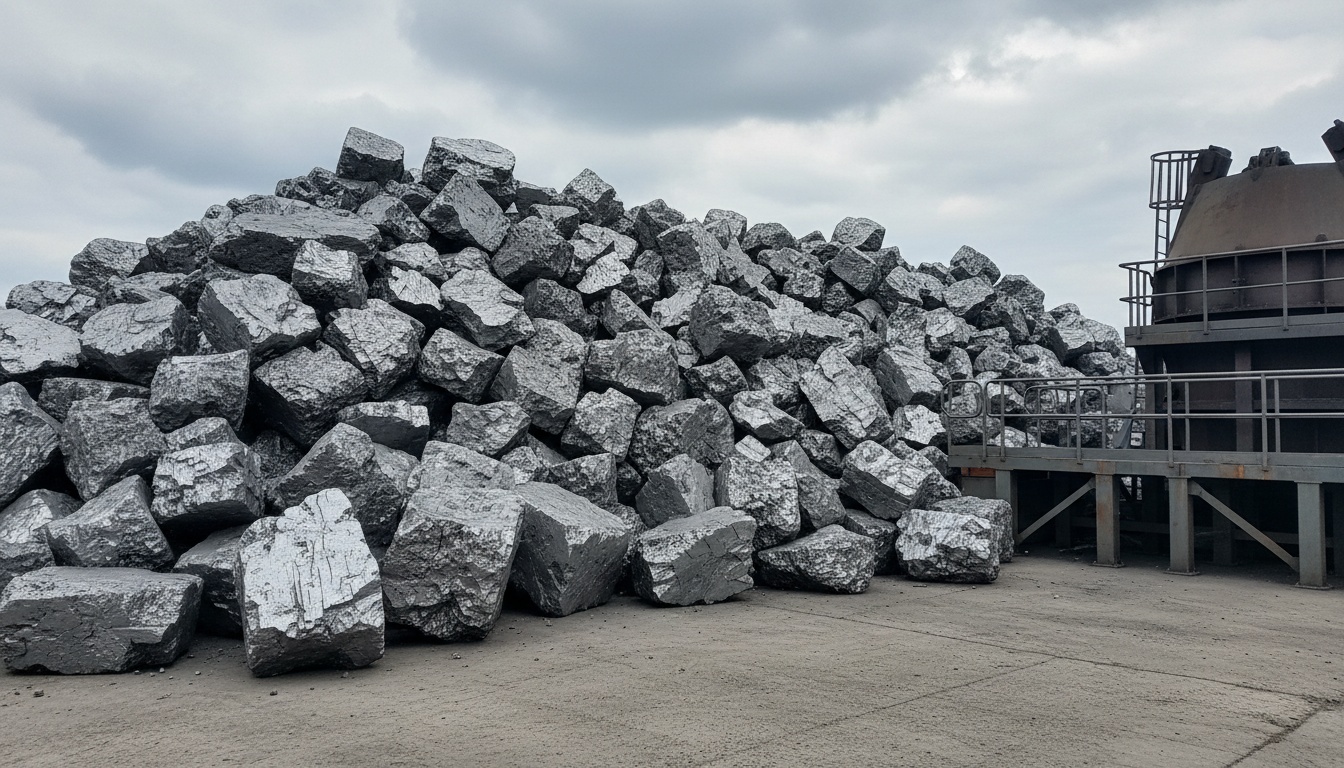
Foundry coke is the coke that sits in the cupola in direct contact with the iron, so it is specified on the melt's behalf rather than the furnace's. Size comes first: analyses of cupola practice put the piece size for cupolas over 1.2 m in diameter above 80 mm and up to 150 mm, and the Polish oven at Wałbrzych that leads the European trade describes its product as special foundry coke with granulation above 100 mm; a lump that is too small burns too fast and lets the coke bed collapse, one that is too large bridges. Then chemistry, because the melt picks up whatever the coke gives off: producers' published sheets run ash at 8% maximum, sulphur at 0.5% maximum and fixed carbon at 86% minimum, with a super grade at 90% fixed carbon, 1.5% volatile matter and 0.5% sulphur, and the tighter sheets add phosphorus. Strength is the third leg: the GOST 3340-88 foundry-coke standard, still the frame most CIS and Eastern European buyers use, normalises five indicators — total moisture, ash, total sulphur, M40 drum strength and the fraction under 40 mm — and a buyer who writes M40 into the contract gets a coke that survives the charge drop. Foundry coke is not a size cut of blast-furnace coke; it is coked from a lower-volatile blend over a longer cycle, which is why the merchant tonnage is small and the price sits above blast-furnace grades. UN Comtrade 2024 export declarations under HS 2704 rank the four origins on this page: China 8.31 million MT at an average USD 230/MT, Poland 5.88 million MT at USD 359, Indonesia 5.56 million MT at USD 274 and Colombia 3.96 million MT at USD 276; India's 2025 import declarations put Polish coke at USD 339/MT CIF against Chinese at USD 230 and Colombian at USD 262, and the Polish premium is the foundry and premium share of that book.
The buyer is a grey-iron or ductile-iron foundry running a cupola, a stone-wool or mineral-wool plant melting basalt in a cupola, or a trader supplying either, and the enquiry is a container lot or a few hundred tonnes a month, not a Panamax. Our own ledger shows the shape of it: cast-iron foundries and cupola-fed stone-wool plants in Pakistan, India and Turkiye, and the traders who supply them, are the counterparties that ask for foundry coke by name. China's coke, including semi-coke under HS 2704, is on the Ministry of Commerce list of goods subject to export licence administration (43 export goods in the 2026 catalogue), so a Chinese offer carries a licensed exporter behind it or it does not ship. CBIL is a commodity brokerage company and brokers foundry coke from Chinese, Colombian, Polish and Indian ovens and trader positions against SGS or Intertek certification of ash, sulphur, fixed carbon, volatile matter, moisture, phosphorus, M40/M10 drum strength and screened size distribution at the load point, on the foundry's own sheet. Lots are structured in 1 MT jumbo bags in 20-foot containers for the 50–500 MT enquiry, breakbulk or bulk Handysize for the larger consumer, on FOB, CFR and CIF terms; because CBIL also runs a chartering desk (LaycanDesk), the freight leg on a breakbulk lot is quoted alongside the coke. Send your size band, ash and sulphur ceilings, M40 floor and monthly tonnage and we will work the oven to it.
Need the ship as well? Our chartering desk prices coal and petcoke bulk freight on LaycanDesk.
Excluded origins are not offered, including product re-exported, blended or re-processed through a third country. Every lot moves with a certificate of origin naming the producing plant, mine or grower country, and nothing is quoted before the seller and loading point are known.
Indicative reference
Per lot, on size and ash USD / MT
as at September 2026
Reference level only — not an offer, and reviewed quarterly. Levels shown are as at September 2026. Firm pricing is quoted per RFQ, subject to volume, terms and inspection.
Typical Specification
Specifications are indicative and adjusted to the agreed contract and destination requirements. Final spec confirmed on COA / SGS.
Available Grades
Applications
- Grey-iron & ductile-iron cupola melting
- Stone-wool & mineral-wool cupolas
- Malleable-iron & pipe foundries
- Non-ferrous crucible melting
- Lime & soda-ash kilns (large-lump grades)
Category
Petroleum & Energy
Incoterms
FOB · CFR · CIF
Pricing basis
USD / MT
Inspection
SGS / Intertek at load port
Foundry Coke (Cupola Coke) — buyer questions
Why is foundry coke bigger than blast-furnace coke?
Because a cupola melts on a coke bed that the iron trickles through, and the bed has to burn slowly and hold its shape under the charge. Cupola practice puts the lump above 80 mm and up to 150 mm for cupolas over 1.2 m in diameter, and the leading Polish producer sells its foundry grade at above 100 mm. Blast-furnace coke is 25–80 mm and is bought on CSR/CRI instead. The two are made from different blends on different coking cycles, not screened from the same oven.
What sulphur and ash should I write into the contract?
Producers' published foundry sheets run ash at 8% maximum and sulphur at 0.5% maximum, with fixed carbon at 86% minimum and a super grade at 90%. Sulphur matters most in ductile iron because it consumes magnesium at treatment; ash is slag you flux and melt. Write the ceilings your metallurgist actually runs to, plus M40 and an undersize limit, and have SGS or Intertek certify them at the load point.
What does M40 mean and why does GOST 3340-88 come up?
M40 is the Micum drum index: the percentage of coke remaining above 40 mm after a standard tumbling test, a measure of the lump's resistance to breaking on the charge drop. GOST 3340-88, the foundry-coke standard used across the CIS and much of Eastern Europe, normalises five indicators — total moisture, ash, total sulphur, M40 and the fraction under 40 mm — and many buyers copy that frame into contracts on coke from any origin.
Does Chinese foundry coke need an export licence?
Yes. Coke, including semi-coke under HS 2704, is on China's Ministry of Commerce catalogue of goods subject to export licence administration, and customs clears the shipment against the licence. A Chinese offer therefore comes through a licensed exporter; Colombian, Polish and Indian coke has no equivalent licence step, which is one reason a small foundry buying container lots often prefers those origins.
Ready to source Foundry Coke?
Send your quantity, specification, preferred Incoterms and destination port. Qualified requirements receive a workable offer against verified supply.
Have Foundry Coke to sell? Submit an offer — we'll match it against live buyer demand.
More in Coal & Coke (incl. PCI & Anthracite)
Thermal Coal (Steam Coal)
Steam coal by NCV, sulphur, ash and total moisture
Coking Coal (Metallurgical Coal)
Hard coking, semi-soft and PCI coal by CSR, fluidity and ash
Metallurgical Coke
Blast-furnace, foundry and nut coke by CSR, ash and size
Anthracite & PCI Coal (Low-Vol and Mid-Tier)
Pulverised coal injection coal by volatile matter, ash and HGI; anthracite for sinter and filtration
Semi-Coke (Lan Tan, Low-Temperature Coke)
Low-temperature coke for ferroalloy, calcium carbide and silicon-metal furnaces
Indonesian Low-CV Coal (3,400–4,200 GAR)
Sub-bituminous and lignite below 4,200 GAR, priced against HBA and ICI 4, loaded barge-to-vessel in Kalimantan