
Semi-Coke (Lan Tan, Low-Temperature Coke)
Low-temperature coke for ferroalloy, calcium carbide and silicon-metal furnaces
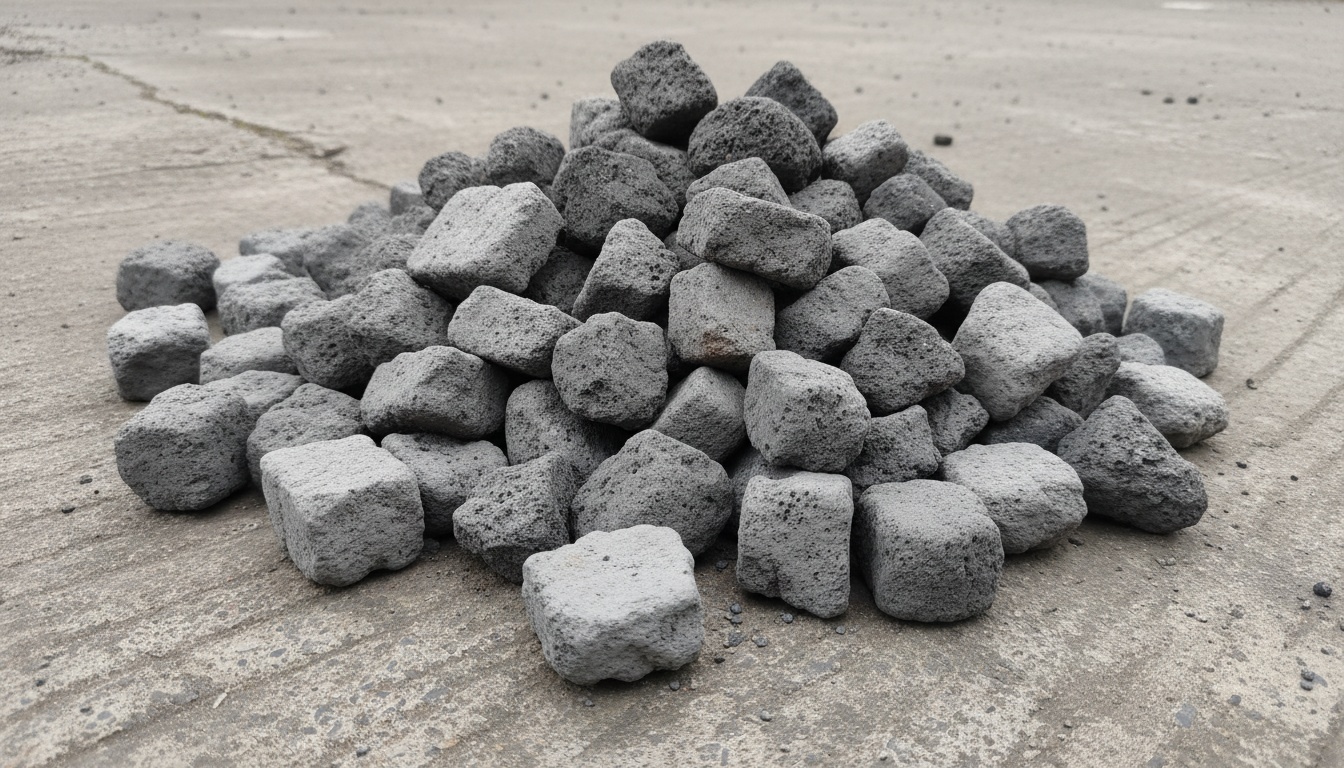
Semi-coke is what you get when low-ash, low-sulphur Jurassic coal from northern Shaanxi is carbonised at low temperature instead of in a full coke oven: a porous, reactive carbon that submerged-arc furnaces prefer to metallurgical coke because it reacts faster and carries less ash into the slag. Producers' published sheets run fixed carbon at 84% minimum (83% on the cheaper cut), ash at 8% maximum, sulphur at 0.4–0.5% and volatile matter around 8%, with phosphorus low and a high specific electrical resistance that helps the electrode sink into the burden; the largest ovens in Yulin and Shenmu quote sulphur at 0.3–0.5% and ash at 8–10%. Size is the working variable: 6–18 mm for silicon-metal and ferrosilicon furnaces, 18–30 or 18–35 mm for calcium carbide and silicomanganese, 30–60 mm where the buyer blends it with coke. Shaanxi's Yulin and Shenmu, with the neighbouring producing regions, make around 60% of China's semi-coke, and single producers there run 2.5–3 million MT a year, so the export offer is a by-product of a domestic market many times larger. It is declared under HS 2704 with coke, and China's coke and semi-coke exports ran at about 8.5 million MT in 2024, with Indonesia — home to the world's newest ferronickel and ferroalloy furnaces — the largest destination by value in late 2024, ahead of Japan, Malaysia, Brazil and Australia.
The buyer is a ferroalloy smelter (ferrosilicon, silicomanganese, ferrochrome), a calcium-carbide plant, a silicon-metal producer or a silicon-carbide furnace, and the enquiry is a monthly tonnage in a stated size band with fixed carbon and ash limits, usually to replace part of a coke burden and cut the power and reductant cost per tonne of alloy. Coke, including semi-coke under HS 2704, is on China's Ministry of Commerce list of goods subject to export licence administration, so every Chinese cargo is shipped by a licensed exporter and the licence is part of the document set. CBIL is a commodity brokerage company and brokers semi-coke from Shaanxi ovens and licensed Chinese exporters against SGS or Intertek certification of fixed carbon, ash, volatile matter, sulphur, phosphorus, moisture and screened size at the load port, on the smelter's own sheet. Lots are structured in 1 MT jumbo bags in containers for the 100–1,000 MT monthly enquiry and in bulk Handysize or Supramax parcels for the larger smelter, on FOB, CFR and CIF terms; because CBIL also runs a chartering desk (LaycanDesk), the bulk freight leg is quoted alongside the cargo. Send your size band, fixed-carbon floor, ash and sulphur ceilings and monthly tonnage and we will work the oven to them.
Need the ship as well? Our chartering desk prices coal and petcoke bulk freight on LaycanDesk.
Excluded origins are not offered, including product re-exported, blended or re-processed through a third country. Every lot moves with a certificate of origin naming the producing plant, mine or grower country, and nothing is quoted before the seller and loading point are known.
Indicative reference
Per lot, on size and fixed carbon USD / MT
as at September 2026
Reference level only — not an offer, and reviewed quarterly. Levels shown are as at September 2026. Firm pricing is quoted per RFQ, subject to volume, terms and inspection.
Typical Specification
Specifications are indicative and adjusted to the agreed contract and destination requirements. Final spec confirmed on COA / SGS.
Available Grades
Applications
- Ferrosilicon & silicomanganese furnaces
- Calcium carbide furnaces
- Silicon-metal & silicon-carbide production
- Ferrochrome & ferronickel reductant blends
- Gasification & industrial fuel
Category
Petroleum & Energy
Incoterms
FOB · CFR · CIF
Pricing basis
USD / MT
Inspection
SGS / Intertek at load port
Semi-Coke (Lan Tan, Low-Temperature Coke) — buyer questions
What is the difference between semi-coke and metallurgical coke?
Temperature and purpose. Semi-coke is carbonised at low temperature from low-ash Jurassic coal, so it keeps about 8% volatile matter, stays porous and reactive and carries a high electrical resistance — what a submerged-arc furnace wants from its reductant. Metallurgical coke is fully carbonised, dense and unreactive, which is what a blast furnace wants. Ferroalloy and carbide smelters replace part or all of their coke with semi-coke to cut reductant cost and power consumption.
Which size should I specify?
Silicon-metal and ferrosilicon furnaces run the finest cut, 6–18 mm, because the reaction zone needs surface area. Calcium carbide and silicomanganese furnaces take 18–30 or 18–35 mm. The 30–60 mm cut is for blending with coke. The 0–6 mm fines that screening produces are sold separately for sinter and briquetting, and a contract should state the undersize tolerance.
Does semi-coke need an export licence from China?
Yes. Coke and semi-coke under HS 2704 are on the Ministry of Commerce catalogue of goods subject to export licence administration, and the licence is checked at customs. The producer in Shaanxi is usually not the exporter of record; a licensed trading company is, and the offer and the shipping documents should show it.
Who buys Chinese semi-coke abroad?
Ferroalloy, ferronickel, silicon-metal and calcium-carbide smelters. Comtrade-based trade profiles put Indonesia as the largest destination by value for China's coke and semi-coke in late 2024, ahead of Japan, Malaysia, Brazil and Australia, which tracks the furnaces built in Sulawesi and Halmahera. Smelters in South Asia, Turkiye and Egypt buy it in container lots to blend with coke.
Ready to source Semi-Coke?
Send your quantity, specification, preferred Incoterms and destination port. Qualified requirements receive a workable offer against verified supply.
Have Semi-Coke to sell? Submit an offer — we'll match it against live buyer demand.
More in Coal & Coke (incl. PCI & Anthracite)
Thermal Coal (Steam Coal)
Steam coal by NCV, sulphur, ash and total moisture
Coking Coal (Metallurgical Coal)
Hard coking, semi-soft and PCI coal by CSR, fluidity and ash
Metallurgical Coke
Blast-furnace, foundry and nut coke by CSR, ash and size
Anthracite & PCI Coal (Low-Vol and Mid-Tier)
Pulverised coal injection coal by volatile matter, ash and HGI; anthracite for sinter and filtration
Foundry Coke (Cupola Coke)
Cupola coke 80–150 mm by ash, sulphur, M40 and fixed carbon
Indonesian Low-CV Coal (3,400–4,200 GAR)
Sub-bituminous and lignite below 4,200 GAR, priced against HBA and ICI 4, loaded barge-to-vessel in Kalimantan