
Castor Seeds
Graded on oil yield and ricinoleic acid content
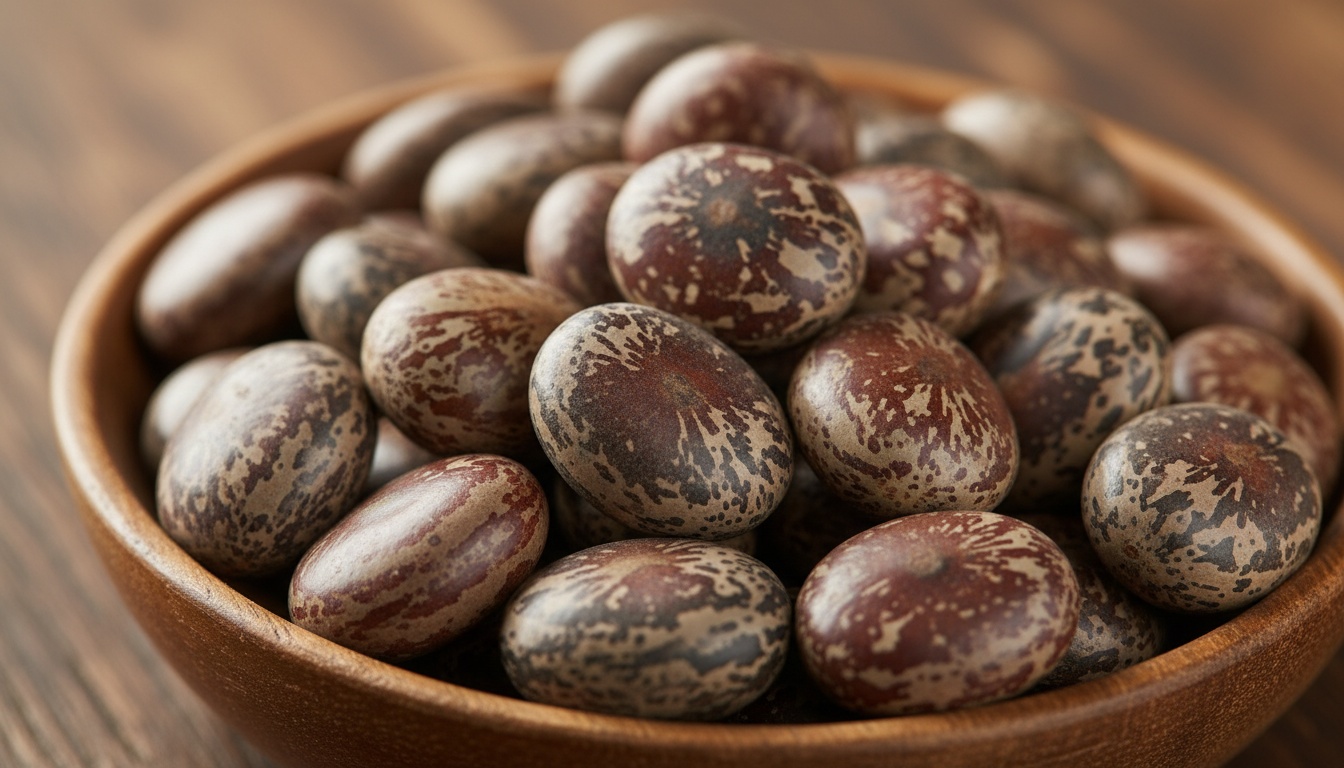
CBIL brokers castor seed from Gujarat and Rajasthan — the belt that supplies the large majority of world castor — graded on the two variables that decide a crusher's economics: oil content at 45–50% and ricinoleic acid at roughly 85–90% of that oil. Ricinoleic acid is why castor exists as a commodity at all. It is the hydroxylated fatty acid that no other commercial oil seed delivers at volume, and it is what makes castor the feedstock for sebacic acid, 12-hydroxystearic acid, polyamide 11, lubricants, coatings and a long list of derivatives, none of which can substitute another oil without redesigning the chemistry. That is the distinction from every other seed in this family: mustard, flax and niger compete with one another on price per tonne of oil; castor does not compete with anything.
This is an industrial line, not a food line, and it needs handling as one. Castor seed contains ricin in the meal fraction, so the seed and cake are subject to their own transport, storage and documentation requirements, and the de-oiled cake is not a feed ingredient without proper detoxification — buyers who assume otherwise get an expensive surprise. We supply against ≤ 6% moisture, ≤ 1% FFA on the extracted oil and ≤ 2% admixture, machine-cleaned and gravity-separated, with SGS or Intertek certification of oil content, ricinoleic acid, moisture, FFA and admixture plus phytosanitary and fumigation documentation. Supply is structured in 25kg and 50kg PP or jute bags, container-load, on FOB, CFR and CIF terms.
Need the ship as well? Our chartering desk prices Danube and Black Sea coaster freight on LaycanDesk.
Excluded origins are not offered, including product re-exported, blended or re-processed through a third country. Every lot moves with a certificate of origin naming the producing plant, mine or grower country, and nothing is quoted before the seller and loading point are known.
Indicative reference
$850–1,150 USD / MT
as at September 2026
Reference level only — not an offer, and reviewed quarterly. Levels shown are as at September 2026. Firm pricing is quoted per RFQ, subject to volume, terms and inspection.
Typical Specification
Specifications are indicative and adjusted to the agreed contract and destination requirements. Final spec confirmed on COA / SGS.
Available Grades
Applications
- Castor oil crushing
- Castor derivatives & oleochemicals
- Lubricants & greases
- Coatings & polymers
- Pharmaceutical & cosmetic grade oil
Category
Agri-Foods, Spices & Nuts
Incoterms
FOB · CFR · CIF
Pricing basis
USD / MT
Inspection
SGS / Intertek at load port
Castor Seeds — buyer questions
What oil content should I contract castor seed against?
45–50% is the working band, and the difference is straight margin at the press — a 48–50% lot is worth a real premium over 45% material because you are buying oil, not seed. Ask for the certified oil figure and the ricinoleic acid percentage together; the second one is what your downstream chemistry actually depends on.
Why can't castor be substituted with another oil seed?
Ricinoleic acid. At 85–90% of the oil, it is a hydroxylated fatty acid that no other commercial seed supplies at volume, and it is the reason castor feeds sebacic acid, 12-HSA, polyamide 11, lubricants and coatings. Swapping in another oil means changing the chemistry, not the supplier — which is why castor prices on its own crop and not against the oil-seed complex.
Is castor meal usable as animal feed?
Not as it comes. Castor seed and the de-oiled cake contain ricin, and the cake is not a feed ingredient unless it has been properly detoxified and documented as such. Castor is an industrial line with its own transport, storage and documentation requirements — plan for that at contract stage rather than discovering it at the port.
Ready to source Castor Seed?
Send your quantity, specification, preferred Incoterms and destination port. Qualified requirements receive a workable offer against verified supply.
Have Castor Seed to sell? Submit an offer — we'll match it against live buyer demand.
More in Oil Seeds
Hulled Sesame Seeds
99/1 & 99/2 purity, graded by whiteness
Natural Sesame Seeds
Unhulled white, brown & black seed by oil content
Mustard Seeds
Yellow & black seed by oil content and erucic acid
Niger Seeds
Sortex-cleaned bird-feed & crushing grade
Flaxseed (Linseed)
Brown & golden linseed by oil and omega-3 content
Rapeseed / Canola
Low-erucic rapeseed and canola, 40–44% oil, Danube and Black Sea origin
Sunflower Seeds
Oil-type sunflower seed by oil content, Black Sea and Danube origin
Cottonseed for Crushing and Dairy Feed
Whole fuzzy cottonseed for oil mills and dairy rations