
Mustard Seeds
Yellow & black seed by oil content and erucic acid
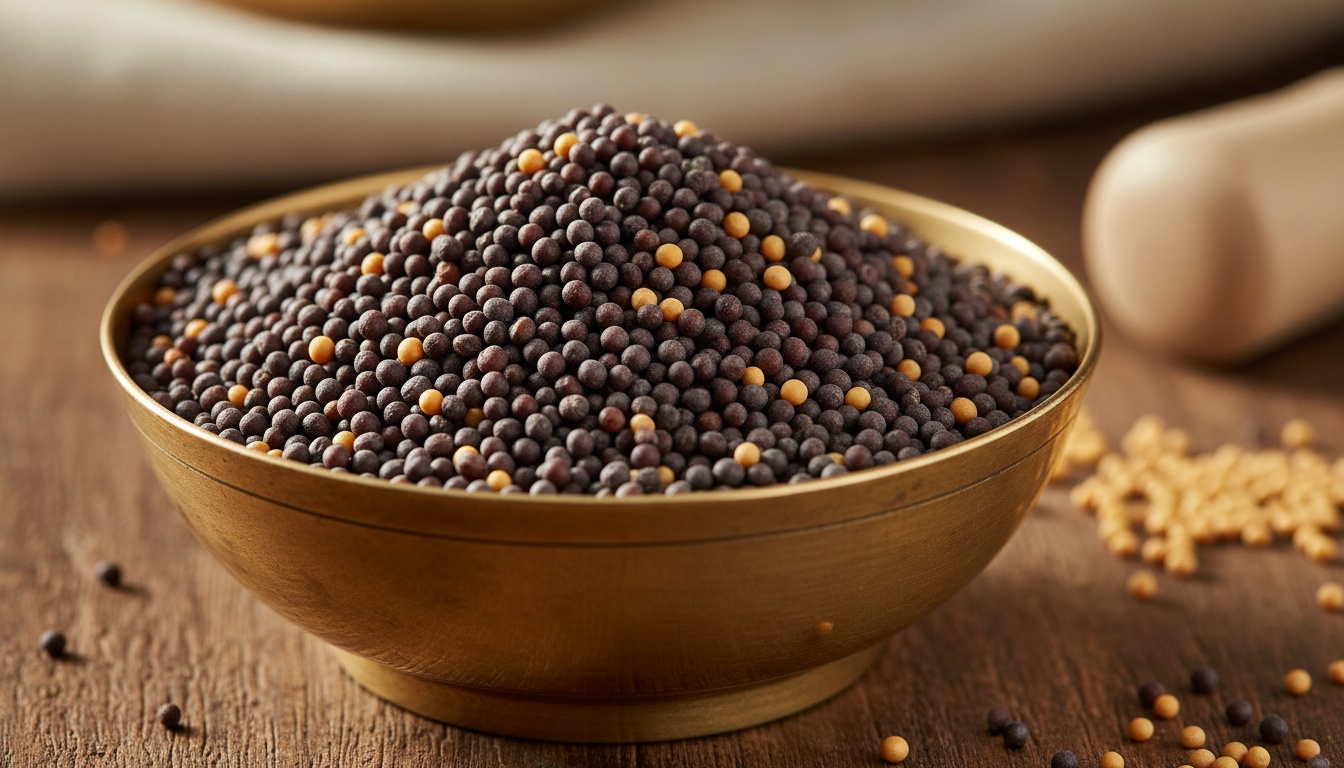
CBIL brokers yellow and black mustard seed from Rajasthan, Madhya Pradesh and the Indian rapeseed belt, graded on the three variables that price it: purity (≥ 99%, Sortex-cleaned), oil content at 38–42%, and erucic acid — the one specification buyers most often overlook until it stops the cargo. Traditional Indian mustard runs high in erucic acid; low-erucic canola-type material is a different seed and a different contract, and food regulators in the EU and elsewhere cap erucic acid in oils and mustard-derived foods, so a condiment or oil buyer needs to state their limit up front rather than assume it. Yellow seed is the milder, larger seed that condiment and table-mustard manufacturers specify for colour and a gentler pungency; black and brown seed is smaller, sharper and higher in the glucosinolates that drive heat, which is why spice blenders, pickle producers and Indian-cuisine manufacturers buy it.
So the choice is straightforward: yellow for pale, mild condiment work and general crushing; black or brown where the pungency is the point. Both run to ≤ 8% moisture, ≤ 1% admixture and ≤ 2% FFA on the extracted oil, machine-cleaned, Sortex colour-sorted and metal-detected before bagging. Mustard sits at the value end of the oil-seed complex — well below sesame — which is why crushers treat it as a volume line and why freight and outturn discipline matter more than headline price. Every lot ships against SGS or Intertek certification of purity, oil content, erucic acid where specified, moisture, FFA, admixture and pesticide residue, with phytosanitary and fumigation documentation, in 25kg and 50kg PP or jute bags, container-load, on FOB, CFR and CIF terms.
Need the ship as well? Our chartering desk prices Danube and Black Sea coaster freight on LaycanDesk.
Excluded origins are not offered, including product re-exported, blended or re-processed through a third country. Every lot moves with a certificate of origin naming the producing plant, mine or grower country, and nothing is quoted before the seller and loading point are known.
Indicative reference
$650–900 USD / MT
as at September 2026
Reference level only — not an offer, and reviewed quarterly. Levels shown are as at September 2026. Firm pricing is quoted per RFQ, subject to volume, terms and inspection.
Typical Specification
Specifications are indicative and adjusted to the agreed contract and destination requirements. Final spec confirmed on COA / SGS.
Available Grades
Applications
- Condiment & table mustard
- Oil crushing & refining
- Spice blending & pickling
- Snack & seasoning manufacture
- Animal feed (meal)
Category
Agri-Foods, Spices & Nuts
Incoterms
FOB · CFR · CIF
Pricing basis
USD / MT
Inspection
SGS / Intertek at load port
Mustard Seeds — buyer questions
Yellow or black mustard seed — which do I need?
Yellow is larger, milder and paler, and it is what table-mustard and condiment manufacturers specify because colour and gentle pungency are the product. Black and brown seed is smaller and sharper, with higher glucosinolate content, so spice blenders, pickle producers and Indian-cuisine manufacturers buy it. They are not substitutes — swapping one for the other changes both the colour and the heat of your finished product.
Do I need to specify erucic acid?
If the seed is going into oil or into a food product, yes. Traditional Indian mustard is naturally high in erucic acid, low-erucic canola-type material is a separate seed, and EU and several other regimes cap erucic acid in oils and mustard-derived foods. State your limit at enquiry stage — it is a sourcing decision, not something that can be fixed after the seed is loaded.
Why is mustard so much cheaper than sesame?
Different crops, different economics. Mustard yields around 38–42% oil against 48–52% for sesame, has none of sesame's food-use premium, and is grown at much larger volume. It is a value-end line, which means freight efficiency and honest outturn matter more to your landed cost than shaving the seed price.
Ready to source Mustard?
Send your quantity, specification, preferred Incoterms and destination port. Qualified requirements receive a workable offer against verified supply.
Have Mustard to sell? Submit an offer — we'll match it against live buyer demand.
More in Oil Seeds
Hulled Sesame Seeds
99/1 & 99/2 purity, graded by whiteness
Natural Sesame Seeds
Unhulled white, brown & black seed by oil content
Niger Seeds
Sortex-cleaned bird-feed & crushing grade
Flaxseed (Linseed)
Brown & golden linseed by oil and omega-3 content
Castor Seeds
Graded on oil yield and ricinoleic acid content
Rapeseed / Canola
Low-erucic rapeseed and canola, 40–44% oil, Danube and Black Sea origin
Sunflower Seeds
Oil-type sunflower seed by oil content, Black Sea and Danube origin
Cottonseed for Crushing and Dairy Feed
Whole fuzzy cottonseed for oil mills and dairy rations