
Aluminium Extrusion Billet (6063 & 6061 Homogenised)
Homogenised 6063 and 6061 log and cut billet, 5–10 inch diameter, by Mg, Si, Fe and ultrasonic class
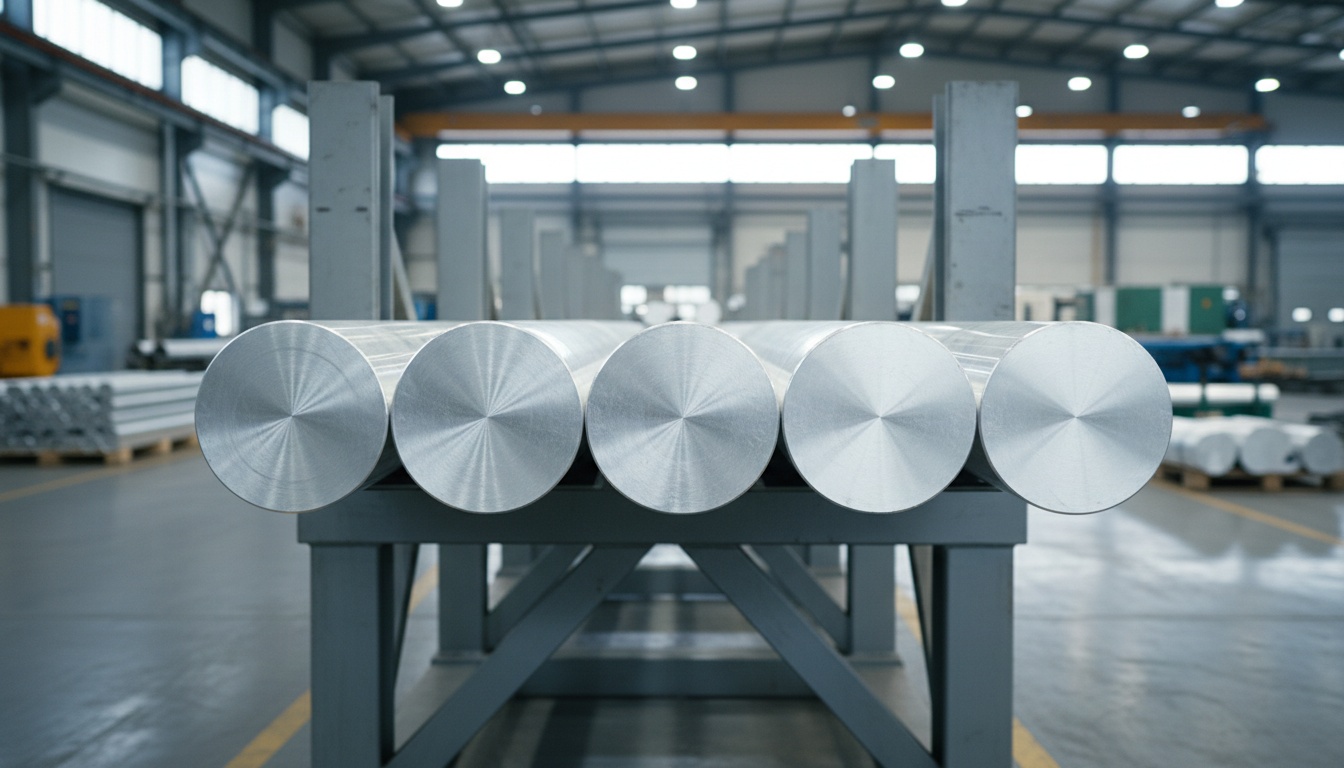
Extrusion billet is bought on three things the extruder cannot fix once the log is in the press: chemistry, homogenisation and soundness. 6063 is the architectural alloy — windows, doors, curtain wall, heat sinks, solar frames — with Mg 0.45–0.90% and Si 0.20–0.60%, Fe ≤ 0.35%, and Cu, Mn, Zn, Cr and Ti each ≤ 0.10%; in practice extruders tighten it to a balanced Mg₂Si band of about 0.45–0.55% Mg and 0.40–0.50% Si for press speed and T5/T6 strength, and to Fe ≤ 0.15–0.20% where the profile will be bright-anodised. 6061 is the structural alloy, with Mg 0.8–1.2%, Si 0.40–0.80%, Cu 0.15–0.40% and Cr 0.04–0.35%, extruded slower and heat-treated for transport, machinery and scaffolding. Homogenisation — a soak at about 560–590 °C followed by controlled cooling — dissolves the coarse Mg₂Si from casting and converts needle-shaped beta iron phases to rounded alpha, and unhomogenised billet shows up as tearing, pick-up and streaks on the profile at speed. Soundness is the direct-chill cast house's job: hydrogen degassing, Al-Ti-B grain refining, ceramic foam filtration and 100% ultrasonic testing for porosity and inclusions to the buyer's class. Diameter is set by the press container, from 5 inch (127 mm) on small presses to 10 inch (254 mm) on large ones, and billet comes as 5.8–7 m logs for a hot log shear or cut to 400–1,200 mm. Secondary billet is cast from remelted 6063 extrusion scrap sweetened with primary metal, and iron creeps up with each cycle, which suits mill-finish and powder-coated profiles and not bright anodising. On the customs side, cast billet is normally declared under HS 7601.20 as unwrought aluminium alloy, but some declarants and importing customs place homogenised, cut billet under HS 7604 (bars, rods and profiles), and the duty can differ, so the importer's customs broker should confirm the heading before the contract. On the trade, UN Comtrade 2025 import declarations under HS 7601.20, which include billet, show India taking 321,469 MT from 55 partners, with the UAE (54,495 MT at USD 2,870/MT CIF), Qatar (51,855 MT at USD 2,842) and Bahrain (41,398 MT at USD 2,798) behind Malaysia (111,595 MT at USD 2,769) — the Gulf lines largely primary cast-house billet and foundry alloy [inference].
The buyer is an extruder in the Gulf, India, Southeast Asia, East Africa or Turkiye buying by press size, alloy and finish, usually monthly, and comparing a primary cast house's billet at a higher premium with secondary billet at a lower one on the reject rate each gives at the press. CBIL is a commodity brokerage company and brokers homogenised 6063 and 6061 billet from cast-house, producer and trader parcels in Pakistan, the UAE, India, Malaysia, Thailand, Vietnam, China, Turkiye and South Africa against third-party chemical analysis: a spectrometer certificate per cast, the homogenisation record and the ultrasonic test report, with independent inspection at stuffing where the buyer asks for it. Price is set off the LME aluminium reference plus a billet premium that reflects alloy, diameter, Fe band and origin. Billet is container cargo — logs bundled on timber bearers with steel strapping, 5.8 m logs in a 20-foot box and longer logs in a 40-foot, about 22–25 MT per container — on FOB, CFR and CIF terms, so freight is container freight booked with the line. Send the alloy, diameter and length, your iron ceiling, the finish (mill, powder-coat or anodise), monthly tonnage and discharge port, and the desk matches cast-house chemistry against them.
Need the ship as well? Our chartering desk prices part cargo and parcel space on LaycanDesk.
Excluded origins are not offered, including product re-exported, blended or re-processed through a third country. Every lot moves with a certificate of origin naming the producing plant, mine or grower country, and nothing is quoted before the seller and loading point are known.
Indicative reference
$2,700–3,400 (LME + billet premium) USD / MT
as at September 2026
Reference level only — not an offer, and reviewed quarterly. Levels shown are as at September 2026. Firm pricing is quoted per RFQ, subject to volume, terms and inspection.
Typical Specification
Specifications are indicative and adjusted to the agreed contract and destination requirements. Final spec confirmed on COA / SGS.
Available Grades
Applications
- Architectural window, door & curtain-wall profiles
- Heat sinks & electrical enclosures
- Solar panel frames & mounting structures
- Automotive & transport profiles (6061 / 6082)
- Structural sections & scaffolding
- Furniture & consumer profiles
Category
Metals & Recycled Scrap
Incoterms
FOB · CFR · CIF
Pricing basis
USD / MT
Inspection
SGS / Intertek at load port
Aluminium Extrusion Billet (6063 & 6061 Homogenised) — buyer questions
Do you handle remelted metal whatever the origin of the feed?
No. Metal of excluded origin is not offered, and that includes material remelted or re-cast from primary metal or scrap of excluded origin. Every lot moves with a certificate of origin and a heat or mill certificate, and the seller declares where the scrap or primary metal came from before a price is discussed.
Why does billet have to be homogenised?
As cast, a 6063 log has coarse Mg₂Si particles and needle-shaped beta iron phases at the grain boundaries. Pushed through a die at speed, that structure tears, picks up on the die and streaks after anodising, and the profile under-ages in T5. A soak at about 560–590 °C and a controlled cool dissolves the Mg₂Si and rounds the iron phases, so the extruder can run faster with fewer rejects. Ask for the homogenisation record per batch alongside the cast analysis.
Primary or secondary billet — does it matter for my profiles?
It depends on the finish. Secondary billet cast from remelted extrusion scrap meets the 6063 standard, but its iron usually runs higher, towards the 0.35% ceiling, and iron is what dulls a bright-anodised surface and lowers press speed. For mill-finish and powder-coated architectural profiles, secondary billet at a lower premium is widely used; for bright or clear anodising, specify Fe ≤ 0.15–0.20% and expect a primary or primary-rich billet at a higher premium.
Is extrusion billet declared under HS 7601.20 or HS 7604?
Cast billet is normally declared under HS 7601.20 as unwrought aluminium alloy, because casting and homogenising do not make it a worked product. Some declarants and importing customs nonetheless place homogenised billet cut to length under HS 7604 (bars, rods and profiles), and the two headings can carry different duty. The importer's customs broker should confirm the heading for the destination before the contract, and the commercial invoice should then use it consistently.
What diameter and length should I order?
The diameter is fixed by your press container: roughly 5–6 inch on small presses, 7 inch on the common mid-size architectural presses and 8–10 inch on the larger ones, with the billet a few millimetres under the container bore. Take 5.8–7 m logs if you have a hot log shear, which lets you cut to the length each die needs; otherwise order cut billet in a length that gives whole multiples of your profile and a small butt. 5.8 m logs fit a 20-foot container; longer logs need a 40-foot.
Ready to source Extrusion Billet?
Send your quantity, specification, preferred Incoterms and destination port. We'll verify supply and respond with a workable offer — usually within one business day.
Have Extrusion Billet to sell? Submit an offer — we'll match it against live buyer demand.
More in Aluminium Alloy Ingot, Billet & Copper Rod