Copper Ingot, Billet & 8 mm CC Rod
Remelt copper ingot and billet by Cu content; 8 mm ETP, FRHC and oxygen-free rod by oxygen and % IACS
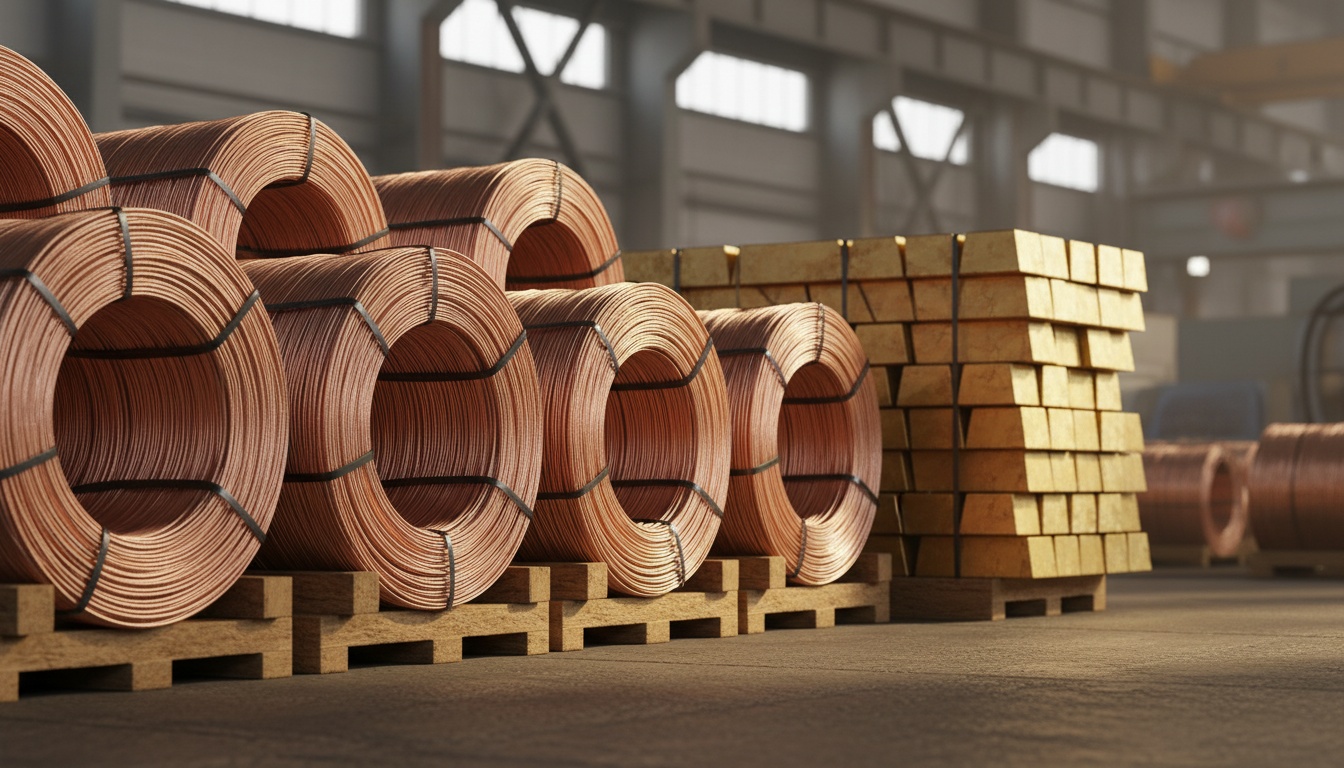
This page covers two different copper products that share a furnace but not a buyer. Remelt copper ingots and billets are copper scrap melted and cast to 20–25 kg ingots or to round and square billets, running from 96–99% Cu for ingot made from mixed and No.2 scrap up to 99.9% for ingot from bright scrap; they are feed for brass mills, bronze and copper-alloy foundries and master-alloy makers, bought on copper content and the lead, tin, iron and zinc that came with them, not on conductivity. 8 mm continuous-cast rod is drawing stock for wire and cable, and it is bought on conductivity. ETP rod to ASTM B49 or EN 1977 Cu-ETP, cast and rolled on SCR or Contirod lines from Grade A cathode, carries Cu + Ag ≥ 99.90%, oxygen up to 400 ppm (typically 150–350) and ≥ 100% IACS; oxygen-free rod from upcast lines carries Cu ≥ 99.95% with oxygen ≤ 10 ppm and goes to enamelled winding wire and fine drawing; FRHC rod to EN 1977 Cu-FRHC is made by fire-refining No.1 scrap (bare bright wire and heavy copper) back to ≥ 99.90% Cu. The rule a buyer should hold is this: rod for wire drawing normally needs cathode or fire-refined No.1 scrap as its feed. Rod cast from No.2 or mixed scrap without refining carries impurities that cut conductivity and break wire in fine drawing, so it belongs in non-electrical uses at a discount. Price is set off the LME copper reference — cathode rod at LME plus a conversion premium, FRHC rod close to or below it, remelt ingot at a discount that widens with falling Cu content. On the customs side, unwrought refined-copper ingot is declared under HS 7403.19 (7403.13 if cast as billets), straight bars and rods under 7407.10, and wire of refined copper over 6 mm in cross-section under 7408.11, which is where 8 mm rod in coils sits. On the trade, UN Comtrade 2025 export declarations under HS 7408 show Pakistan exporting only 208 MT of copper wire across 16 partners, 151 MT of it to the USA; declared values above USD 20,000/MT on that line point to fine or special wire rather than 8 mm drawing stock, and Pakistani rod is consumed largely by the domestic cable industry [inference]. Pakistan's own cathode comes in under HS 7403 — 12,604 MT in 2024 from Zambia (35.9%), China (20.9%), the DR Congo (14.5%) and Australia (8.6%) on UN Comtrade 2024 import declarations.
The buyers are wire and cable makers — building wire, power cable, enamelled winding wire for motors and transformers, earthing and bus conductors — and brass mills and copper-alloy foundries for ingot and billet, in the Gulf, India, Southeast Asia, East Africa and Turkiye. CBIL is a commodity brokerage company and brokers remelt copper ingot and billet and 8 mm ETP, FRHC and oxygen-free rod from producer and trader parcels in Pakistan, the UAE, India, Malaysia, Thailand, Vietnam, China, Turkiye and South Africa against third-party chemical analysis: a spectrometer certificate per heat for ingot and billet, and for rod the Cu + Ag assay, oxygen by inert-gas fusion and a conductivity test per coil lot, with independent inspection at stuffing where the buyer asks for it. Copper is container cargo — rod in 3–5 MT coils on wooden pallets, ingots strapped in bundles of about 1 MT, 24–25 MT to a 20-foot box, weight-limited well before it is full — on FOB, CFR and CIF terms, so freight is container freight booked with the line. Send the product, the Cu + Ag floor, oxygen and conductivity limits for rod or the Cu and impurity limits for ingot, the monthly tonnage and the discharge port, and the desk matches mill chemistry against them.
Need the ship as well? Our chartering desk prices part cargo and parcel space on LaycanDesk.
Excluded origins are not offered, including product re-exported, blended or re-processed through a third country. Every lot moves with a certificate of origin naming the producing plant, mine or grower country, and nothing is quoted before the seller and loading point are known.
Indicative reference
$8,500–11,500 (LME-linked; rod at a premium, remelt ingot at a discount) USD / MT
as at September 2026
Reference level only — not an offer, and reviewed quarterly. Levels shown are as at September 2026. Firm pricing is quoted per RFQ, subject to volume, terms and inspection.
Typical Specification
Specifications are indicative and adjusted to the agreed contract and destination requirements. Final spec confirmed on COA / SGS.
Available Grades
Applications
- Building wire & power cable (drawing stock)
- Enamelled winding wire for motors & transformers
- Earthing & bus conductors
- Brass mills & copper-alloy foundries (remelt ingot)
- Bronze & master alloys
- Tubes & fittings (billet)
Category
Metals & Recycled Scrap
Incoterms
FOB · CFR · CIF
Pricing basis
USD / MT
Inspection
SGS / Intertek at load port
Copper Ingot, Billet & 8 mm CC Rod — buyer questions
Do you handle remelted metal whatever the origin of the feed?
No. Metal of excluded origin is not offered, and that includes material remelted or re-cast from primary metal or scrap of excluded origin. Every lot moves with a certificate of origin and a heat or mill certificate, and the seller declares where the scrap or primary metal came from before a price is discussed.
Can copper rod made from scrap go into wire drawing?
Only if the scrap was No.1 grade and fire-refined back to high conductivity — that is FRHC rod to EN 1977, and it draws to building wire and power-cable sizes. Rod cast from No.2 or mixed scrap without refining carries lead, tin, iron and oxygen that cut conductivity below 100% IACS and break wire during fine drawing. For winding wire and fine sizes, the feed is cathode, either as ETP rod from an SCR or Contirod line or as oxygen-free upcast rod. Ask for the conductivity test per coil lot before you order.
What is the difference between ETP and oxygen-free copper rod?
ETP (electrolytic tough pitch) rod is cast and rolled continuously from cathode with a controlled 150–400 ppm of oxygen, which ties up impurities as oxides and keeps conductivity at or above 100% IACS; it is the standard drawing stock for building wire and power cable. Oxygen-free rod, usually from upcast lines, carries ≤ 10 ppm oxygen and ≥ 99.95% Cu; it does not embrittle in hydrogen during annealing or brazing and draws finer, so enamelled winding wire and fine-wire makers pay a premium for it.
How are copper ingot and rod priced?
Off the LME copper reference, as a fixed price or against an agreed averaging period. Cathode-based ETP and oxygen-free rod price at LME plus a conversion premium for casting and rolling; FRHC rod usually sits close to or below LME because its feed is scrap; remelt ingot and billet trade at a discount to LME that widens as copper content falls and impurities rise. The assay on the certificate settles the copper content, so ask for it per heat or per coil lot.
Which HS code applies to copper ingot, billet and rod?
Unwrought refined-copper ingot is declared under HS 7403.19, or 7403.13 if cast as billets. Straight bars and rods of refined copper are HS 7407.10. Wire of refined copper with a cross-section over 6 mm is HS 7408.11, and that is where 8 mm rod in coils is normally declared. Ingot below the refined-copper definition in the HS chapter notes falls under the copper-alloy lines instead, so the importer's customs broker should confirm the heading from the assay before the contract.
Ready to source Copper Ingot & Rod?
Send your quantity, specification, preferred Incoterms and destination port. We'll verify supply and respond with a workable offer — usually within one business day.
Have Copper Ingot & Rod to sell? Submit an offer — we'll match it against live buyer demand.
More in Aluminium Alloy Ingot, Billet & Copper Rod