
Demerara & Muscovado Sugar
Demerara, muscovado & turbinado — natural browns
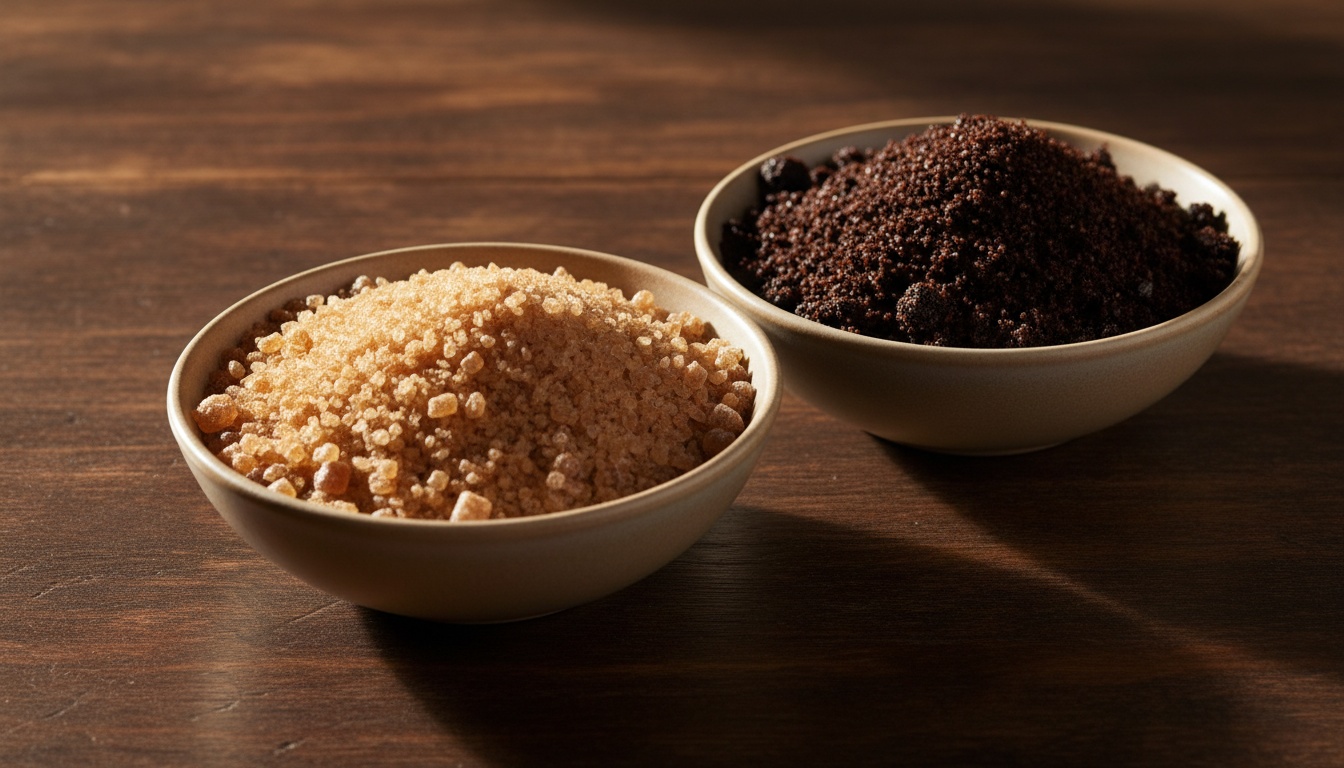
Speciality brown sugars are defined by retained molasses rather than by added colour, and the three main types behave quite differently. Demerara is a large, hard, golden-amber crystal with a light toffee note, which keeps its crunch on top of a baked good rather than dissolving in — the reason it is the standard for crumble toppings and coffee service. Muscovado, sometimes traded as Barbados sugar, is fine, very moist and dark, with a high molasses content that gives a strong treacle flavour and a sticky texture that clumps; it is a baking and sauce ingredient rather than a table sugar. Turbinado sits between them, lighter than demerara with larger crystals than white. All are typically minimally processed from cane juice, with moisture materially higher than refined white and molasses content the defining specification.
Buy these where the sugar's colour, flavour or texture is part of the product: premium bakery, retail speciality packs, coffee and tea service, sauces, marinades, rum and ginger cakes, and any brand selling on natural or unrefined positioning. What matters commercially is being clear about which one you actually want, because the trade uses the names loosely and a “brown sugar” that turns out to be refined white with molasses sprayed back on is a different product entirely — cheaper, uniform, and lacking the texture and character that demerara and muscovado are bought for. Specify the type by name, the crystal size and the moisture. Note also that the higher moisture makes these sugars prone to hardening in storage, so packaging and turnover matter more than they do for refined white. CBIL brokers speciality browns against type, crystal size, moisture, molasses content and colour, on FOB Mauritian, Indian, Brazilian and Caribbean ports, CFR and CIF terms.
Need the ship as well? Our chartering desk prices bagged rice and sugar freight on LaycanDesk.
Excluded origins are not offered, including product re-exported, blended or re-processed through a third country. Every lot moves with a certificate of origin naming the producing plant, mine or grower country, and nothing is quoted before the seller and loading point are known.
Indicative reference
$780–1,400 USD / MT
as at September 2026
Reference level only — not an offer, and reviewed quarterly. Levels shown are as at September 2026. Firm pricing is quoted per RFQ, subject to volume, terms and inspection.
Typical Specification
Specifications are indicative and adjusted to the agreed contract and destination requirements. Final spec confirmed on COA / SGS.
Available Grades
Applications
- Premium bakery & crumble toppings
- Retail speciality packs
- Coffee & tea service
- Sauces, marinades & glazes
- Natural & unrefined brand lines
Category
Agriculture & Fertilizers
Incoterms
FOB · CFR · CIF
Pricing basis
USD / MT
Inspection
SGS / Intertek at load port
Demerara & Muscovado Sugar — buyer questions
Demerara or muscovado — which do I need?
Demerara if you want a large, hard, golden crystal that keeps its crunch — crumble toppings, coffee service, a visible sugar on a baked surface. Muscovado if you want dark, moist, strongly treacle-flavoured sugar that dissolves into a mixture — rich cakes, sauces and marinades. They are not interchangeable and a recipe written for one will misbehave with the other.
How do I know it is not white sugar with molasses added back?
Ask how it was made, and specify natural or unrefined by name. Much commercial brown sugar is refined white with molasses sprayed on — uniform, cheaper and lacking the texture and depth that genuine demerara and muscovado have. Both are legitimate products, but they are not the same thing and should not be priced the same.
Why does my brown sugar go hard in storage?
Moisture loss. These sugars carry 1 to 4% moisture against refined white's 0.04%, and as that moisture escapes the molasses binds the crystals into a block. It is not spoilage — the sugar is fine — but it is a handling problem. Airtight packaging and reasonable turnover prevent it, and it is worth specifying packaging accordingly.
Is speciality brown sugar nutritionally different?
Marginally, and not enough to build a health claim on. Retained molasses carries trace minerals that refined white lacks, but the quantities involved in normal consumption are negligible. Sell it on flavour, colour, texture and provenance, which are real and demonstrable, rather than on nutrition, which invites regulatory challenge.
Ready to source Speciality Browns?
Send your quantity, specification, preferred Incoterms and destination port. Qualified requirements receive a workable offer against verified supply.
Have Speciality Browns to sell? Submit an offer — we'll match it against live buyer demand.
More in Sugar
ICUMSA 45 Refined White Sugar
Sparkling white, 99.80° pol — the export benchmark
Mill White Sugar (ICUMSA 100–150)
Crystal & plantation white — the value white grade
Raw Cane Sugar (VHP)
99.4° pol, ICUMSA 600–1200 — refinery feedstock
Beet Sugar
EU, UK & Ukrainian refined white — identical sucrose, different chain
Organic Sugar
Certified organic cane — blonde, white & demerara
Liquid Sugar & Invert Syrup
Liquid sucrose, invert & golden syrup — 67-77 Brix
Glucose Syrup (DE 38-42 & DE 60-63)
Corn, wheat and tapioca glucose syrup by DE and Brix, in drums, IBCs, flexitanks and tankers
Dextrose Monohydrate & Anhydrous
Crystalline D-glucose 99.5% min, food grade and USP / BP / Ph. Eur. grade, in 25 kg bags
High Fructose Corn Syrup (HFCS-42 & HFCS-55)
HFCS-42 and HFCS-55, labelled in the EU as glucose-fructose and fructose-glucose syrup
Maltodextrin (DE 10-12, 15-20, 18-20)
Corn and tapioca maltodextrin by DE band, in 25 kg bags
Crystalline Fructose
Pure crystallised D-fructose, 98% min, food and pharmacopoeia grade, in 25 kg bags
Soft Brown & Icing Sugar
Refinery soft brown sugar and icing (powdered) sugar with starch or anti-caking agent