
Assam CTC Tea
BP1, PF1, PD & D1 — malty, strong, milk-tea grade
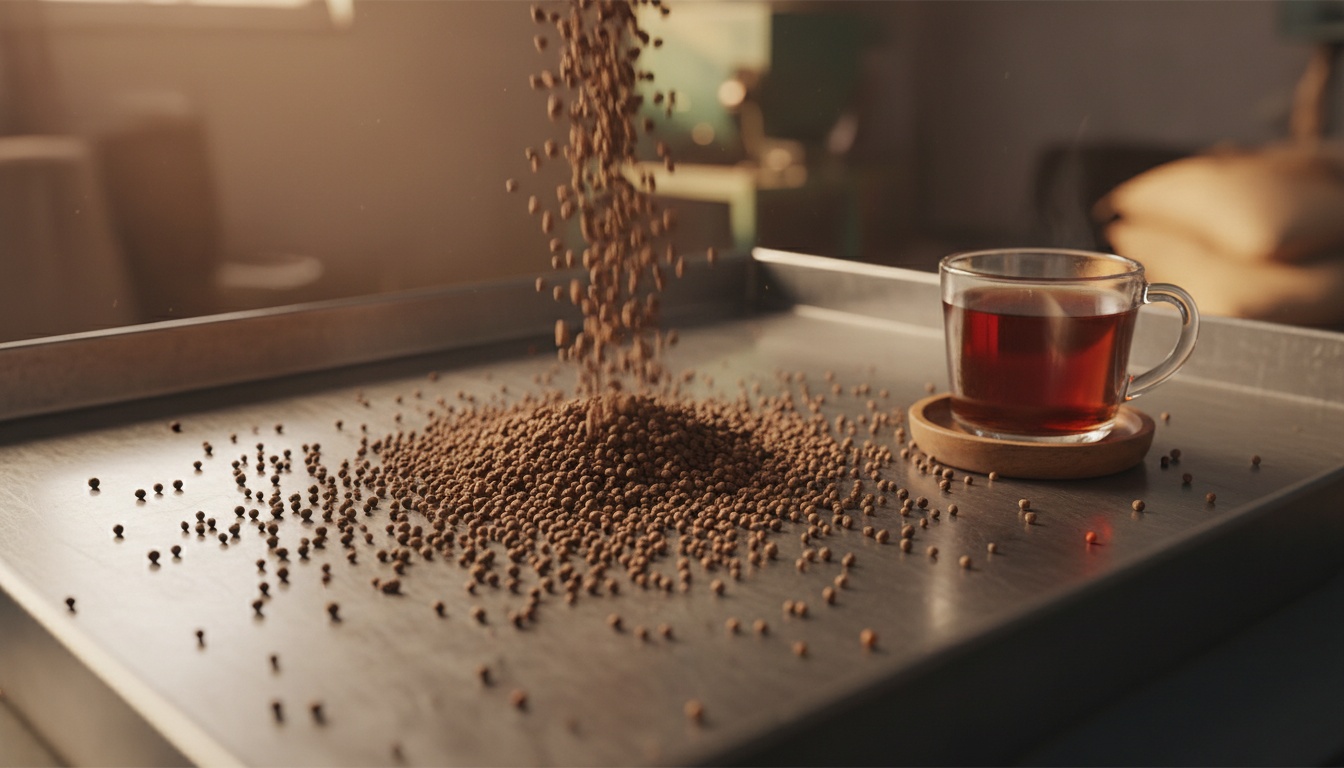
CTC — crush, tear, curl — passes withered leaf through toothed rollers that shred rather than roll it, producing hard granular particles that release colour and strength within a minute or two in the cup. Roughly nine-tenths of Assam's crop is made this way, and it is the reason Assam CTC is the default tea in a teabag and in a cup of chai. Grades run by particle size: BP1 (Broken Pekoe 1) is the largest and most open, PF1 (Pekoe Fannings 1) smaller and faster-brewing, PD (Pekoe Dust) and D1 finer still and used where speed and colour matter most. The cup is the Assam signature — malty, brisk, deep coppery-red — and it stands up to milk in a way lighter teas cannot. Contracts specify garden or estate mark, grade, invoice number, liquor and infusion assessed by a taster, moisture at 6.5% maximum, and ash and water-soluble extract to ISO 3720.
Buy Assam CTC when strength and colour per kilo are what you are paying for: teabag blends, chai and milk-tea programmes, catering and vending, instant tea manufacture and any private-label line competing on cup strength. Second-flush Assam, picked from around late May, carries the fullest malt and commands a premium over first flush and the rains teas that follow. Where CTC is the wrong purchase is a loose-leaf or speciality programme — the particles look like grit next to a whole-leaf orthodox tea, and the nuance a speciality customer is paying for was destroyed in the rollers by design. For that, orthodox Assam is the same district and a different product. CBIL brokers Assam CTC against garden mark, grade, taster assessment, moisture, ash and extract, from the Kolkata and Guwahati auctions or direct estate contracts, on FOB Kolkata and Haldia, CFR and CIF terms.
Excluded origins are not offered, including product re-exported, blended or re-processed through a third country. Every lot moves with a certificate of origin naming the producing plant, mine or grower country, and nothing is quoted before the seller and loading point are known.
Indicative reference
$2,200–3,500 USD / MT
as at September 2026
Reference level only — not an offer, and reviewed quarterly. Levels shown are as at September 2026. Firm pricing is quoted per RFQ, subject to volume, terms and inspection.
Typical Specification
Specifications are indicative and adjusted to the agreed contract and destination requirements. Final spec confirmed on COA / SGS.
Available Grades
Applications
- Teabag blending
- Chai & milk-tea programmes
- Catering & vending
- Instant tea manufacture
- Private-label strength blends
Category
Agri-Foods, Spices & Nuts
Incoterms
FOB · CFR · CIF
Pricing basis
USD / MT
Inspection
SGS / Intertek at load port
Assam CTC Tea — buyer questions
What do BP1, PF1 and PD actually mean?
Particle size within CTC manufacture, largest to smallest. BP1 is the most open leaf and brews a little slower with a cleaner cup; PF1 is smaller and faster; PD and D1 are dust grades that give colour and strength almost instantly, which is why they dominate teabag and vending blends. It is a size ladder, not a quality ladder — pick the one that suits your brew time.
Why does Assam CTC take milk so well?
Strength and body. CTC processing ruptures the leaf cells thoroughly, so polyphenols and colour extract fast and heavily, and Assam's own malty, brisk character is robust enough not to disappear under milk and sugar. A delicate orthodox or a Darjeeling would simply be lost. This is why chai is built on Assam and not on a first-flush tea.
Is second flush worth the premium?
For a blend sold on cup character, usually yes. Second flush, picked from around late May, carries the fullest malt and the deepest colour of the Assam year. First flush is lighter and the rains teas that follow are plainer and cheaper. If you are blending to a strength specification for vending or catering, the cheaper flushes often do the job and the premium buys little.
Can I substitute Kenyan CTC?
Often yes, and blenders do it routinely — but the cup differs. Kenyan CTC is brighter and more coppery with a cleaner briskness; Assam is maltier and heavier. Many teabag blends use both deliberately. Substitute on a taster's assessment rather than on grade alone, because BP1 from the two origins are not interchangeable in the cup.
Ready to source Assam CTC?
Send your quantity, specification, preferred Incoterms and destination port. Qualified requirements receive a workable offer against verified supply.
Have Assam CTC to sell? Submit an offer — we'll match it against live buyer demand.
More in Tea
Assam Orthodox Tea
TGFOP & FTGFOP whole leaf — tippy, malty, loose-leaf grade
Darjeeling Tea
First & second flush — muscatel, GI-protected
Kangra Tea
Himachal orthodox & green — GI-protected in India and the EU
Nilgiri Tea
Fragrant South Indian — clear liquor, iced-tea grade
Ceylon Tea (Sri Lanka)
High, mid & low grown — OP, BOP & BOPF orthodox
Kenya CTC Tea
Bright coppery BP1 & PF1 from the Mombasa auction
Green Tea
Chunmee, gunpowder & sencha — pan-fired and steamed