
Kenya CTC Tea
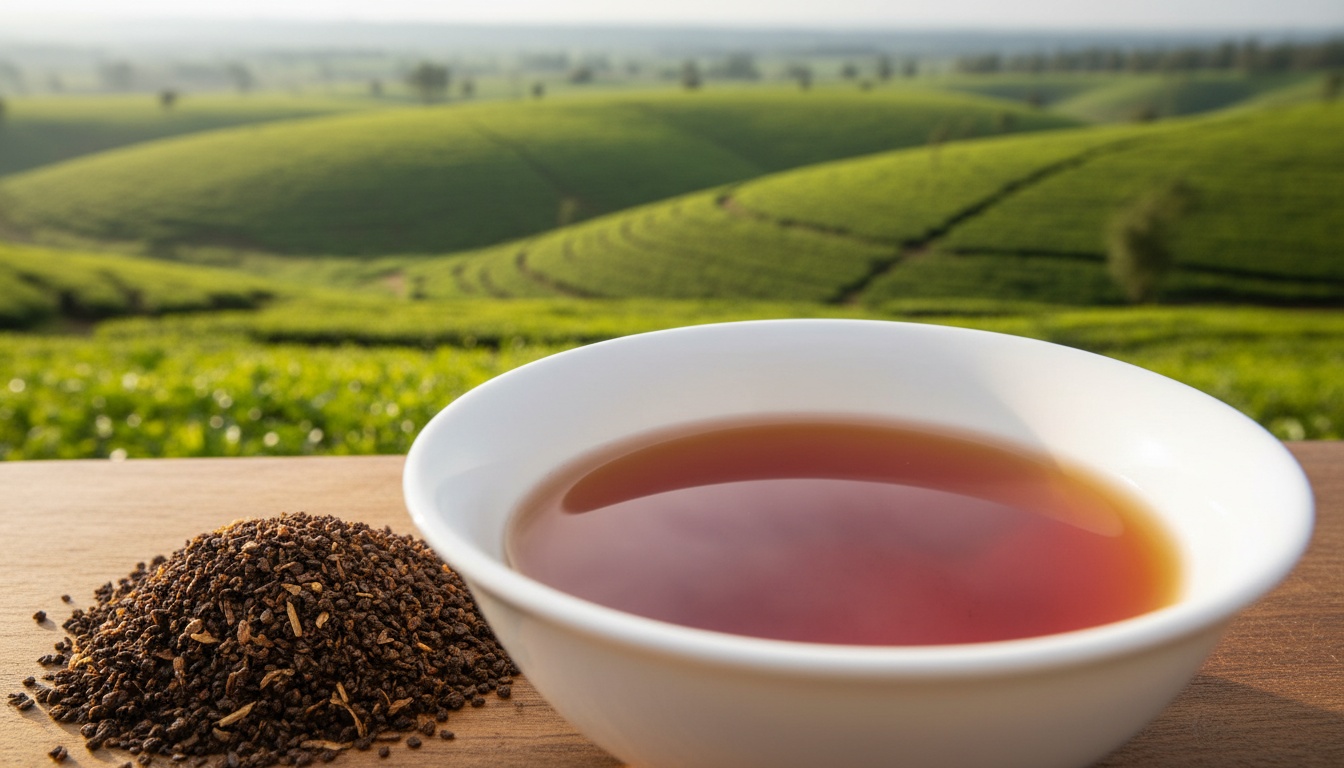
Bright coppery BP1 & PF1 from the Mombasa auction
Kenya is the largest exporter of black tea in the world and close to all of it is CTC. Grown at 1,500 to 2,700 metres on volcanic soils either side of the Rift Valley, largely by smallholders organised through the Kenya Tea Development Agency alongside large estates, and sold principally through the Mombasa auction — the biggest tea auction anywhere. The cup is the origin's commercial signature: exceptionally bright, coppery-red, brisk and clean, with strong colour development that makes it the reference tea for teabag blends where liquor colour sells the product. Grades follow the CTC ladder — BP1, PF1, PD, D1 — with moisture at 6.5% maximum and ISO 3720 parameters standard. Plucking runs year-round with peaks after the two rainy seasons, so supply is continuous rather than seasonal.
Buy Kenyan CTC where colour and briskness per kilo decide the blend: mainstream teabag manufacture, catering and vending, instant and RTD production, and any private label competing on a strong, bright cup at volume. It is the most liquid tea in world trade, which means real depth of supply and directly comparable auction pricing — a genuine advantage for a packer needing continuity. Against Assam CTC the difference is character rather than quality: Kenya is brighter and cleaner, Assam maltier and heavier, and many commercial blends carry both deliberately. Where Kenya is the wrong buy is loose-leaf or speciality, where it has no whole-leaf tradition to speak of; for that, orthodox origins are the answer. CBIL brokers Kenyan CTC against garden or factory mark, grade, taster assessment, moisture and ISO 3720 parameters, from the Mombasa auction or direct, on FOB Mombasa, CFR and CIF terms.
Excluded origins are not offered, including product re-exported, blended or re-processed through a third country. Every lot moves with a certificate of origin naming the producing plant, mine or grower country, and nothing is quoted before the seller and loading point are known.
Indicative reference
$2,000–3,200 USD / MT
as at September 2026
Reference level only — not an offer, and reviewed quarterly. Levels shown are as at September 2026. Firm pricing is quoted per RFQ, subject to volume, terms and inspection.
Typical Specification
Specifications are indicative and adjusted to the agreed contract and destination requirements. Final spec confirmed on COA / SGS.
Available Grades
Applications
- Mainstream teabag blending
- Catering & vending
- Instant tea & RTD
- Colour component in blends
- Private label at volume
Category
Agri-Foods, Spices & Nuts
Incoterms
FOB · CFR · CIF
Pricing basis
USD / MT
Inspection
SGS / Intertek at load port
Kenya CTC Tea — buyer questions
Kenya or Assam CTC?
Character, not quality. Kenyan CTC is brighter, cleaner and more coppery with strong colour development; Assam is maltier and heavier in the cup. Many commercial teabag blends carry both on purpose — Kenya for colour and briskness, Assam for malt and body. Choose on a taster's assessment against your target cup, not on grade or price alone.
What does the Mombasa auction mean for pricing?
Transparency and depth. It is the largest tea auction in the world, held weekly, and it produces directly comparable published prices by grade and factory mark. That makes Kenyan CTC the easiest tea to benchmark and the most liquid to buy in volume. It also means a seller quoting well away from auction levels should be asked why.
Is smallholder KTDA tea different from estate tea?
Not inherently in quality — KTDA factories process leaf from many smallholders and are graded and auctioned on the same basis as estate factories. What differs is traceability and consistency: a named estate offers a tighter, more repeatable profile, while factory marks pool leaf. For a blend either works; for a single-origin story, the estate matters.
Can I get orthodox or loose-leaf tea from Kenya?
Some, but it is a small and relatively young part of the industry — Kenya built itself on CTC and that is where its depth, price advantage and reliability lie. If you need whole-leaf grades, Assam, Ceylon and Darjeeling are the established orthodox origins. Buying Kenya for loose leaf means paying a premium for a product the origin is not set up to make at scale.
Ready to source Kenya CTC?
Send your quantity, specification, preferred Incoterms and destination port. Qualified requirements receive a workable offer against verified supply.
Have Kenya CTC to sell? Submit an offer — we'll match it against live buyer demand.
More in Tea
Assam CTC Tea
BP1, PF1, PD & D1 — malty, strong, milk-tea grade
Assam Orthodox Tea
TGFOP & FTGFOP whole leaf — tippy, malty, loose-leaf grade
Darjeeling Tea
First & second flush — muscatel, GI-protected
Kangra Tea
Himachal orthodox & green — GI-protected in India and the EU
Nilgiri Tea
Fragrant South Indian — clear liquor, iced-tea grade
Ceylon Tea (Sri Lanka)
High, mid & low grown — OP, BOP & BOPF orthodox
Green Tea
Chunmee, gunpowder & sencha — pan-fired and steamed