
Darjeeling Tea
First & second flush — muscatel, GI-protected
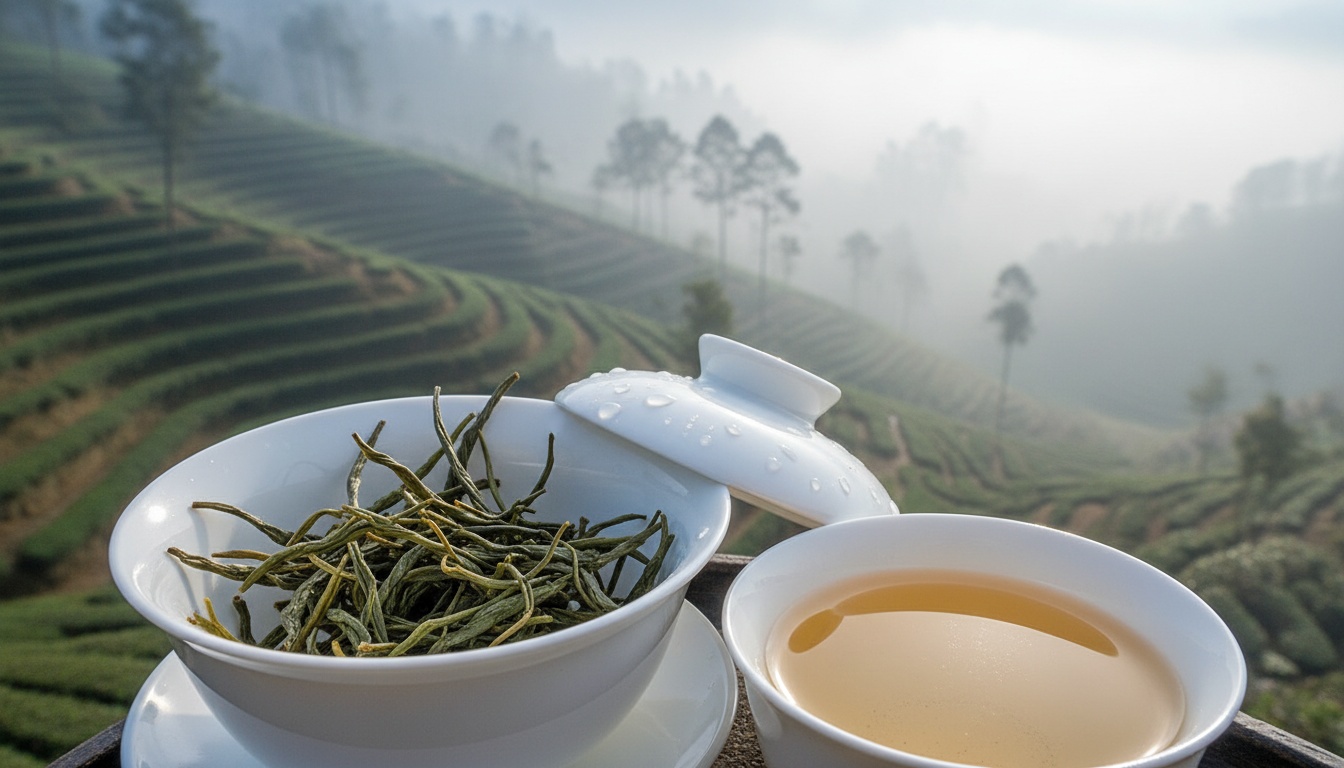
Darjeeling is grown at 600 to 2,000 metres on the Himalayan foothills of West Bengal, from China-variety and hybrid bushes rather than the Assamica plant used in the plains, and the cup is unlike any other Indian tea — light-bodied, floral and astringent, with the distinctive muscatel note that second-flush lots are prized for. The year divides into flushes and they are effectively different products. First flush, picked from March, is pale, brisk and green-floral. Second flush, from late May, is the classic: amber, rounder and carrying muscatel, a grape-like character associated with leaf that has been fed on by the jassid insect. Monsoon teas are plainer and cheaper, and autumnal lots from October have a mellow coppery character of their own. Manufacture is orthodox throughout, graded on the FTGFOP ladder, with garden name carrying real weight in the market.
The commercial fact that matters most is scale. Darjeeling's total annual crop is small — on the order of eight to nine million kilograms from 87 registered gardens — and far more tea is sold worldwide as Darjeeling than Darjeeling produces. It carries a Geographical Indication and a certification mark administered by the Tea Board of India precisely because of that, and a buyer sourcing on price alone will be offered blends and lookalikes. Buy it for premium loose-leaf retail, speciality and hotel programmes, and gifting where the name and the garden are the product. Do not buy it for a blend where the delicacy will be lost, or for milk tea, where Darjeeling is simply the wrong tea. CBIL brokers Darjeeling against garden mark, flush, invoice, grade and taster assessment, with GI documentation, on FOB Kolkata, CFR and CIF terms.
Excluded origins are not offered, including product re-exported, blended or re-processed through a third country. Every lot moves with a certificate of origin naming the producing plant, mine or grower country, and nothing is quoted before the seller and loading point are known.
Indicative reference
$12,000–45,000 USD / MT
as at September 2026
Reference level only — not an offer, and reviewed quarterly. Levels shown are as at September 2026. Firm pricing is quoted per RFQ, subject to volume, terms and inspection.
Typical Specification
Specifications are indicative and adjusted to the agreed contract and destination requirements. Final spec confirmed on COA / SGS.
Available Grades
Applications
- Premium loose-leaf retail
- Speciality tea rooms
- Hotel & fine-dining service
- Gifting & luxury packs
- Single-garden programmes
Category
Agri-Foods, Spices & Nuts
Incoterms
FOB · CFR · CIF
Pricing basis
USD / MT
Inspection
SGS / Intertek at load port
Darjeeling Tea — buyer questions
First flush or second flush?
They are different teas, not different qualities. First flush from March is pale, brisk and green-floral, and the specialty trade prizes it for freshness. Second flush from late May is amber, rounder and carries the muscatel note most people mean when they say Darjeeling. Decide which cup your customer expects before buying — substituting one for the other will be noticed immediately.
How do I know a lot is genuinely Darjeeling?
Documentation and price. Darjeeling has a Geographical Indication and a Tea Board certification mark, and lots trace to one of 87 registered gardens by name and invoice number. Far more tea is sold worldwide as Darjeeling than Darjeeling produces, so a cheap offer is a blend or a lookalike. Contract the garden and flush by name and insist on the certification chain.
What actually causes the muscatel character?
It is associated with leaf that has been fed on by the jassid, a small leafhopper — the plant's response to the insect changes the leaf chemistry and the resulting cup gains a grape-like note. That is why muscatel appears in second flush rather than being made on demand, and why its intensity varies by season and garden. It cannot be manufactured.
Is Darjeeling suitable for milk tea or blending?
No on both counts, and it is worth being blunt. The body is light and the character delicate, so milk obliterates it and a blend buries it — you would be paying the highest price in the tea trade for something nobody can taste. Darjeeling is a loose-leaf, no-milk, single-origin proposition. For milk tea, use Assam CTC.
Ready to source Darjeeling?
Send your quantity, specification, preferred Incoterms and destination port. Qualified requirements receive a workable offer against verified supply.
Have Darjeeling to sell? Submit an offer — we'll match it against live buyer demand.
More in Tea
Assam CTC Tea
BP1, PF1, PD & D1 — malty, strong, milk-tea grade
Assam Orthodox Tea
TGFOP & FTGFOP whole leaf — tippy, malty, loose-leaf grade
Kangra Tea
Himachal orthodox & green — GI-protected in India and the EU
Nilgiri Tea
Fragrant South Indian — clear liquor, iced-tea grade
Ceylon Tea (Sri Lanka)
High, mid & low grown — OP, BOP & BOPF orthodox
Kenya CTC Tea
Bright coppery BP1 & PF1 from the Mombasa auction
Green Tea
Chunmee, gunpowder & sencha — pan-fired and steamed