
Pig Iron
Basic, foundry and nodular pig iron by Si, Mn, P and S for melt shops and foundries
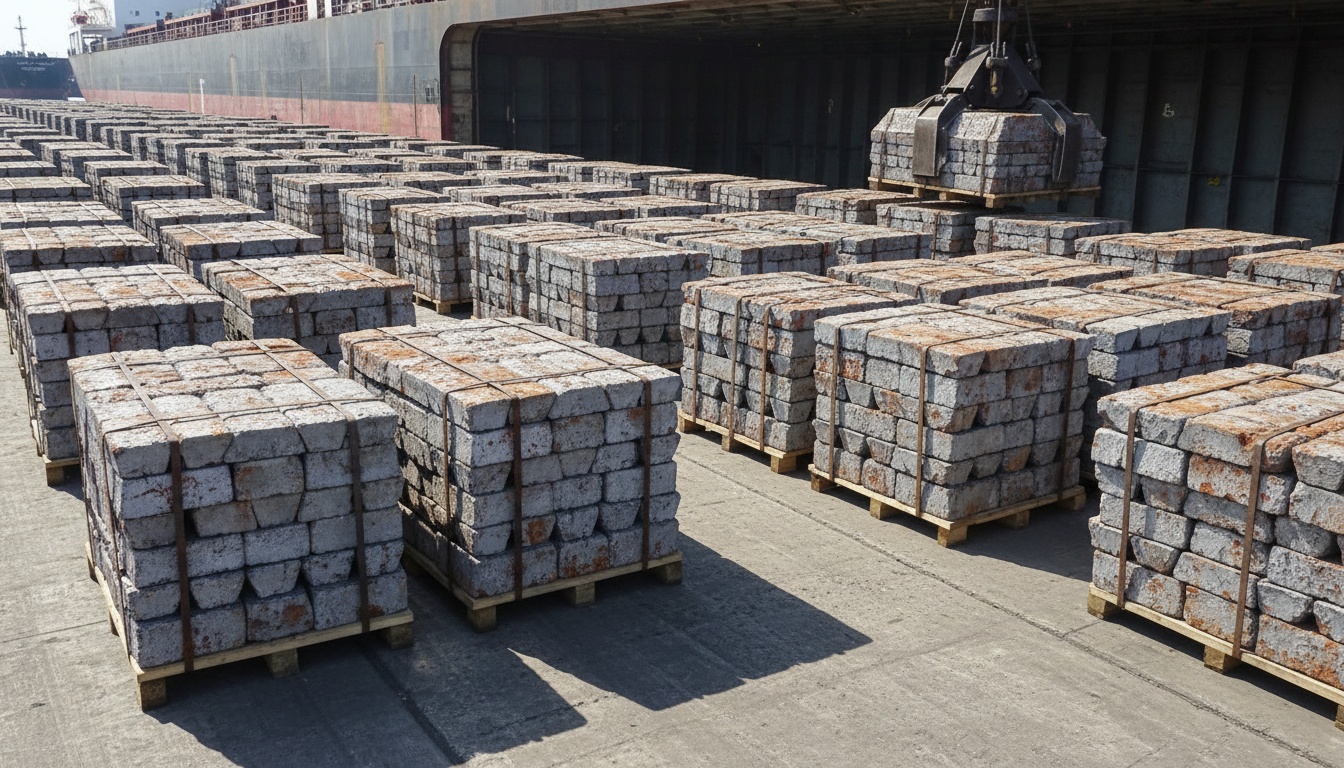
Pig iron is blast-furnace hot metal cast into ingots and sold cold, and it is bought as a known chemistry in a market where scrap is not. Basic pig iron for steelmaking (HS 7201.10) runs 3.5–4.5% carbon, silicon ≤ 1.0–1.2%, manganese 0.1–1.0%, phosphorus ≤ 0.10–0.12% and sulphur ≤ 0.04–0.05%; a melt shop buys it to dilute the copper, tin, chromium and nickel that scrap brings in, and pays for it by the point of residual it removes from the finished steel. Foundry pig iron carries more silicon (1.5–3.5%) so grey-iron castings graphitise, and is bought on manganese and phosphorus bands matched to the casting grade; nodular (ductile-iron base) pig iron is the strictest of the three — low manganese (≤ 0.10%), low phosphorus (≤ 0.05%), low sulphur (≤ 0.02%) and low trace elements — because the magnesium treatment that makes the graphite spheroidal is spoiled by them. Ingots are 5–10 kg, sometimes cast in strands broken to size; a foundry buying for a cupola wants a piece size the charge door takes. Nickel pig iron, a 4–15% Ni product from Indonesian laterite smelters made for stainless steel, is a different product with a different buyer and often clears under the same HS heading, which shows in the trade data. UN Comtrade 2025 export declarations under HS 7201 put India at 0.60 million MT at an average USD 373/MT, Indonesia at 0.19 million MT at USD 1,078/MT — a value that says nickel pig iron rather than basic pig iron — Malaysia at 0.03 million MT at USD 350, Australia at 0.03 million MT at USD 326, the USA at 0.02 million MT at USD 263 and Saudi Arabia at 7,250 MT at USD 386, out of 10 declaring origins; Brazil, the largest seaborne merchant pig iron exporter, had not filed 2025 declarations at the time of writing, and Ukrainian tonnage moves through Black Sea and Danube ports on a schedule the war sets.
The buyer is a melt shop that has found the limit of what scrap alone can make: an electric-arc furnace rolling low-residual billet or wire rod, an induction furnace that cannot refine and so must buy its chemistry in the charge, or a foundry that needs a consistent base iron for ductile castings. That buyer prices pig iron against the scrap it replaces plus the residual it avoids, which is why merchant pig iron tracks HMS and busheling with a premium that widens when residual-sensitive products are in demand. CBIL is a commodity brokerage company and brokers basic, foundry and nodular pig iron from Indian, Brazilian, Ukrainian, Malaysian and Gulf producers and trader positions to electric-arc and induction melt shops and foundries against producer analysis and SGS or Intertek verification of carbon, silicon, manganese, phosphorus and sulphur and of piece size, with trace-element analysis written in for nodular grades. Parcels are structured in Handysize and Supramax bulk lots on FOB and CFR terms, loaded loose and trimmed; pig iron is a high-density cargo and stows low, so the vessel's tank-top strength and stowage plan are checked before fixing. Because CBIL also runs a chartering desk (LaycanDesk), the freight leg is quoted alongside the cargo. Send your silicon, manganese, phosphorus and sulphur bands, the residual limit on your finished product and your monthly draw, and we will work the producer to it.
Need the ship as well? Our chartering desk prices bulk ore and metallics freight on LaycanDesk.
Indicative reference
$330–420 USD / MT
as at September 2026
Reference level only — not an offer, and reviewed quarterly. Levels shown are as at September 2026. Firm pricing is quoted per RFQ, subject to volume, terms and inspection.
Typical Specification
Specifications are indicative and adjusted to the agreed contract and destination requirements. Final spec confirmed on COA / SGS.
Available Grades
Applications
- Electric-arc furnace charge (residual dilution)
- Induction furnace charge
- Grey-iron foundries (cupola & induction)
- Ductile-iron foundries (nodular base)
- Steel foundries
Category
Metals & Recycled Scrap
Incoterms
FOB · CFR · CIF
Pricing basis
USD / MT
Inspection
SGS / Intertek at load port
Pig Iron — buyer questions
Why buy pig iron when scrap is cheaper?
For the residuals. Scrap carries copper, tin, chromium and nickel that no melt shop can refine out, and they make wire rod brittle in drawing, flat products crack on the edge and castings fail spec. Pig iron carries essentially none, so a 20–30% pig iron charge pulls the residuals in the heat down to where a low-residual product can be made from a scrap-based furnace. The premium over HMS is priced against that, and against the carbon it brings, which an electric-arc furnace otherwise buys as charge carbon.
What is the difference between basic, foundry and nodular pig iron?
Silicon and cleanliness. Basic pig iron is low in silicon (≤ 1.2%) because a steelmaker does not want it and removes it in the furnace anyway. Foundry pig iron is high in silicon (1.5–3.5%) so grey-iron castings form graphite and machine well. Nodular pig iron is bought for ductile iron and is held very low in manganese, phosphorus, sulphur and trace elements such as titanium, lead and antimony, because they interfere with the magnesium treatment that makes the graphite spheroidal. The three trade at different prices and a foundry cannot substitute one for another without changing its charge make-up.
Is Indonesian pig iron the same as Indian or Brazilian?
Usually not. Much of Indonesia's HS 7201 export is nickel pig iron from laterite smelters, a 4–15% nickel product made for stainless-steel mills, and the UN Comtrade 2025 declared value of USD 1,078/MT against India's USD 373/MT is the nickel showing through the heading. If you are buying basic pig iron for a carbon-steel melt shop or a foundry, nickel pig iron is the wrong product, and the analysis must show it.
What parcel sizes and freight terms do you work?
Handysize (20–35,000 MT) is the common merchant lot out of Indian east-coast and Black Sea ports; Supramax out of Brazil and where the buyer's draw justifies it. Foundry lots of a few hundred tonnes go in jumbo bags or bundled in containers. On FOB, CFR and CIF terms, and because CBIL also runs a chartering desk we quote the freight leg with the cargo. Pig iron is dense and the stowage plan is agreed with the owner before fixing.
Ready to source Pig Iron?
Send your quantity, specification, preferred Incoterms and destination port. We'll verify supply and respond with a workable offer — usually within one business day.
Have Pig Iron to sell? Submit an offer — we'll match it against live buyer demand.
More in Iron Ore, Pig Iron & DRI
Iron Ore Fines
Second-tier fines 58–65% Fe priced off the 62% index with a differential
Iron Ore Lumps & Pellets
Direct-charge lump and blast-furnace / DR-grade pellets by Fe, tumble index and CCS
DRI & HBI (Direct Reduced Iron)
Hot briquetted iron and DRI by metallisation, carbon and gangue for EAF melt shops