
Lemon Juice Concentrate (Cloudy & Clarified 400–500 GPL, 45–55 °Brix)
400 GPL and 45-55 °Brix cloudy and clarified lemon concentrate, bought on acidity, ratio, essential oil and pulp
Lemon juice concentrate is pressed lemon juice concentrated by vacuum evaporation, and unlike sweet fruit juices where Brix leads the trade, lemon concentrate is bought primarily on acidity: grams per litre of anhydrous citric acid (GPL). The industry standard benchmark is 400 GPL (roughly 45–48 °Brix and ~31–33% w/w citric acid) and 500 GPL (roughly 55 °Brix and ~40% w/w citric acid). Buyers specify five key parameters on the certificate of analysis: corrected Brix, titratable acidity expressed as anhydrous citric acid (GPL or % w/w), the Brix/acid ratio (typically 1.3–1.8, reflecting the natural sharp sourness of lemons), pulp content by volume (cloudy concentrate carries 4–12% centrifugable pulp for cloudy lemonades and squashes; clarified/depectinised concentrate is ultrafiltered to ≤ 0.5% pulp with low turbidity for clear beverages), and recoverable essential oil (by Clevenger distillation, typically held to 0.01–0.05% v/v to ensure organoleptic freshness without terpene oxidation). Reconstituted lemon juice sold in the European Union must achieve a minimum of 8.0 °Brix under Directive 2012/12/EU. UN Comtrade 2024 export declarations for citrus juices other than orange and grapefruit above 20 °Brix (HS 2009.39) total over USD 850 million, dominated by Argentina (Tucumán province, the world's leading industrial lemon processing basin, exporting ~120,000 MT), Spain (Murcia and Alicante basins, processing Fino and Verna cultivars), South Africa, Italy (Sicily), and Türkiye.
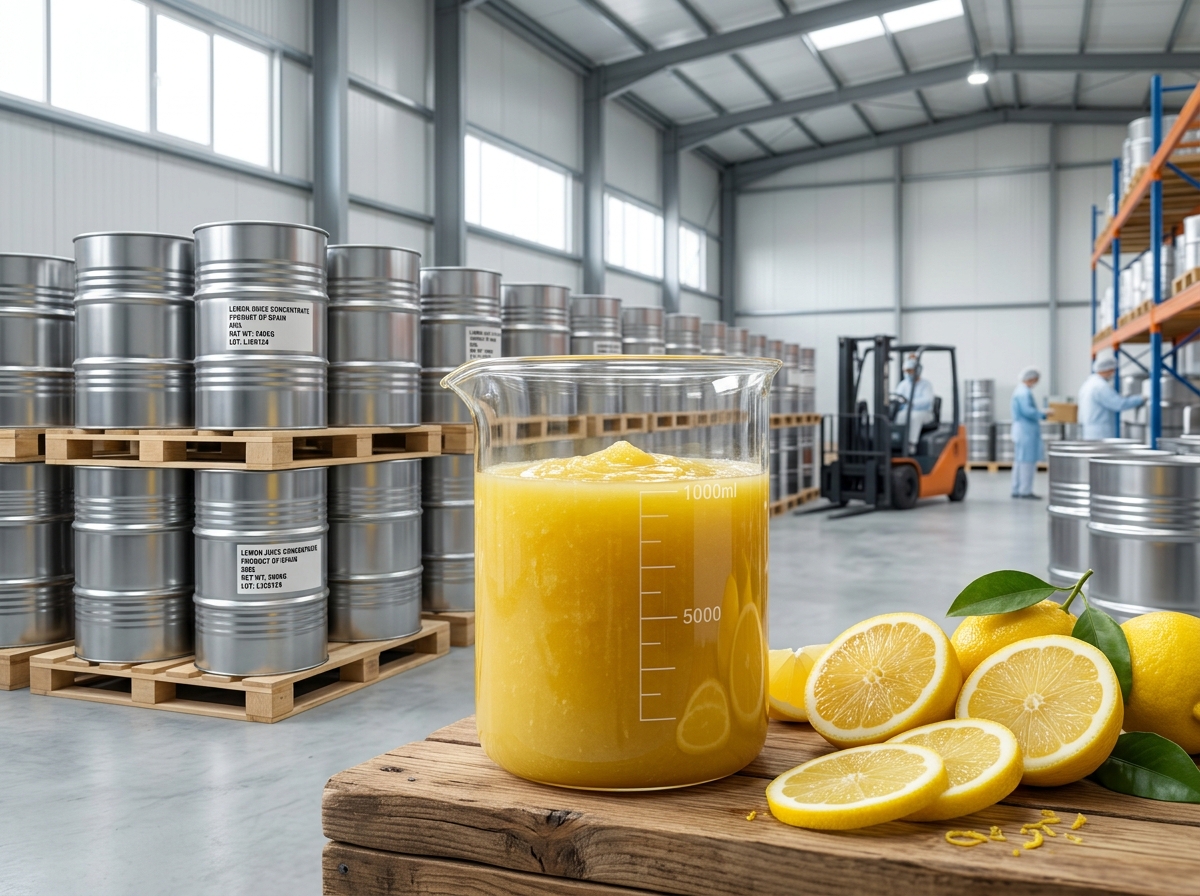
Buyers are carbonated soft drink bottlers, lemonade and iced tea packers, salad dressing and condiment manufacturers, bakery filling producers, and industrial food formulators using concentrated lemon juice as a natural pH regulator, acidulant, and clean-label preservative. Aseptic concentrate is packed in sterile multi-layer barrier bags inside 200–220 litre steel drums (approx. 250–260 kg net weight) and ships in 20-ft dry containers under ambient or cool conditions; frozen concentrate is held in drums at -18 °C in 20-ft reefer containers to preserve volatile top-notes and pale yellow colour. Merchant inventory positions are regularly held in European and UK cold-storage hubs (such as London Gateway and Rotterdam) for prompt pallet and multi-drum release. CBIL is a commodity brokerage company and brokers lemon juice concentrate from primary processors in Argentina, Spain, South Africa, Italy, and Türkiye on FCA, FOB, CFR, and CIF terms against the processor's certificate of analysis, pesticide residue results conforming to destination MRLs (Regulation (EC) No 396/2005 for EU-bound shipments), a certificate of origin, a phytosanitary/health certificate, a halal certificate from an accredited body, and authenticity screening under the AIJN Code of Practice. The concentrate is 100% non-alcoholic pure fruit juice for beverage and food manufacturing. State your required GPL, cloudy or clarified grade, pulp specification, packing format, volume, and destination port, and the trade desk will match it against vetted processing lines.
Excluded origins are not offered, including product re-exported, blended or re-processed through a third country. Every lot moves with a certificate of origin naming the producing plant, mine or grower country, and nothing is quoted before the seller and loading point are known.
Indicative reference
Per lot, on GPL, clarity and origin USD / MT
as at September 2026
Reference level only — not an offer, and reviewed quarterly. Levels shown are as at September 2026. Firm pricing is quoted per RFQ, subject to volume, terms and inspection.
Typical Specification
Specifications are indicative and adjusted to the agreed contract and destination requirements. Final spec confirmed on COA / SGS.
Available Grades
Applications
- Carbonated soft drinks, lemonades, and iced teas
- Fruit juice blends, nectars, and squashes
- Salad dressings, marinades, mayonnaise, and sauces
- Bakery fillings, lemon curds, and confectionery
- Natural clean-label acidulant and antioxidant in food processing
Category
Agri-Foods, Spices & Nuts
Incoterms
FCA · FOB · CFR · CIF
Pricing basis
USD / MT
Inspection
SGS / Intertek at load port
Lemon Juice Concentrate (Cloudy & Clarified 400–500 GPL, 45–55 °Brix) — buyer questions
What does '400 GPL' mean on a lemon juice concentrate specification?
GPL stands for Grams Per Litre of anhydrous citric acid. Because lemon juice is bought for its souring power and acidity rather than sweetness, trading contracts reference the citric acid concentration (typically 400 GPL, corresponding to roughly 45–48 °Brix and ~31.5% w/w citric acid, or 500 GPL at ~55 °Brix). The processor's certificate of analysis confirms both the GPL acidity and refractometric Brix.
What is the difference between cloudy and clarified lemon concentrate?
Cloudy concentrate retains the natural insoluble lemon pulp (4–12% by volume), delivering the characteristic visual haze, cloud stability, and mouthfeel required for cloudy lemonades, squashes, and nectars. Clarified (clear) concentrate is depectinised with enzymes and ultrafiltered to remove pulp (≤ 0.5%) and insoluble solids, creating a crystal-clear liquid base for clear soft drinks, seltzers, and flavoured waters without sedimentation.
How should lemon juice concentrate be stored and transported?
Aseptic concentrate packed in sterile multi-layer barrier bags in 200–220 L steel drums can travel in standard 20-ft dry containers under ambient or cool conditions, though cool-chain handling (0–5 °C) is recommended to prevent browning. Frozen concentrate is shipped in 20-ft reefers at -18 °C, preserving pale lemon colour and delicate volatile citrus aromas for premium applications.
Which quality and regulatory documents accompany lemon concentrate shipments?
Shipments are accompanied by the manufacturer's Certificate of Analysis (verifying GPL, Brix, acidity, essential oil, pulp, and microbiology), pesticide residue screening reports compliant with destination MRLs (such as EU Regulation (EC) No 396/2005), a Certificate of Origin, a health or phytosanitary certificate, and an accredited Halal certificate. Authenticity is validated against AIJN Code of Practice reference guidelines.
Ready to source Lemon Juice Concentrate?
Send your quantity, specification, preferred Incoterms and destination port. Qualified requirements receive a workable offer against verified supply.
Have Lemon Juice Concentrate to sell? Submit an offer — we'll match it against live buyer demand.
More in Fruit Juice Concentrates
Frozen Concentrated Orange Juice (FCOJ 65-66 °Brix)
65-66 °Brix FCOJ in frozen drums at -18 °C or bulk from processor terminals, bought on ratio, acidity and pulp
Apple Juice Concentrate (Clear 70-72 °Brix)
Clear 70-72 °Brix concentrate bought on colour at 440 nm, clarity, acidity and patulin
Pineapple Juice Concentrate (60 °Brix Aseptic)
60 °Brix aseptic concentrate from Thailand, the Philippines, Costa Rica, Kenya and Indonesia
Grape Juice Concentrate (Red & White 65-68 °Brix, RCGM)
Non-alcoholic red and white grape juice concentrate and rectified grape sugar for beverages, food and sweetening
Mango Puree & Concentrate (Totapuri, Alphonso & Kesar)
Aseptic 14 °Brix single-strength puree and 28-30 °Brix concentrate in drums, bought on Brix, Bostwick and acidity