
EVA Copolymer Resin (Ethylene-Vinyl Acetate)
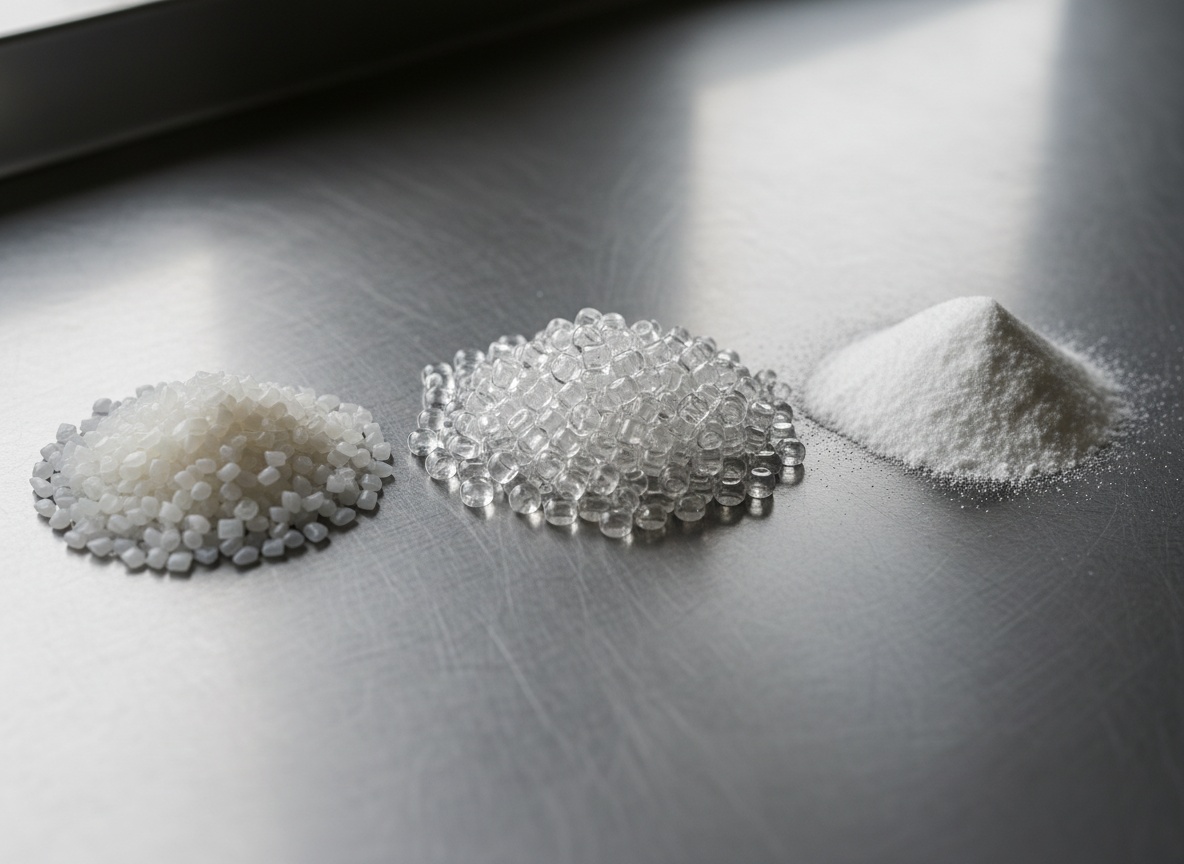
Ethylene-vinyl acetate pellets by VA content and melt index, from foam to solar film
EVA, ethylene-vinyl acetate copolymer (HS 3901.30), is bought on two numbers: vinyl acetate content and melt index. At 18 to 22 per cent VA it is the foam resin of shoe soles, mats and sports goods; at 26 to 28 per cent with a high melt index it is the base of hot-melt adhesives; at 28 to 33 per cent VA with a melt index near 25 it is the encapsulant film resin of photovoltaic modules; and lower-VA grades go to cable compounds, agricultural film and coextruded packaging. The grades are not interchangeable, and a buyer states the VA content, the melt index, the end use and whether the lot is prime, because a foam grade in a PV film line or a film grade in a shoe press fails on sight. Producers include Hanwha Solutions, LG Chem and Lotte Chemical in Korea, Formosa Plastics in Taiwan, SABIC, Exxon Mobil, Dow, LyondellBasell, Braskem, Sipchem, Petronas Chemicals and the Chinese units at Sinopec and Levima, and they sell through distributors and their own regional offices.
China is the market that sets the price: it imports about 70,000 tonnes a month, mostly from Korea, Taiwan, Thailand and Saudi Arabia, and its PV film makers take the high-VA grades under allocation while its foam and footwear industry takes the rest. Korean exports of EVA fell through 2025 as Chinese capacity grew, and the photovoltaic grades have lost share to POE and POE-EVA films on newer cell types, so the 2026 market is easier than the shortage years. Prices are negotiated against the ICIS, Platts and ChemOrbis assessments the Asian market reads, by grade and origin. CBIL brokers EVA from producer distributors against the distributor's authorisation or the producer's allocation confirmation, the certificate of analysis for the lot and SGS or Intertek inspection at stuffing where the buyer wants it, in 25 kg bags on pallets, about 17 tonnes in a 20 ft container, on FOB, CFR and CIF terms. Send the VA content and melt index you run, the end use, the colour and the monthly volume.
See also: POE: the elastomer replacing EVA in PV film · Polyethylene
Need the ship as well? Our chartering desk prices part cargo and parcel space on LaycanDesk.
Excluded origins are not offered, including product re-exported, blended or re-processed through a third country. Every lot moves with a certificate of origin naming the producing plant, mine or grower country, and nothing is quoted before the seller and loading point are known.
Indicative reference
$1,250–1,650 USD / MT
as at September 2026
Reference level only — not an offer, and reviewed quarterly. Levels shown are as at September 2026. Firm pricing is quoted per RFQ, subject to volume, terms and inspection.
Typical Specification
Specifications are indicative and adjusted to the agreed contract and destination requirements. Final spec confirmed on COA / SGS.
Available Grades
Applications
- Footwear foam, mats and sports goods
- Photovoltaic module encapsulant film
- Hot-melt adhesives
- Wire and cable compounds
- Agricultural, greenhouse and packaging film
- Extrusion coating and sealant layers
Category
Petroleum & Energy
Incoterms
FOB · CFR · CIF
Pricing basis
USD / MT
Inspection
SGS / Intertek at load port
EVA Copolymer Resin (Ethylene-Vinyl Acetate) — buyer questions
What does the VA percentage change?
Everything a converter cares about. More vinyl acetate means a softer, clearer, more polar and more adhesive resin with a lower melting point: 18 to 22 per cent foams well, 26 to 28 per cent bonds as a hot melt, 28 to 33 per cent laminates as PV film. The melt index then sets how the grade flows in the process. Both numbers are on the offer.
Is EVA still used in solar modules?
Yes, on a large share of modules, and in co-extruded films with a POE core. Newer bifacial and TOPCon designs moved to POE because EVA releases acetic acid and is more prone to potential-induced degradation, which is why PV-grade EVA demand softened while foam and hot-melt demand did not.
Who sets the EVA price?
China, which imports about 70,000 tonnes a month, and the Korean, Taiwanese and Saudi producers who supply it, priced against ICIS, Platts and ChemOrbis Asian assessments. Chinese capacity additions through 2025 took the shortage premium out of the market.
How is an EVA offer verified?
By the producer behind it. The named producers sell through distributors and regional offices, so an offer carries the distributor's authorisation or the producer's allocation confirmation and the certificate of analysis for the lot. A trader with a datasheet and no authorisation is asked for one before anything else.
Ready to source EVA Resin?
Send your quantity, specification, preferred Incoterms and destination port. Qualified requirements receive a workable offer against verified supply.
Have EVA Resin to sell? Submit an offer — we'll match it against live buyer demand.
More in Polymers: PE, PP, PVC, PET, PS & Engineering Resins
Polyethylene (HDPE, LLDPE, LDPE)
HDPE, LLDPE and LDPE by density, melt index and end-use grade
Polypropylene (Homopolymer & Copolymer)
PP homopolymer raffia, injection and film grades, impact and random copolymers
PVC Resin (Suspension Grade)
Suspension PVC by K-value for pipe, profile, cable and film
PET Resin (Bottle, Fibre & Film Grade Chips)
Bottle-grade PET chips by intrinsic viscosity for water, CSD and edible-oil preforms
Polystyrene (GPPS, HIPS & EPS)
General-purpose and high-impact polystyrene by melt flow, and EPS beads by size
ABS Resin (General Purpose, High Impact & Extrusion)
Acrylonitrile-butadiene-styrene pellets by melt flow and notched Izod impact
Polycarbonate Resin (General, Optical & Flame-Retardant)
PC pellets by melt flow, light transmission and UL94 flame rating
Nylon 6 Chips & Caprolactam
Polyamide 6 chips by relative viscosity, and caprolactam monomer for polymerisers
MDI, TDI & Polyether Polyols
Polymeric MDI, TDI and polyether polyols for rigid and flexible polyurethane foam
POM Polyacetal Resin (Polyoxymethylene)
Acetal copolymer and homopolymer pellets by melt flow, for gears, clips and precision parts
POE Polyolefin Elastomer (Ethylene-Octene)
Metallocene ethylene-octene and ethylene-butene elastomers for PV film, TPO and impact modification