
In-Shell Walnuts
30 mm, 32 mm & 34 mm+ — Chandler & Hartley
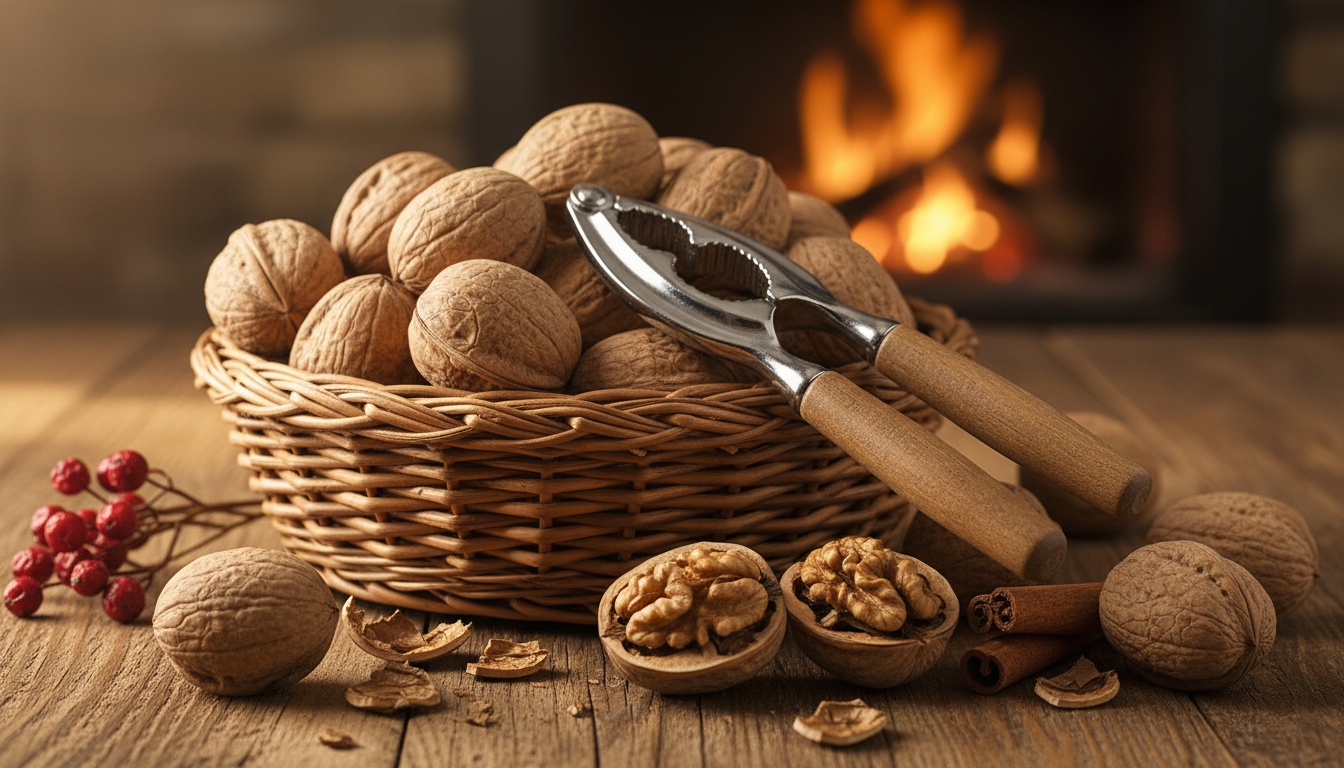
In-shell walnuts are graded on shell diameter and shell appearance rather than on kernel colour, and the screens that matter are 30 mm, 32 mm and 34 mm and above, with larger nuts commanding a clear premium for display. Chandler is the dominant Californian variety and is prized for a light, clean, well-sealed shell and a pale kernel inside; Hartley is the older standard, slightly more variable. Beyond size, buyers contract on shell colour and cleanliness, the percentage of splits and broken shells, kernel fill — an underfilled nut is a customer complaint waiting to happen — and moisture at ≤ 8%, which is higher than for kernels because the shell itself carries moisture.
The honest arithmetic on in-shell is the thing most new buyers miss: roughly half the gross weight is shell, so a price per tonne that looks dramatically cheaper than kernels is not the bargain it appears once you calculate cost per kilo of edible kernel, and you pay freight and storage on the shell either way. What you are buying instead is the occasion — festive and Christmas retail, Diwali and New Year gifting, traditional markets where cracking nuts at the table is part of the product, and bulk bin retail. In-shell also stores considerably better than kernels, because the shell protects the oil from air, which is a genuine advantage for a seasonal programme held for months. For anything baked, ground, packed as kernel or processed, buy kernels and skip the shell entirely. CBIL supplies against certification of size screen, moisture, kernel fill, splits and shell condition, on FOB, CFR and CIF terms.
Excluded origins are not offered, including product re-exported, blended or re-processed through a third country. Every lot moves with a certificate of origin naming the producing plant, mine or grower country, and nothing is quoted before the seller and loading point are known.
Indicative reference
$2,600–3,800 USD / MT
as at September 2026
Reference level only — not an offer, and reviewed quarterly. Levels shown are as at September 2026. Firm pricing is quoted per RFQ, subject to volume, terms and inspection.
Typical Specification
Specifications are indicative and adjusted to the agreed contract and destination requirements. Final spec confirmed on COA / SGS.
Available Grades
Applications
- Festive & Christmas retail
- Diwali & New Year gifting
- Traditional & bin retail
- Cracking at destination
- Seasonal programmes
Category
Agri-Foods, Spices & Nuts
Incoterms
FOB · CFR · CIF
Pricing basis
USD / MT
Inspection
SGS / Intertek at load port
In-Shell Walnuts — buyer questions
Is in-shell really cheaper than kernels?
Not on the basis that matters. Roughly half the gross weight is shell, so once you calculate cost per kilo of edible kernel the gap narrows sharply — and you pay freight and storage on the shell regardless. Buy in-shell for the occasion and the shelf life, not because the headline price per tonne looks low.
Chandler or Hartley?
Chandler for most display purposes — it has a lighter, cleaner, better-sealed shell and a paler kernel, which is why it dominates Californian acreage. Hartley is the older standard, a little more variable in shell colour and seal, and often available at a lower price. If the pack is transparent, take Chandler.
Why does in-shell store better?
The shell keeps air off the oil. Walnut kernels are highly polyunsaturated and oxidise quickly once exposed; in-shell nuts are naturally protected and hold condition far longer. For a seasonal programme bought ahead and held for months, that is a real and underrated advantage.
What is kernel fill and why contract it?
Whether the kernel properly fills the shell. An underfilled or shrivelled nut looks identical from the outside and disappoints the customer who cracks it, which in festive retail is exactly the wrong moment. It is checked by cracking a sample, and it belongs in the contract alongside size screen and splits.
Ready to source In-Shell Walnuts?
Send your quantity, specification, preferred Incoterms and destination port. Qualified requirements receive a workable offer against verified supply.
Have In-Shell Walnuts to sell? Submit an offer — we'll match it against live buyer demand.
More in Dry Fruits & Nuts
Cashew Nuts
W180 to W450 wholes, plus SW, butts, splits & LWP
Almonds
Nonpareil, Independence & Carmel by count per ounce
Walnuts
Light halves, in-shell & kernel by colour grade
Pistachios
Californian & Turkish, open-shell by count per ounce
Dates
Medjool, Ajwa, Safawi & Zahidi by grade and moisture
Dried Figs
Turkish Lerida & Natural by diameter grade
W320 Cashew Kernels
300–320 kernels/lb — the world benchmark grade
Premium Whole Cashews (W180 / W210 / W240)
170–240 kernels/lb — the gifting & premium retail sizes
Cashew Pieces & Splits
LWP, SWP, butts & splits — the processing grades
Nonpareil Almonds
California's premium variety — clean blanching, uniform kernel
California Type Almonds
Carmel, Monterey & Independence — the volume grades
Walnut Kernels
Colour-graded ELH to Amber — halves, quarters & pieces
Hazelnuts (Kernels & In-Shell)
Turkish Giresun & Levant kernels, natural or roasted, 11-13 & 13-15 mm
Macadamia Nuts (NIS & Kernel)
Nut-in-shell and kernel styles 0 to 8 from South Africa, Australia, Kenya & China
Pecans (In-Shell & Kernels)
In-shell and halves by count per pound from the USA, Mexico & South Africa
Brazil Nuts
Shelled kernels by count per pound from Bolivia, Peru & Brazil
Raw Cashew Nuts (RCN, In-Shell)
In-shell RCN by outturn (KOR lbs/80 kg), nut count & moisture
Pine Nuts (Kernels & In-Shell)
Chinese Pinus koraiensis kernels and Pakistani chilgoza, species-declared
Dried Apricots
Turkish Malatya, sulphured or natural, sizes 1 to 8
Prunes (Dried Plums)
Chilean, Californian, Agen & Argentine prunes by count per pound
Date Paste (Bulk, for Bars, Bakery & Fillings)
100% pitted, minced dates in vacuum blocks, bought on moisture, pit fragments, mince size and variety