
Pistachios
Californian & Turkish, open-shell by count per ounce
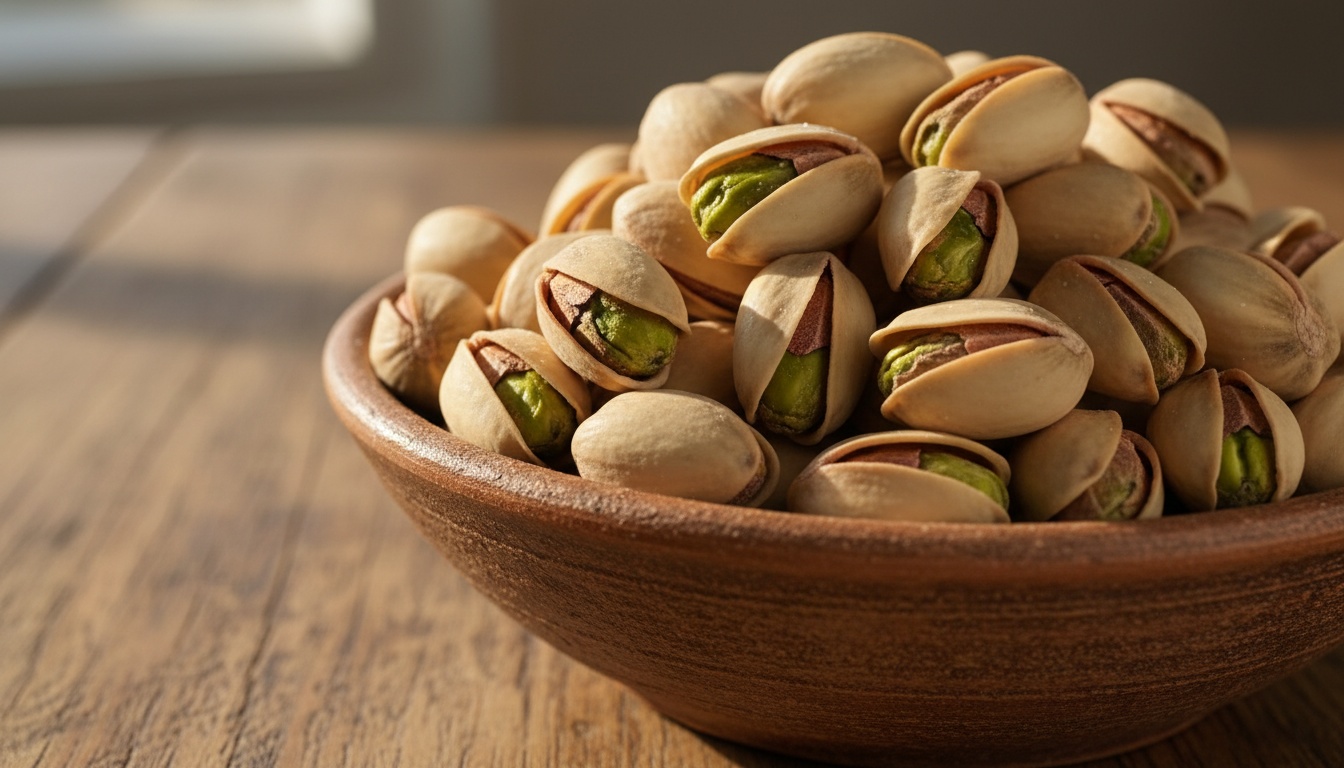
Pistachios come down to two numbers on the contract: count per ounce and open-shell percentage. Count works like almonds — 18/20 and 20/22 are the bold, expensive sizes, 21/25 and 22/24 are the mainstream, 26/28 and 30/32 are small and cheaper — with fewer nuts per ounce meaning a bigger nut. Open-shell percentage is the variable unique to this nut: the shell splits naturally as the kernel expands at maturity, and only a split nut can be eaten from the shell without a tool, so a lot at 90%+ naturally open commands a real premium over one at 75%. Closed shells are not waste — they are diverted to kernel production, where the shell is mechanically cracked and the price resets to a different market entirely. Variety carries shape: long types sit at the top of the market and round types are the volume grade, and CBIL offers both from Californian and Turkish origin only; Californian supply is machine-harvested and consistently processed, and typically shows better open-shell percentages and lower aflatoxin variance than field-dried material, while Turkish Antep (Siirt and Uzun types) supplies the small, intensely green kernel the pastry trade prefers.
Choose in-shell open when you are selling a snack the customer opens — retail packs, roasted-and-salted, HORECA bar nuts, gifting. Choose kernel when the nut disappears into something: pistachio ice cream and gelato, baklava and Middle Eastern pastry, mortadella and charcuterie, nougat and confectionery, pistachio paste and butter. Kernel is graded on its own axes — whole kernels versus splits versus pieces, and green intensity, since deep-green kernel commands a premium in ice cream and pastry where the colour is the product. Aflatoxin is the defining commercial risk on this line: pistachios are the single most frequently rejected nut at EU borders, the EU limit for direct-consumption nuts is 8 ppb B1 / 10 ppb total (stricter again where the nut goes for further processing at 12/15), and a rejected pistachio cargo at these values is a very expensive problem. We source from lots pre-screened to your destination's limit and certify at load port rather than testing on arrival. Supply ships in 10 kg and 22.68 kg vacuum cartons and nitrogen-flushed formats, container-load, on FOB, CFR and CIF terms.
Excluded origins are not offered, including product re-exported, blended or re-processed through a third country. Every lot moves with a certificate of origin naming the producing plant, mine or grower country, and nothing is quoted before the seller and loading point are known.
Indicative reference
$8,200–9,500 USD / MT
as at September 2026
Reference level only — not an offer, and reviewed quarterly. Levels shown are as at September 2026. Firm pricing is quoted per RFQ, subject to volume, terms and inspection.
Typical Specification
Specifications are indicative and adjusted to the agreed contract and destination requirements. Final spec confirmed on COA / SGS.
Available Grades
Applications
- Retail packing & roasted-salted snack
- Ice cream, gelato & dairy
- Baklava & Middle Eastern pastry
- Charcuterie & mortadella
- Nougat, confectionery & pistachio paste
Category
Agri-Foods, Spices & Nuts
Incoterms
FOB · CFR · CIF
Pricing basis
USD / MT
Inspection
SGS / Intertek at load port
Pistachios — buyer questions
What is open-shell percentage and why does it matter?
The pistachio shell splits naturally as the kernel expands at maturity, and only a split nut can be eaten from the shell without a tool. A lot at 90%+ naturally open sells at a real premium over one at 75%, because closed nuts are effectively unsellable as a snack. Closed shells are not scrapped — they are diverted to kernel production, which is a different market at a different price.
Turkish or Californian pistachios — which should I buy?
Different profiles. Turkish Antep material is smaller, with a deep-green kernel and a more intense flavour, and it is what baklava and pastry buyers specify. Californian pistachio is machine-harvested and consistently processed, larger in count, and typically shows better open-shell percentages and tighter aflatoxin variance, which matters if you are shipping into the EU. We quote both and will be straight about the trade-off.
When do I need kernel rather than in-shell?
Whenever the shell never reaches the customer — ice cream and gelato, baklava and pastry, mortadella, nougat, pistachio paste. Kernel is graded on its own axes: whole versus splits versus pieces, plus green intensity, because deep-green kernel commands a premium where the colour is the selling point. Buying in-shell and cracking it yourself is almost always the more expensive route.
Why are pistachios rejected at EU borders so often?
Aflatoxin. Pistachios are among the most frequently rejected nuts at EU entry, with limits of 8 ppb B1 and 10 ppb total for direct consumption. At these values a rejected cargo is a very expensive problem, so we source from lots pre-screened to your destination's limit and certify at load port through SGS or Intertek rather than discovering it on arrival.
Ready to source Pistachios?
Send your quantity, specification, preferred Incoterms and destination port. Qualified requirements receive a workable offer against verified supply.
Have Pistachios to sell? Submit an offer — we'll match it against live buyer demand.
More in Dry Fruits & Nuts
Cashew Nuts
W180 to W450 wholes, plus SW, butts, splits & LWP
Almonds
Nonpareil, Independence & Carmel by count per ounce
Walnuts
Light halves, in-shell & kernel by colour grade
Dates
Medjool, Ajwa, Safawi & Zahidi by grade and moisture
Dried Figs
Turkish Lerida & Natural by diameter grade
W320 Cashew Kernels
300–320 kernels/lb — the world benchmark grade
Premium Whole Cashews (W180 / W210 / W240)
170–240 kernels/lb — the gifting & premium retail sizes
Cashew Pieces & Splits
LWP, SWP, butts & splits — the processing grades
Nonpareil Almonds
California's premium variety — clean blanching, uniform kernel
California Type Almonds
Carmel, Monterey & Independence — the volume grades
Walnut Kernels
Colour-graded ELH to Amber — halves, quarters & pieces
In-Shell Walnuts
30 mm, 32 mm & 34 mm+ — Chandler & Hartley
Hazelnuts (Kernels & In-Shell)
Turkish Giresun & Levant kernels, natural or roasted, 11-13 & 13-15 mm
Macadamia Nuts (NIS & Kernel)
Nut-in-shell and kernel styles 0 to 8 from South Africa, Australia, Kenya & China
Pecans (In-Shell & Kernels)
In-shell and halves by count per pound from the USA, Mexico & South Africa
Brazil Nuts
Shelled kernels by count per pound from Bolivia, Peru & Brazil
Raw Cashew Nuts (RCN, In-Shell)
In-shell RCN by outturn (KOR lbs/80 kg), nut count & moisture
Pine Nuts (Kernels & In-Shell)
Chinese Pinus koraiensis kernels and Pakistani chilgoza, species-declared
Dried Apricots
Turkish Malatya, sulphured or natural, sizes 1 to 8
Prunes (Dried Plums)
Chilean, Californian, Agen & Argentine prunes by count per pound
Date Paste (Bulk, for Bars, Bakery & Fillings)
100% pitted, minced dates in vacuum blocks, bought on moisture, pit fragments, mince size and variety