
Corn Gluten Feed (CGF)
US and EU wet-mill corn gluten feed pellets by protein, fibre and starch
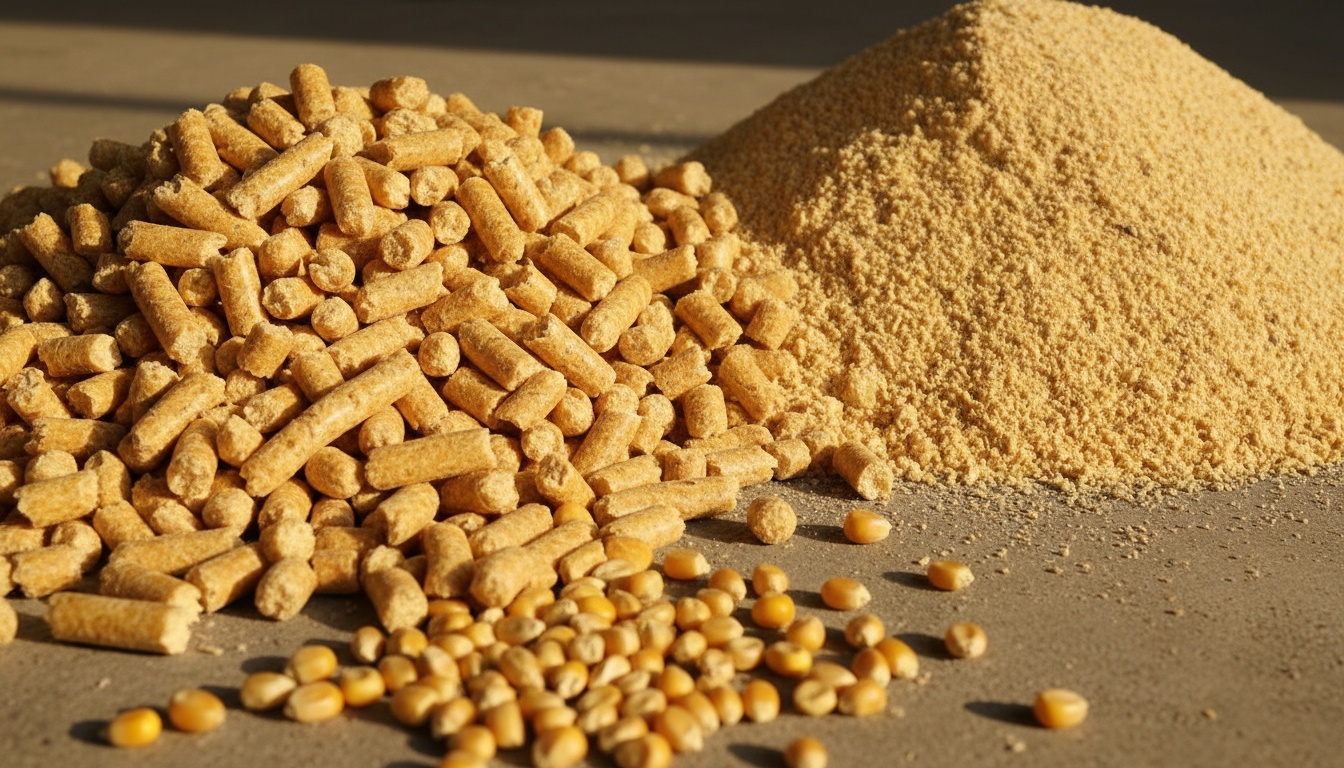
Corn gluten feed is the bulk co-product of corn wet-milling, the process that turns corn into starch, sweeteners and ethanol: after the germ and the high-protein gluten are separated out, the bran is blended back with the concentrated steep liquor (and sometimes germ meal) and dried into a fibrous, tan feed that is pelleted for export. The U.S. Grains Council describes it as roughly 20% crude protein against about 60% for corn gluten meal, and Feedipedia notes that it usually contains 60–65% bran and 35–40% steep liquor, so composition varies with the plant; the export sheet reads crude protein 18–25% (21% is the standard US grade), fat 2–4%, crude fibre 8–10%, starch 12–18%, moisture ≤ 12% and ash ≤ 8%, with aflatoxin B1, DON and fumonisin at the buyer's national limits because mycotoxins in the corn concentrate in the bran. Pelleting (roughly 6–8 mm) raises bulk density, cuts fines and lets it stow and discharge like a grain. It is a ruminant energy-and-protein feed: its fibre is highly digestible, so dairy and beef rations take it at 20–40% of dry matter in place of corn and part of the protein meal, and the University of Florida's beef-cattle guide treats it as a standard supplement for pasture and feedlot cattle. Pigs and poultry take only small inclusions because of the fibre. Corn gluten meal, the 60% protein fraction, is a different product with its own page under yellow corn; buyers who ask for "corn gluten" should say which they mean, because the two differ three-fold in protein and price.
The buyer is a dairy or beef feed mill in Ireland, the UK, Türkiye, Egypt, Korea or Vietnam that takes CGF as its cheapest digestible-fibre ingredient in a Panamax or Supramax lot from the US Gulf or in containers, or an EU compounder taking it by barge from a wet mill in the Netherlands, Belgium, Germany or Hungary. CBIL is a commodity brokerage company and brokers corn gluten feed pellets and meal from US, EU and Chinese wet-milling plants and trader positions against SGS or Intertek certification of protein, fat, fibre, starch, moisture, ash and mycotoxins at the load port, on GAFTA or the buyer's own contract terms. Parcels are structured as Panamax and Supramax bulk out of the US Gulf on FOB and CFR terms, often as combination cargoes with DDGS or soybean hulls into the same discharge port, and in 20-foot and 40-foot containers bulk-loaded with liners for Asian and Mediterranean mills taking 500–3,000 MT a month; because CBIL also runs a chartering desk (LaycanDesk), the freight leg can be quoted with the cargo. Send your protein floor, the mycotoxin limits your regulator enforces, the monthly tonnage and the discharge port and we will work the mill to it.
Need the ship as well? Our chartering desk prices bulk feed ingredient freight on LaycanDesk.
Excluded origins are not offered, including product re-exported, blended or re-processed through a third country. Every lot moves with a certificate of origin naming the producing plant, mine or grower country, and nothing is quoted before the seller and loading point are known.
Indicative reference
Per MT, on protein and origin USD / MT
as at September 2026
Reference level only — not an offer, and reviewed quarterly. Levels shown are as at September 2026. Firm pricing is quoted per RFQ, subject to volume, terms and inspection.
Typical Specification
Specifications are indicative and adjusted to the agreed contract and destination requirements. Final spec confirmed on COA / SGS.
Available Grades
Applications
- Dairy rations
- Beef feedlot & pasture supplement
- Sheep & goat feed
- Compound ruminant feed
- Pig & poultry feed (limited inclusion)
Category
Agriculture & Fertilizers
Incoterms
FOB · CFR · CIF
Pricing basis
USD / MT
Inspection
SGS / Intertek at load port
Corn Gluten Feed (CGF) — buyer questions
What is the difference between corn gluten feed and corn gluten meal?
Protein and price. Both come out of the same corn wet mill, but corn gluten feed is the bran plus steep liquor at roughly 20% protein, while corn gluten meal is the separated gluten fraction at about 60% protein (U.S. Grains Council). CGF is a ruminant fibre-and-energy feed sold by the Panamax; CGM is a concentrated protein for poultry, pet food and aquafeed sold in far smaller lots. Say which you mean; the two differ three-fold in protein and in price per tonne.
Why does CGF composition vary between plants?
Because it is a blend. Feedipedia notes CGF usually contains 60–65% bran and 35–40% steep liquor, and a plant that adds germ meal or more steep liquor moves the protein, fat and starch. That is why export grades are sold by protein guarantee (21% US standard; 18–25% range) rather than by a fixed recipe, and why the certificate should carry protein, fat, fibre and starch together. Ask for the plant's typical analysis and hold the lot to it.
How is corn gluten feed used in a cattle ration?
As a digestible-fibre energy source that also brings protein, replacing part of the corn and part of the protein meal at 20–40% of dry matter in dairy and beef rations; the University of Florida's beef-cattle guide treats it as a routine supplement for cattle on pasture and in feedlots. Its fibre is fermented in the rumen without the acidosis risk of starch, which is why dairy nutritionists like it. Pigs and poultry take only small inclusions.
What parcel sizes and freight terms do you work?
Panamax 60–70,000 MT and Supramax 50–55,000 MT out of the US Gulf on FOB and CFR terms into Irish, UK, Turkish, Egyptian and Korean discharge ports, often combined with DDGS or soybean hulls; barge and coaster lots from EU wet mills; 20-foot and 40-foot containers bulk-loaded with liners for Asian and Mediterranean mills taking 500–3,000 MT a month. Because CBIL also runs a chartering desk, the freight can be quoted with the cargo.
Ready to source Corn Gluten Feed?
Send your quantity, specification, preferred Incoterms and destination port. Qualified requirements receive a workable offer against verified supply.
Have Corn Gluten Feed to sell? Submit an offer — we'll match it against live buyer demand.
More in Feed By-products: PKE, DDGS, Rice Bran, Fishmeal & Fish Oil
Palm Kernel Expeller (PKE)
Indonesian & Malaysian PKE by protein, fibre, shell and aflatoxin
DDGS (Distillers Dried Grains with Solubles)
US corn DDGS by protein, fat, fibre, colour and mycotoxins
Rice Bran & De-Oiled Rice Bran (DORB)
Full-fat rice bran and de-oiled rice bran for feed, by protein, oil and FFA
Fishmeal (Steam-Dried Super Prime, Prime & Standard)
Anchovy and pelagic fishmeal by protein, TVN, histamine and antioxidant, in bags or bulk
Fish Oil (Crude Anchovy & Pelagic Fish Oil, Feed and Refining Grades)
Crude fish oil by EPA+DHA, FFA, peroxide and anisidine, in flexitanks and ISO tanks
Sunflower Meal (Pellets & Meal)
Black Sea, Danube and Argentine sunflower meal by protein, fibre and hull share
Rapeseed & Canola Meal
Canadian, EU and Indian rapeseed meal by protein, glucosinolates and fibre
Copra Meal (Coconut Expeller & Extraction)
Philippine and Indonesian copra meal by protein, oil, fibre and aflatoxin
Cottonseed Meal & Cake
Decorticated and undecorticated cottonseed meal by protein, fibre and free gossypol