
Sunflower Meal (Pellets & Meal)
Black Sea, Danube and Argentine sunflower meal by protein, fibre and hull share
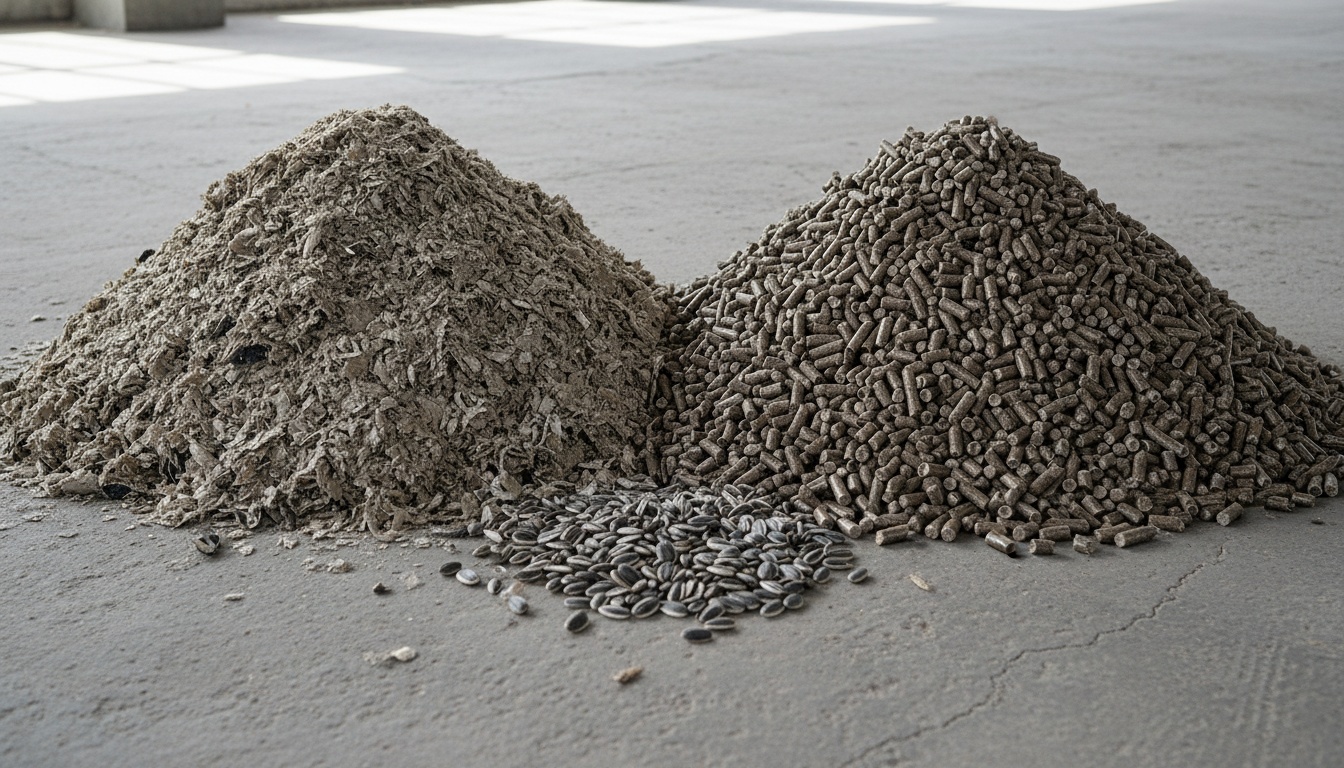
Sunflower meal is the residue left after sunflower seed is dehulled, pressed and solvent-extracted for oil, and it is sold on two numbers that move together: protein and fibre. Feedipedia's compilation puts dehulled or partially dehulled solvent-extracted meal at 35–39% crude protein and 20–26% crude fibre on dry matter, and non-dehulled meal at 29–33% protein and 27–31% fibre, both with 2–3% residual oil; the export contract grades that follow from this are the high-protein pellets (36–38% protein, sold as "36/38" or "high-pro") and the standard 29–32% meal, with fibre, moisture (≤ 12%), sand and silica and aflatoxin B1 on the sheet. It is a ruminant and layer protein first: lysine is short so pig and broiler inclusions are limited, but dairy and beef rations take it freely and it displaces soybean meal at a discount that tracks the two. UN Comtrade 2024 export declarations under HS 2306.30 show Ukraine at 4.54 million MT at an average USD 213/MT, Hungary 0.67 million MT at USD 256, Argentina 0.66 million MT at USD 209, Bulgaria 0.53 million MT at USD 295, the Netherlands 0.40 million MT at USD 317 and Romania 0.34 million MT at USD 273. USDA FAS Oilseeds: World Markets and Trade puts 2025/26 world sunflower meal output at about 22.4 million MT, with the EU at 4.4 million MT, and expects Argentine sunflower meal exports to reach 1.8 million MT, the highest in over 25 years, with shipments directed mainly to the EU and in particular Bulgaria and Romania. Argentina's export duty on sunflower by-products (meal and oil) stands at 22.5% and is scheduled to fall in step with the seed rate from 2027, per the government's Decree 423/2026 schedule.
The buyers are dairy and layer feed mills in Türkiye (sunflower meal imports of 367,000 MT in early 2025 per Tridge), Bangladesh, Pakistan and India, and EU compounders in the Netherlands, Spain, Italy and Poland who receive it in Panamax and Supramax lots from the Black Sea, the Danube ports of Constanța and Varna and the Up-River Paraná. CBIL is a commodity brokerage company and brokers sunflower meal and pellets from Bulgarian, Romanian, Hungarian, Argentine and Ukrainian crushers and trader positions against SGS or Intertek certification of protein, fibre, fat, moisture, ash and aflatoxin at the load port, with amino-acid profile on request, on GAFTA or FOSFA terms. Parcels are structured as Handysize and Supramax bulk on FOB and CFR terms, and in 20-foot and 40-foot containers bulk-loaded with liners or in jumbo bags for South Asian mills taking 500–3,000 MT a month; because CBIL also runs a chartering desk (LaycanDesk), the freight leg can be quoted with the cargo. Send your protein and fibre bands, the aflatoxin limit your regulator enforces, the monthly tonnage and the discharge port and we will work the crusher to it.
Need the ship as well? Our chartering desk prices bulk feed ingredient freight on LaycanDesk.
Excluded origins are not offered, including product re-exported, blended or re-processed through a third country. Every lot moves with a certificate of origin naming the producing plant, mine or grower country, and nothing is quoted before the seller and loading point are known.
Indicative reference
Per MT, on protein and origin USD / MT
as at September 2026
Reference level only — not an offer, and reviewed quarterly. Levels shown are as at September 2026. Firm pricing is quoted per RFQ, subject to volume, terms and inspection.
Typical Specification
Specifications are indicative and adjusted to the agreed contract and destination requirements. Final spec confirmed on COA / SGS.
Available Grades
Applications
- Dairy & beef rations
- Layer feed
- Sheep & goat feed
- Aquafeed
- Rabbit & horse feed
Category
Agriculture & Fertilizers
Incoterms
FOB · CFR · CIF
Pricing basis
USD / MT
Inspection
SGS / Intertek at load port
Sunflower Meal (Pellets & Meal) — buyer questions
What is the difference between 36/38 pellets and standard sunflower meal?
Hull share. When the crusher dehulls the seed before extraction the meal comes out at 35–39% protein and 20–26% fibre on dry matter; when it does not, protein falls to 29–33% and fibre rises to 27–31% (Feedipedia). The 36/38 grade is sold as pellets so it stows and discharges cleanly; the standard meal is often loose. Price both on protein delivered, and fix a fibre ceiling, because a lot that only just makes 36% protein with 26% fibre feeds differently from one at 38% and 21%.
Who exports sunflower meal and at what declared value?
UN Comtrade 2024 export declarations under HS 2306.30: Ukraine 4.54 million MT at USD 213/MT, Hungary 0.67 million MT at USD 256, Argentina 0.66 million MT at USD 209, Bulgaria 0.53 million MT at USD 295, the Netherlands 0.40 million MT at USD 317 and Romania 0.34 million MT at USD 273. The Argentine and Ukrainian averages are FOB deep-sea bulk; the Bulgarian, Dutch and Romanian averages are weighted by intra-EU truck and barge trade in higher-protein pellets. USDA FAS expects Argentine meal exports of 1.8 million MT in 2025/26, mainly into Bulgaria and Romania.
Which species can take sunflower meal, and at what inclusion?
Ruminants first: dairy and beef rations replace part of the soybean meal with it and are limited only by energy density. Layers take it well; broilers and pigs are limited by its low lysine and high fibre, so inclusions there stay in the single digits to low teens unless the ration is balanced with synthetic lysine. Aquafeed uses dehulled meal as a plant protein. We match the grade to the species: high-protein pellets for poultry and aqua, standard meal for cattle and sheep.
What parcel sizes and freight terms do you work?
Handysize 25–35,000 MT and Supramax 50–55,000 MT out of the Black Sea, Constanța, Varna and the Up-River Paraná on FOB and CFR terms; Panamax combination cargoes with corn or soybean meal into the same discharge port; 20-foot and 40-foot containers bulk-loaded with liners or in jumbo bags for South Asian mills taking 500–3,000 MT a month. Because CBIL also runs a chartering desk, the freight can be quoted with the cargo so the delivered number is on one sheet.
Ready to source Sunflower Meal?
Send your quantity, specification, preferred Incoterms and destination port. Qualified requirements receive a workable offer against verified supply.
Have Sunflower Meal to sell? Submit an offer — we'll match it against live buyer demand.
More in Feed By-products: PKE, DDGS, Rice Bran, Fishmeal & Fish Oil
Palm Kernel Expeller (PKE)
Indonesian & Malaysian PKE by protein, fibre, shell and aflatoxin
DDGS (Distillers Dried Grains with Solubles)
US corn DDGS by protein, fat, fibre, colour and mycotoxins
Rice Bran & De-Oiled Rice Bran (DORB)
Full-fat rice bran and de-oiled rice bran for feed, by protein, oil and FFA
Fishmeal (Steam-Dried Super Prime, Prime & Standard)
Anchovy and pelagic fishmeal by protein, TVN, histamine and antioxidant, in bags or bulk
Fish Oil (Crude Anchovy & Pelagic Fish Oil, Feed and Refining Grades)
Crude fish oil by EPA+DHA, FFA, peroxide and anisidine, in flexitanks and ISO tanks
Rapeseed & Canola Meal
Canadian, EU and Indian rapeseed meal by protein, glucosinolates and fibre
Copra Meal (Coconut Expeller & Extraction)
Philippine and Indonesian copra meal by protein, oil, fibre and aflatoxin
Cottonseed Meal & Cake
Decorticated and undecorticated cottonseed meal by protein, fibre and free gossypol
Corn Gluten Feed (CGF)
US and EU wet-mill corn gluten feed pellets by protein, fibre and starch