
DDGS (Distillers Dried Grains with Solubles)
US corn DDGS by protein, fat, fibre, colour and mycotoxins
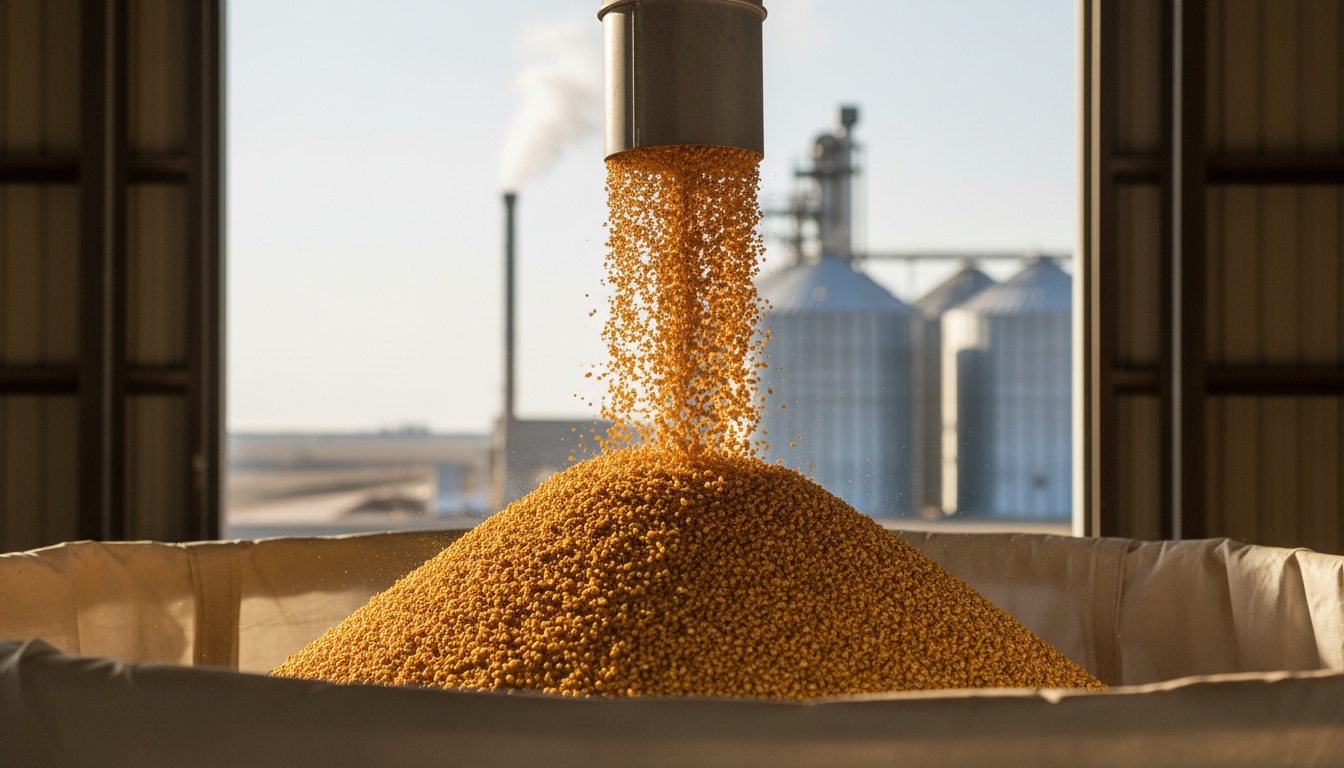
DDGS is the co-product of corn ethanol: after the starch has been fermented and distilled off, the remaining protein, fat, fibre and yeast are dried into a golden, granular meal that carries roughly three times the nutrient concentration of the grain it came from. The specification reads crude protein 26–30% (some plants guarantee 27% minimum), fat 6–12% (lower where the plant extracts corn oil first — 6–8% for oil-extracted DDGS, 10–12% for full-fat), crude fibre 7–10%, moisture ≤ 12%, ash ≤ 6% and a colour score, because colour is the visible proxy for drying temperature: a golden-orange DDGS was dried gently and its lysine is available; a dark brown, burnt-smelling one has been over-dried and its lysine digestibility can fall by a third. Mycotoxins follow the corn crop — aflatoxin ≤ 20 ppb, DON (vomitoxin) and fumonisin at the buyer's national limits — and are worth testing every lot in a bad crop year because the concentration triples through the ethanol process. Sulphur is worth watching too (0.4–1.0%, from the sulphuric acid used in the plant) for ruminant rations. UN Comtrade 2025 export declarations under HS 2303 put the USA at 13.39 million MT at an average USD 253/MT, with India at 0.72 million MT at USD 216 and Egypt at 0.60 million MT at USD 262 as the next reporters, though those two are largely corn gluten feed and starch residues under the same heading. The US destination list for 2025 shows Mexico 2.38 million MT at USD 229/MT, Korea 1.51 million MT at USD 218, Vietnam 1.17 million MT at USD 240, Indonesia 1.13 million MT at USD 283, Colombia 0.88 million MT, Turkiye 0.77 million MT at USD 282, Japan 0.57 million MT, Thailand 0.28 million MT at USD 291 and Morocco 0.23 million MT.
A feed mill buys DDGS as a mid-protein energy ingredient that displaces some soybean meal and some corn at once, at 10–20% inclusion in poultry and swine and up to 30% in dairy and beef. Its price sits between corn and soybean meal and moves with both, so the buyer's arithmetic is the substitution value against those two on the day, at the discharge port, with the fat and colour on the certificate. CBIL is a commodity brokerage company and brokers corn DDGS from US ethanol plants and trader positions against SGS or Intertek certification of protein, fat, fibre, moisture, ash, colour and mycotoxins, with amino-acid profile and sulphur on request. Parcels are structured in Supramax bulk lots out of the US Gulf and the Pacific Northwest on FOB and CFR terms, and in 20-foot and 40-foot containers (bulk-loaded with liners or in jumbo bags) for buyers in Indonesia, Vietnam, Bangladesh, Egypt and Saudi Arabia who want 500–3,000 MT a month; because CBIL also runs a chartering desk (LaycanDesk), the freight leg can be quoted alongside a bulk cargo. Send your protein and fat bands, the fibre ceiling, the mycotoxin limits your regulator enforces and the monthly tonnage and we will work the plant to it.
Need the ship as well? Our chartering desk prices bulk feed ingredient freight on LaycanDesk.
Indicative reference
$220–300 USD / MT
as at September 2026
Reference level only — not an offer, and reviewed quarterly. Levels shown are as at September 2026. Firm pricing is quoted per RFQ, subject to volume, terms and inspection.
Typical Specification
Specifications are indicative and adjusted to the agreed contract and destination requirements. Final spec confirmed on COA / SGS.
Available Grades
Applications
- Broiler & layer feed
- Swine grower-finisher feed
- Dairy & beef rations
- Aquafeed (tilapia, catfish, shrimp)
- Pet food
Category
Agriculture & Fertilizers
Incoterms
FOB · CFR · CIF
Pricing basis
USD / MT
Inspection
SGS / Intertek at load port
DDGS (Distillers Dried Grains with Solubles) — buyer questions
Why does the colour of DDGS matter?
Because it shows how hot the dryer ran. Distillers grains are dried after the solubles are added back, and the sugars in the solubles brown at high temperature in a Maillard reaction that binds lysine so the animal cannot use it. Golden-orange DDGS has most of its lysine available; dark brown DDGS can have a third less. Two lots with the same 27% protein on paper can differ that much in what a broiler gets. Ask for a colour score (Hunter L) or at least a retained sample.
Oil-extracted or full-fat DDGS?
Most US plants now spin corn oil out of the thin stillage, so the common export grade is 6–8% fat rather than the 10–12% of a decade ago. Lower fat means lower energy for the animal and, by difference, a little more protein and fibre per tonne. Pigs and poultry rations built on the older full-fat figures will under-deliver energy on oil-extracted DDGS unless the formulation is corrected. Specify the fat band you have formulated for and price the two grades on energy, not on protein alone.
Where does US DDGS go and at what price?
UN Comtrade 2025 export declarations under HS 2303 show the USA at 13.39 million MT at an average USD 253/MT: Mexico 2.38 million MT at USD 229, Korea 1.51 million MT at USD 218, Vietnam 1.17 million MT at USD 240, Indonesia 1.13 million MT at USD 283, Colombia 0.88 million MT, Turkiye 0.77 million MT at USD 282 and Japan 0.57 million MT. The Asian averages sit above the Mexican one because most of that tonnage moves in containers rather than by rail, and container freight is inside the declared value.
Containers or bulk?
Containers dominate the Asian DDGS trade — 20-foot boxes bulk-loaded with a liner at about 25 MT each, or jumbo bags — because a feed mill can take 500 MT a month through a container yard with no silo. Supramax bulk parcels out of the US Gulf or the Pacific Northwest make sense once a buyer or a group of mills can take 40–55,000 MT into a bulk berth and combine it with soybean meal or corn on the same vessel. Because CBIL also runs a chartering desk, the bulk freight can be quoted with the cargo.
Ready to source DDGS?
Send your quantity, specification, preferred Incoterms and destination port. We'll verify supply and respond with a workable offer — usually within one business day.
Have DDGS to sell? Submit an offer — we'll match it against live buyer demand.