
Himalayan Salt Lamps
Natural & carved lamps by graded weight band
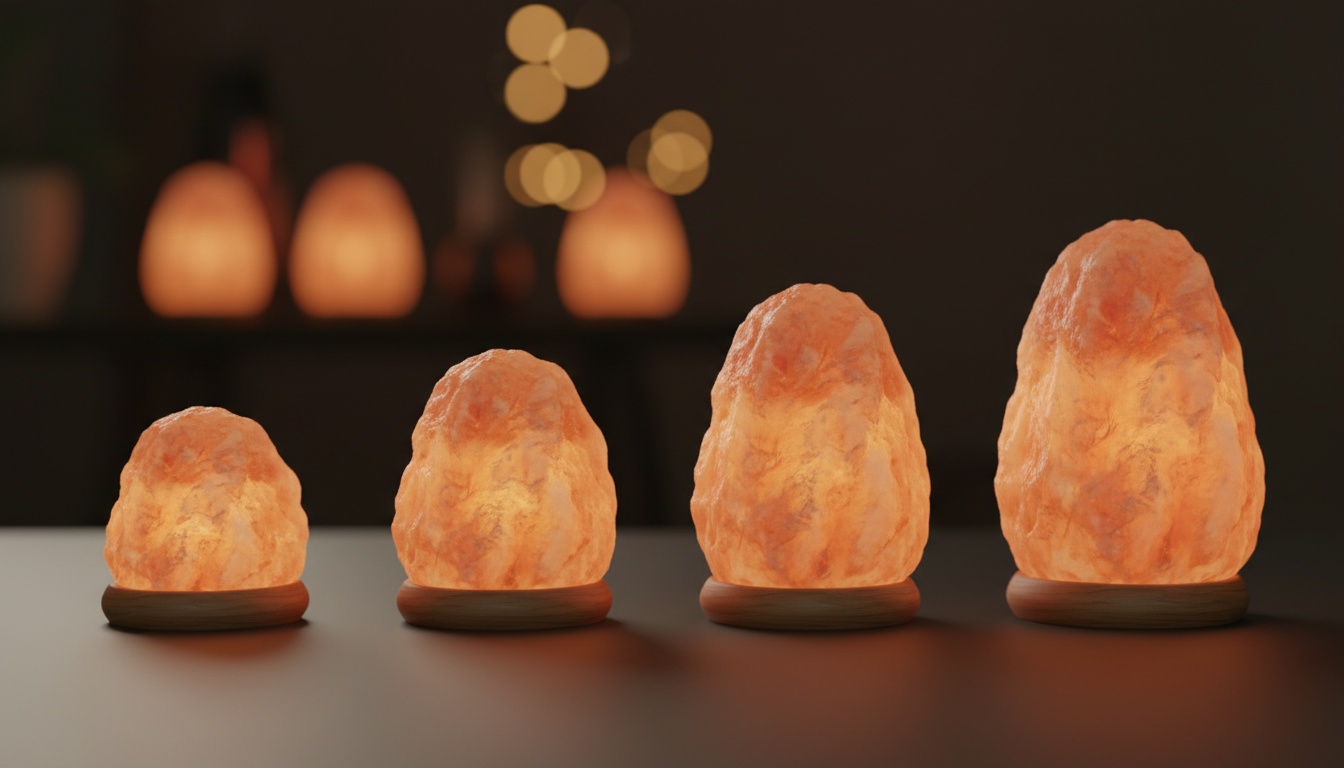
Salt lamps are a retail product bought by weight band, and the band is the price unit: 2–3 kg and 3–5 kg are the volume retail sizes, 5–7 kg and 7–10 kg the mid-range, and 10–20 kg plus the display pieces. Natural form — the rough, uncarved crystal — is the largest share of the trade; carved shapes (bowl, pyramid, sphere, obelisk) and USB and tealight formats serve gifting and impulse retail. Beyond weight, the variables that decide whether a container sells through are translucency (the crystal must actually glow, which is a selection question at the mine and the reason lamp-grade material is picked rather than taken from general run), colour consistency across a carton, base quality, and the electrical fitting. That last one is where consignments fail: the cord, switch and lamp holder must carry the destination's certification — CE and UKCA for Europe and the UK, UL or ETL for North America — and a lamp assembled with an uncertified fitting is not sellable no matter how good the crystal is.
Buy lamps rather than brick or décor blocks when the product is going onto a retail shelf or into a gifting programme; the crystal is selected for how it transmits light rather than for dimensional accuracy or food certification. The two operational realities worth planning for are weight and moisture. Weight bands mean a container's piece count varies with the mix, so quote and contract on tonnage with a declared band distribution rather than assuming a piece count. And salt is hygroscopic — lamps sweat in humid storage and can mark packaging and bases — so inner packing, desiccant and a dry warehouse are part of the specification, not an afterthought. CBIL supplies assembled lamps with base, cord, switch and bulb to your nominated electrical standard, or unfitted crystal for local assembly, packed in printed or plain cartons for private label, on FOB Karachi and Port Qasim, CFR and CIF terms.
Need the ship as well? Our chartering desk prices bulk and bagged salt freight on LaycanDesk.
Excluded origins are not offered, including product re-exported, blended or re-processed through a third country. Every lot moves with a certificate of origin naming the producing plant, mine or grower country, and nothing is quoted before the seller and loading point are known.
Indicative reference
$420–780 USD / MT
as at September 2026
Reference level only — not an offer, and reviewed quarterly. Levels shown are as at September 2026. Firm pricing is quoted per RFQ, subject to volume, terms and inspection.
Typical Specification
Specifications are indicative and adjusted to the agreed contract and destination requirements. Final spec confirmed on COA / SGS.
Available Grades
Applications
- Wholesale & retail distribution
- Gifting programmes
- Private-label home & wellness
- E-commerce fulfilment
- Spa & clinic retail
Category
Agri-Foods, Spices & Nuts
Incoterms
FOB · CFR · CIF
Pricing basis
USD / MT
Inspection
SGS / Intertek at load port
Himalayan Salt Lamps — buyer questions
Should I contract by piece or by weight?
By tonnage with a declared weight-band distribution. Lamps are sold in bands, so the piece count in a container swings with the mix — a load skewed to 7–10 kg pieces holds far fewer units than one skewed to 2–3 kg. Agree the band split up front and you will know both your landed cost per unit and your shelf mix before the container is packed.
What electrical certification do I need?
Whatever your destination requires, and it is not optional: CE and UKCA for Europe and the UK, UL or ETL for North America. The certification attaches to the cord, switch and lamp holder rather than the salt. This is the most common reason a lamp consignment cannot be sold on arrival, so nominate the standard at enquiry stage and we will source assembled to it — or ship unfitted crystal for you to assemble locally.
Why do some lamps glow better than others?
Translucency, which is a selection decision at the mine rather than something you can fix later. Lamp-grade crystal is picked for how it transmits light; general run material is denser and duller and will look flat on a shelf next to properly selected stock. If your programme depends on the glow, say so — it changes which material we work, and it is visible in a sample.
How do I stop lamps sweating in storage?
Treat them as hygroscopic goods, because they are. Individual cartons with desiccant, sealed master cartons, and a dry warehouse. Lamps stored in humid conditions draw moisture, weep onto bases and packaging, and arrive on shelf looking damaged. Coastal and tropical destinations need this planned rather than assumed.
Ready to source Salt Lamps?
Send your quantity, specification, preferred Incoterms and destination port. Qualified requirements receive a workable offer against verified supply.
Have Salt Lamps to sell? Submit an offer — we'll match it against live buyer demand.
More in Himalayan Pink Salt
Edible Himalayan Pink Salt
Food grade 97–98.5% NaCl, fine to coarse mesh
Pink Salt Bricks & Tiles
Hand-cut brick for salt walls & halotherapy rooms
Animal Licking Salt Blocks
Natural mineral licks, 1–5 kg, roped or drilled
Bath & Spa Pink Salt
Coarse & granular bath grade, plain or scented
Industrial Grade Pink Salt
Unwashed run-of-mine & crushed grades, 96–98% NaCl, bulk
Natural Rock Salt (White)
Mined white halite — industrial, de-icing & food grades