
Colombia Arabica (Supremo & Excelso)
Supremo scr 17/18 & Excelso scr 14/16, fully washed
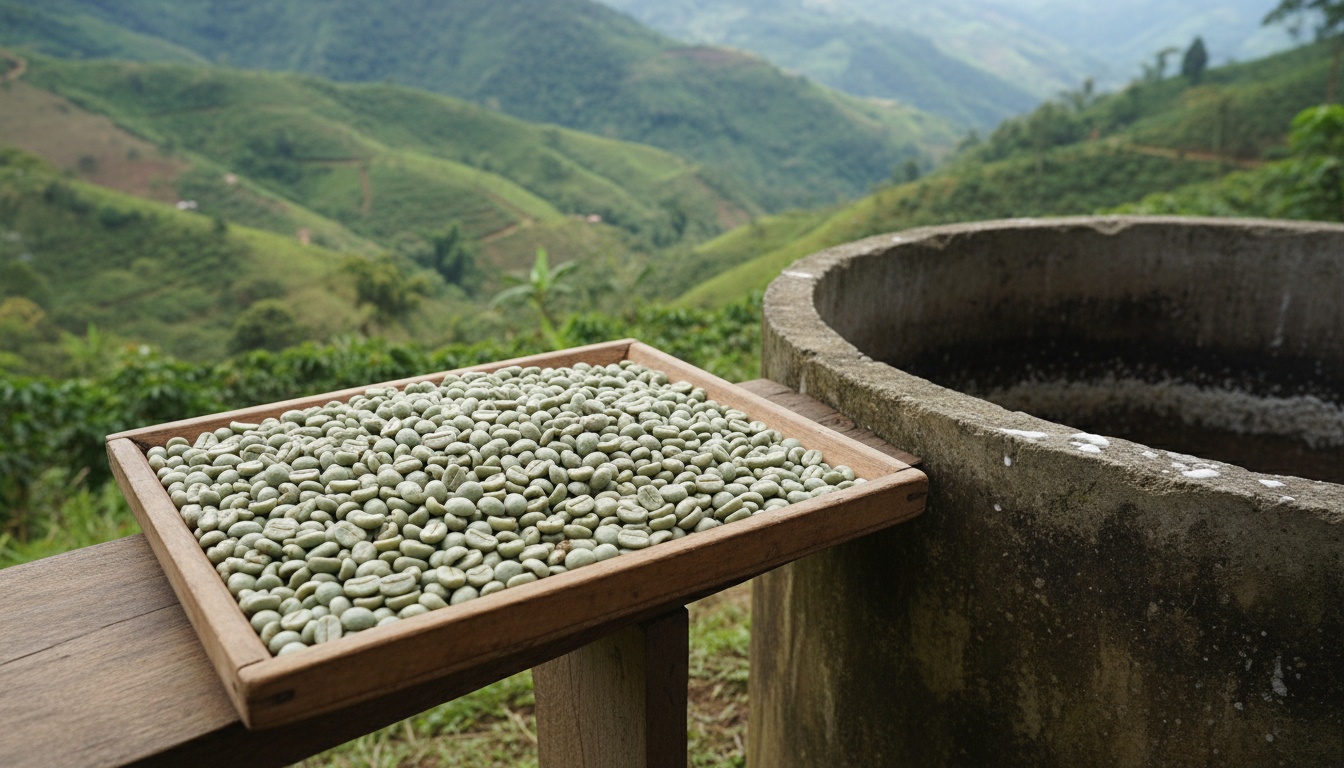
Colombian arabica is graded on screen size rather than on defect count in the way Brazil is, and the two names that matter are Supremo and Excelso. Supremo is the large-bean grade, screen 17 and above, and it is what the export trade markets; Excelso covers screen 14 to 16 and is the workhorse the domestic and blending trade actually consumes in volume. Both are fully washed — depulped, fermented, washed and dried — which strips the fruit away and produces the clean, bright, balanced cup with citric acidity that defines the washed milds category. Moisture runs 10–12%, water activity at or below 0.60, with the Federación Nacional de Cafeteros standards and the protected Café de Colombia designation governing what may be exported under the name. The standard export bag is 70 kg, unusual in a trade that otherwise runs on 60.
Buy Colombia when the cup needs acidity and clarity: single-origin filter, the bright component of a blend that Brazil cannot supply, speciality espresso where a lively cup is wanted, and any programme selling on origin recognition — Colombia has consumer name value that few origins match. The size question is worth being unsentimental about. Supremo screens larger and commands a premium, but bean size and cup quality are only loosely correlated; a good Excelso from a strong region will out-cup a mediocre Supremo. If you are roasting for a blend where the bean is never seen, Excelso is frequently the better commercial buy, and paying Supremo money for it buys appearance and a name. Where Supremo earns the premium is a single-origin retail bag where the customer sees the bean, and in roasters that need even bean size for consistent development. CBIL brokers Colombian arabica against verification of screen distribution, defect count, moisture, water activity and cup score, quoted as a differential to the ICE "C", on FOB Buenaventura and Cartagena, CFR and CIF terms.
Excluded origins are not offered, including product re-exported, blended or re-processed through a third country. Every lot moves with a certificate of origin naming the producing plant, mine or grower country, and nothing is quoted before the seller and loading point are known.
Indicative reference
$8,000–10,500 USD / MT
as at September 2026
Reference level only — not an offer, and reviewed quarterly. Levels shown are as at September 2026. Firm pricing is quoted per RFQ, subject to volume, terms and inspection.
Typical Specification
Specifications are indicative and adjusted to the agreed contract and destination requirements. Final spec confirmed on COA / SGS.
Available Grades
Applications
- Single-origin filter
- Bright component in blends
- Speciality espresso
- Origin-branded retail
- Premium private label
Category
Agri-Foods, Spices & Nuts
Incoterms
FOB · CFR · CIF
Pricing basis
USD / MT
Inspection
SGS / Intertek at load port
Colombia Arabica (Supremo & Excelso) — buyer questions
Is Supremo better coffee than Excelso?
It is bigger coffee, which is not the same thing. Supremo is screen 17 and above, Excelso 14 to 16, and bean size correlates only loosely with cup quality — a good Excelso from a strong region routinely out-cups a mediocre Supremo. Supremo earns its premium where the bean is seen in a retail bag, or where even size matters for roast consistency. In a blend, Excelso is often the better buy.
Why 70 kg bags when everyone else ships 60?
Colombian convention, and it catches people out on arithmetic. A container of Colombian coffee holds fewer bags for the same tonnage, and a price quoted per bag means something different from an origin shipping 60s. Always convert to a per-tonne or per-pound basis before comparing Colombian offers against Brazilian or African ones.
What does fully washed change in the cup?
It removes the fruit before drying, so none of the mucilage sugars ferment into the bean. The result is the clean, bright, citric profile that defines washed milds — clarity rather than body. Naturals and pulped naturals keep fruit contact and gain sweetness, body and fruit character at the cost of that clarity. Neither is better; they do different jobs in a blend.
Does the Café de Colombia designation matter commercially?
Yes, if you intend to use the name. It is a protected designation administered by the Federación, with rules about what can be labelled and sold as Colombian coffee. If your retail packaging leans on the origin, make sure the chain of documentation supports it — the name carries genuine consumer recognition and it is policed.
Ready to source Colombia Arabica?
Send your quantity, specification, preferred Incoterms and destination port. Qualified requirements receive a workable offer against verified supply.
Have Colombia Arabica to sell? Submit an offer — we'll match it against live buyer demand.
More in Green Coffee Beans
Brazil Arabica (Santos)
Santos NY 2/3, screen 17/18, natural & pulped natural
Ethiopia Arabica
Yirgacheffe, Sidamo & Guji — G1/G2, washed & natural
Vietnam Robusta
Grade 1 scr 18 & Grade 2 scr 13, 5% black & broken
Uganda Robusta
Screen 18 natural robusta — cleaner cup than Asian origin
Central America Arabica (SHG / SHB)
Honduras, Guatemala & Nicaragua — SHG/SHB, EP washed
India Coffee (Plantation & Monsooned)
Plantation A, Cherry AB & Monsooned Malabar
Instant Coffee (Soluble Coffee)
Spray-dried, agglomerated & freeze-dried — bulk and private label
Roasted Coffee Beans (Private Label)
Whole bean & ground, private label — valve bags, roast to profile
Indonesia Sumatra Coffee (Mandheling, Gayo & Lampung)
Wet-hulled Mandheling & Gayo arabica, Lampung robusta
Peru & Honduras Arabica (Organic, Fairtrade, SHB & SHG)
Washed arabica — organic & Fairtrade volume, SHB / SHG grades
Kenya & Tanzania Arabica (AA, AB & Peaberry)
AA, AB & PB washed arabica — Nairobi and Moshi auctions
Decaffeinated Green Coffee (Swiss Water, CO2 & Sugarcane EA)
Swiss Water, CO2 & sugarcane ethyl acetate decaf, unroasted