
Steel Plates (AH36 / DH36, S275 / S355, A36, Boiler Plate)
Hot-rolled plate for shipyards, fabricators and pressure-vessel shops
Steel plate is hot-rolled flat product too thick to coil, and it is bought on grade, thickness and paperwork in that order. Shipbuilding plate — Grade A and the higher-strength AH36, DH36 and EH36, at yield 355 MPa and a Charpy impact requirement at 0 °C, minus 20 °C and minus 40 °C respectively — is the trade the shipyards run on, and every plate carries a classification society stamp (ABS, BV, DNV, LR, CCS, ClassNK, RINA or IRS) from a mill approved by that society; without the stamp it is not shipbuilding plate whatever the chemistry says. Structural plate — EN 10025 S275JR / S355J2, ASTM A36 and A572 Grade 50, JIS SS400 and SM490 — feeds bridges, buildings, cranes, storage tanks and offshore modules, and is bought on yield, tensile, elongation and the impact-test temperature suffix. Boiler and pressure-vessel plate — ASTM A516 Grade 60/70, EN 10028 P265GH and P355GH, with normalised or normalised-rolled delivery and often an ultrasonic test to EN 10160 — goes to vessel shops and refinery contractors and carries the tightest chemistry and the most inspection. Thickness runs 6–150 mm on a plate mill, widths 1,500–4,000 mm and lengths to 12 m or 18 m for shipyards; a heavy-plate mill in Korea or Japan will roll 100 mm and above for a jack-up leg or a pressure vessel that a Chinese or Indian coil-plate line cannot. The mill test certificate is the document that sells the plate: EN 10204 3.1 (the mill's own inspector certifies chemistry and mechanicals against the order) is the standard for structural, and 3.2 (a class surveyor or an independent inspector countersigns) is what a shipyard or a pressure-vessel code demands. UN Comtrade 2025 export declarations under HS 7208 — a heading that covers hot-rolled coil and plate together, so the reporter figures blend the two — put Indonesia at 2.94 million MT at an average USD 524/MT, India 2.26 million MT at USD 549, the USA 1.44 million MT at USD 1,046, Kazakhstan 1.18 million MT at USD 565 and Egypt 0.77 million MT at USD 691. Korea's own 2025 declarations under HS 7208.51, plate over 10 mm and not in coils, isolate the heavy-plate trade: 2.49 million MT across 57 partners, Japan 380,000 MT at USD 606/MT, Turkiye 302,000 MT at USD 630, India 297,000 MT at USD 746, China 244,000 MT at USD 710, Viet Nam 214,000 MT at USD 682, Spain 116,000 MT at USD 698, the USA 104,000 MT at USD 934, the Philippines 100,000 MT at USD 631 and the UAE 39,700 MT at USD 778; the Turkish, Vietnamese and Philippine lines are shipyard and fabricator feed, and the gap between USD 606 and USD 934 is the gap between commodity structural plate and normalised, ultrasonically tested grades.
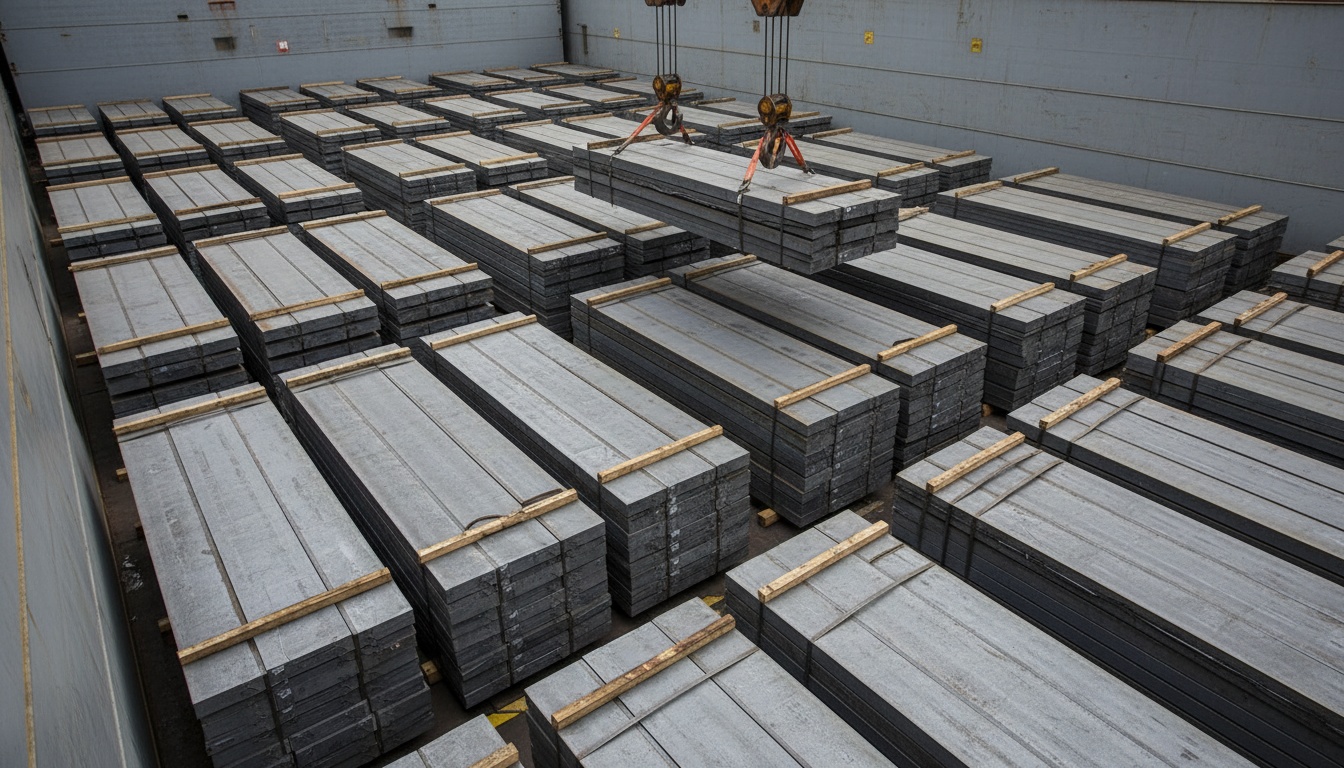
The buyer is a shipyard in Turkiye, Vietnam, the Philippines or the Gulf, a structural fabricator or EPC contractor in the Gulf, Iraq, Egypt or Bangladesh, a pressure-vessel or storage-tank shop, or a stockist feeding all of them, and the desk worked 15,000–35,000 MT of plates from Dunkirk to Umm Qasr and a 30,000 cbm steel project cargo out of Penglai in September 2026. CBIL is a commodity brokerage company and brokers steel plate from Korean, Japanese, Chinese, Indonesian, Indian, Turkish and Belgian and French mills and stockist positions to shipyards, fabricators and contractors, against the mill test certificate to EN 10204 3.1 or 3.2, class approval and stamping for shipbuilding grades, and third-party inspection of dimensions, flatness, surface and marking at load. Plates are lifted by bundle and stowed flat, breakbulk in Handysize and multipurpose tonnage for 5,000–35,000 MT parcels, on FOB and CFR terms, and because CBIL also runs a chartering desk (LaycanDesk) that works that tonnage, the freight is quoted with the cargo — on plate the stowage, the lifting gear and the discharge port's crane capacity move the delivered price as much as the mill does. Send your grade, thickness-by-width-by-length list, the certificate level and the class society if it is shipbuilding plate, and we will work the mill and the ship together.
Need the ship as well? Our chartering desk prices steel coil and plates breakbulk freight on LaycanDesk.
Indicative reference
$600–950 USD / MT
as at September 2026
Reference level only — not an offer, and reviewed quarterly. Levels shown are as at September 2026. Firm pricing is quoted per RFQ, subject to volume, terms and inspection.
Typical Specification
Specifications are indicative and adjusted to the agreed contract and destination requirements. Final spec confirmed on COA / SGS.
Available Grades
Applications
- Shipbuilding & ship repair
- Bridges, buildings & structural fabrication
- Boilers, pressure vessels & storage tanks
- Offshore platforms, jack-ups & wind towers
- Heavy equipment, cranes & mining structures
Category
Metals & Recycled Scrap
Incoterms
FOB · CFR · CIF
Pricing basis
USD / MT
Inspection
SGS / Intertek at load port
Steel Plates (AH36 / DH36, S275 / S355, A36, Boiler Plate) — buyer questions
What makes plate 'shipbuilding grade' rather than just S355?
The class stamp. AH36 and S355J2 overlap on yield and chemistry, but a shipyard's class society (ABS, BV, DNV, LR, CCS, ClassNK, RINA or IRS) only accepts plate from a mill it has approved, rolled under a surveyor's witness and hard-stamped with the society mark and heat number, with an EN 10204 3.2 certificate the surveyor countersigns. A structural S355 plate with a 3.1 certificate is a good plate but it is not shipbuilding plate and a yard cannot use it in a classed hull. Tell us the society at the enquiry so we only approach approved mills.
EN 10204 3.1 or 3.2 — what is the difference and which do I need?
A 3.1 certificate is issued by the mill's own authorised inspector, independent of the production department, confirming the plate meets the order. A 3.2 certificate adds a countersignature from a party outside the mill — a class surveyor, the buyer's inspector or an independent body — who has witnessed the tests. Structural work is contracted on 3.1; shipbuilding, pressure-vessel codes and most offshore and EPC specifications require 3.2. It costs more and adds time at the mill, so put it in the enquiry and not in the claim.
Why does Korean plate to the USA declare USD 934/MT and to Japan USD 606?
UN Comtrade 2025 export declarations under HS 7208.51 show both figures from the same Korean reporters. The Japanese line is commodity structural and shipbuilding plate between two neighbouring shipbuilding industries; the US line is mostly normalised, ultrasonically tested and low-temperature-impact grades for pressure vessels, offshore and wind towers, with a tariff built in. The spread is the price of the grade and the certificate, not of the steel. Your cost sits wherever your specification does.
How is plate shipped and what parcel sizes do you work?
Breakbulk, strapped in bundles of 3–10 MT and stowed flat on dunnage in the lower holds, in Handysize and multipurpose tonnage for 5,000–35,000 MT parcels, on FOB and CFR terms. Long plates for shipyards need a hatch that takes 12 m or 18 m lengths and a discharge port with the crane or the ship's gear to lift the bundle, so those two questions come before the freight. Because CBIL also runs a chartering desk that works this tonnage, the freight is quoted alongside the cargo; small lots ride on multipurpose vessels or in flat-racks where the plate size allows.
Ready to source Steel Plates?
Send your quantity, specification, preferred Incoterms and destination port. We'll verify supply and respond with a workable offer — usually within one business day.
Have Steel Plates to sell? Submit an offer — we'll match it against live buyer demand.
More in Steel Billets, Coil, Rebar & Wire Rod
Steel Billets (3SP / 5SP, Q235 / Q275)
Continuous-cast square billets for re-rolling mills
Hot-Rolled Steel Coil (HRC)
Commercial and structural HRC by gauge, width and grade
Reinforcing Steel Bar (Rebar)
B500B, Grade 60 and Fe 500 deformed bar in 8–40 mm
Steel Wire Rod (SAE 1006 / 1008, Mesh & High-Carbon)
Low-carbon drawing rod and mesh-quality rod in 5.5–16 mm coils