
Bentonite (API 13A Drilling, Foundry & Civil Piling Grades)
High-yield sodium and activated bentonite — API 13A oilfield, green sand foundry & diaphragm piling
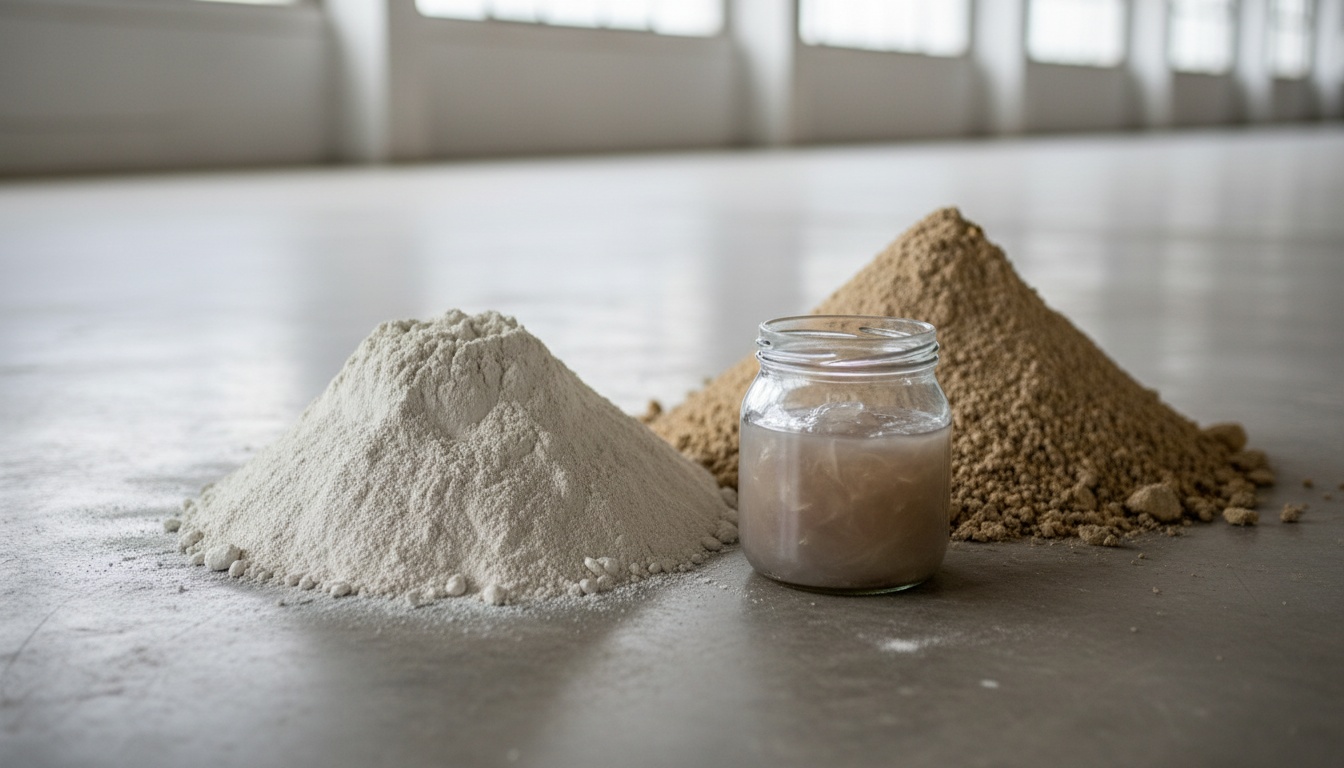
Bentonite under HS 2508.10 is an aluminium hydrosilicate clay consisting predominantly of the smectite mineral montmorillonite. Its commercial utility across oil and gas exploration, metal casting foundries, and heavy geotechnical engineering derives from its crystal lattice structure, which expands dramatically upon hydration to produce high-viscosity thixotropic gels with exceptional water-absorption, lubrication, and sealing capabilities. In international trade, the commodity divides sharply between natural sodium bentonite (famed for high swelling volumes of 24–30 ml/2g) and calcium bentonite, which is mechanically and chemically activated with soda ash (sodium carbonate) to elevate rheological yield.
CBIL brokers certified industrial bentonite across three core containerized market sectors: 1. Oilfield Drilling Grade (API Spec 13A Section 9 / Section 10 & OCMA): Milled to 200-mesh fineness (≥96% passing 75 microns) with a minimum viscometer dial reading of 30 at 600 rpm and yield point / plastic viscosity (YP/PV) ratios precisely calibrated for horizontal directional drilling (HDD), oil/gas wellbore stabilization, and fluid-loss control (filtrate volume ≤15.0 ml). 2. Foundry Green Sand Grade: Engineered with high thermal durability, high green compression strength (≥80–110 kPa), and elevated wet tensile strength for cast iron, ductile iron, and steel foundries. It acts as the inorganic binder that holds quartz sand moulds together during molten metal pour without gas pocket formation. 3. Civil Engineering & Geotechnical Slurry Grade: Sized for diaphragm wall trenching, micro-tunnelling, pipe-jacking lubrication, and impermeable landfill liner compaction, delivering instant swell and ultra-low hydraulic conductivity (<10⁻⁹ cm/s).
Shipments move in containerized FCLs rather than bulk ships to protect the hydro-sensitive clay from ambient humidity and cryo-caking: 25 kg multi-wall valve paper bags with inner polyethylene moisture barriers on shrink-wrapped wooden pallets (typically 20–22 MT per 20ft FCL), or heavy-duty 1,000 kg FIBC bags with discharge spouts (22–25 MT per 20ft FCL). Sourced from premier deposits in India (Bhavnagar/Kutch basin), Turkey (Ankara/Cankiri), Egypt, and Wyoming (USA), each consignment is independently certified at the loading facility by SGS or Intertek for moisture, 200-mesh sieve retention, swelling index, and API rheology. Mid-tier drilling contractors and foundry blenders can onboard via 1 to 2 container starter-trials (25 to 50 MT) under standard CFR and CIF container liner terms.
Need the ship as well? Our chartering desk prices Norway to India olivine sand freight on LaycanDesk.
Excluded origins are not offered, including product re-exported, blended or re-processed through a third country. Every lot moves with a certificate of origin naming the producing plant, mine or grower country, and nothing is quoted before the seller and loading point are known.
Indicative reference
$85–160 USD / MT
as at September 2026
Reference level only — not an offer, and reviewed quarterly. Levels shown are as at September 2026. Firm pricing is quoted per RFQ, subject to volume, terms and inspection.
Typical Specification
Specifications are indicative and adjusted to the agreed contract and destination requirements. Final spec confirmed on COA / SGS.
Available Grades
Applications
- Oil, gas & geothermal wellbore drilling fluids
- Horizontal directional drilling (HDD) & micro-tunnelling
- Cast iron & steel foundry green sand mould binding
- Civil diaphragm wall slurry trenches & piling lubrication
- Environmental geotextile clay liners (GCL) & pond sealing
- Pelletizing binder for iron ore taconite pellets
Category
Industrial Minerals & Construction
Incoterms
FOB · CFR · CIF
Pricing basis
USD / MT
Inspection
SGS / Intertek at load port
Bentonite (API 13A Drilling, Foundry & Civil Piling Grades) — buyer questions
What is the difference between API Section 9 and Section 10 bentonite?
API Spec 13A Section 9 covers high-purity, naturally occurring sodium bentonite that achieves rheological yield without chemical or polymer extension. Section 10 covers OCMA-grade or polymer-treated bentonites where peptizing chemicals or polymers have been added to boost barrel yield. Many oilfield operators in environmentally sensitive basins mandate Section 9 untreated material to prevent polymer thermal degradation downhole.
Why does bentonite ship in containers rather than bulk cargo vessels?
Milled bentonite is a hygroscopic powder. If transported in bulk vessel holds, exposure to maritime humidity and condensation causes surface hydration and severe caking, making mechanical unloading extremely difficult. Packing in 25 kg valve bags with internal polyethylene liners or coated 1 MT big bags inside 20ft sea containers guarantees dry, free-flowing powder on delivery.
What is the minimum order quantity?
We support drilling mud supply houses and foundries with 1 to 2 container starter-trials (22 to 45 MT) packed on fumigated ISPM-15 wooden pallets, allowing plant technicians to run marsh funnel viscosity and mould compression trials prior to volume contracting.
Ready to source Bentonite Clay?
Send your quantity, specification, preferred Incoterms and destination port. Qualified requirements receive a workable offer against verified supply.
Have Bentonite Clay to sell? Submit an offer — we'll match it against live buyer demand.
More in Industrial Minerals
Titanium Minerals (Ilmenite, Rutile & Titanium Slag)
Sulphate and chloride ilmenite, natural and synthetic rutile, leucoxene and slag by TiO₂ content
Zircon Sand & Zircon Flour
Premium, standard and ceramic-grade zircon sand and milled flour by ZrO₂+HfO₂, iron and titanium
Drilling-Grade Barite (API 13A)
API 13A barite at 4.10 and 4.20 specific gravity, lumps and ground powder
Silica Sand & Quartz (Glass, Foundry, Frac, High-Purity)
Glass, foundry and frac sand and quartz, bought on SiO₂, iron and grain size
Kaolin & Ball Clay
Paper coating and filler kaolin, calcined kaolin and ceramic ball clay by brightness and particle size
Feldspar & Nepheline Syenite
Sodium and potassium feldspar and nepheline syenite by alkali, alumina and iron
Olivine Sand & Lump Flux
Natural magnesium iron silicate rock and sand for blast furnace slag conditioning, foundry sand and refractories
High-Purity Quartz (HPQ 4N8 / 5N & Crucible Sand)
HPQ 4N to 5N granular sand and lump for solar CZ crucibles and semiconductor wafer pulling
Activated Carbon (Coconut-Shell, Coal-Based & Wood)
Granular, powdered and extruded activated carbon bought on iodine number, CTC, hardness and mesh
Talc (Paint, Ceramic, Paper, Polymer & Cosmetic Grades)
Lump and micronised talc by brightness, particle size and asbestos-free certification
Perlite & Vermiculite (Crude Ore and Expanded)
Crude perlite ore, crude vermiculite concentrate and expanded grades for horticulture, construction and filter aids
Silicon Carbide (Black & Green, Metallurgical, Abrasive & Refractory)
Black and green SiC as metallurgical lumps, FEPA-graded abrasive grain and refractory aggregate
Borates (Colemanite, Ulexite, Boric Acid & Borax Pentahydrate)
Ground and granular colemanite, ulexite, boric acid and borax pentahydrate sold on B₂O₃ content
Garnet Sand (Blasting & Waterjet Grades)
Almandine garnet for abrasive blasting and waterjet cutting, sold by mesh cut and origin
Wollastonite, Kyanite & Mica (Ceramic, Refractory & Filler Minerals)
Acicular wollastonite, kyanite-group refractory minerals and muscovite and phlogopite mica for ceramics, refractories and fillers