
Limestone (Flux & Crushed)
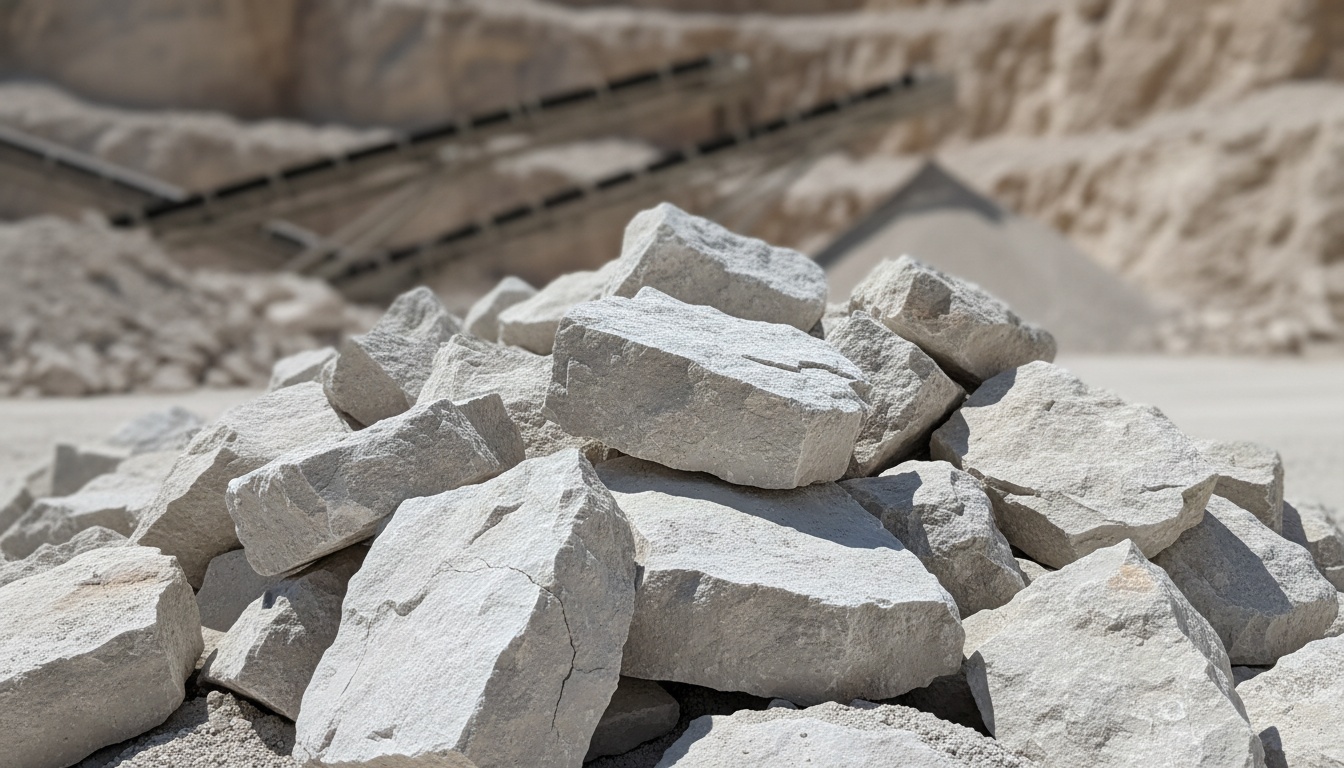
High-CaCO₃ flux lumps and crushed stone in Supramax lots
Limestone under HS 2521.00 is bought on chemistry first and size second. Calcium carbonate content (93–97% for flux, ≥ 90% for cement raw feed) sets how much stone you need per tonne of clinker or hot metal; silica (≤ 2% flux, up to 4–6% tolerated in cement feed) is the number a blast furnace or BOF shop polices hardest, because every point of SiO₂ in the flux is more slag volume and more lime consumed to hold basicity. Magnesia (≤ 1.5–3%) matters where the stone is heading to a lime kiln or a glass batch, and sulphur, phosphorus and alkalis (Na₂O + K₂O ≤ 0.3%) are set by whoever is downstream of the kiln. On size, steelworks flux runs 10–40 mm or 40–80 mm lump with fines under 10 mm capped at 5%; cement plants take 0–40 mm run-of-quarry or crushed; sinter and pellet plants take a fine fraction. Loss on ignition around 42–44% is simply the CO₂ leaving good stone, and a low figure is a warning of clay or silica, not a virtue.
The trade is short-haul and freight-led. UN Comtrade, 2025 export declarations: Oman shipped 9.17 million MT of HS 2521 at an average USD 7/MT FOB, India 6.48 million MT at USD 10, Egypt 623k MT at USD 31, Malaysia 931k MT at USD 48. Oman's own declarations for 2025 place 5.40 million MT (59%) into India, 2.23 million MT into the UAE and 837k MT into Bangladesh, at USD 6–10/MT. At those numbers a Supramax of Omani limestone is worth under USD 400,000 on the quay and the freight to Chittagong or the Indian west coast is usually more than the cargo, so the delivered cost lives or dies on the vessel: geared or gearless, draft at the discharge port, laytime and demurrage exposure. CBIL is a commodity brokerage company that also runs a chartering desk (LaycanDesk), and we are currently working Shinas and Sohar loadings to Chittagong. That puts us in a position to quote the cargo and the ship together against an SGS or Intertek chemistry and sizing certificate, on FOB, CFR and CIF terms, in Handymax and Supramax parcels of 30,000–58,000 MT. Send your CaCO₃ floor, SiO₂ ceiling, size fraction and discharge port draft and we work the quarry and the tonnage to fit.
Need the ship as well? Our chartering desk prices bulk limestone, gypsum and aggregates freight on LaycanDesk.
Indicative reference
$6–12 USD / MT
as at September 2026
Reference level only — not an offer, and reviewed quarterly. Levels shown are as at September 2026. Firm pricing is quoted per RFQ, subject to volume, terms and inspection.
Typical Specification
Specifications are indicative and adjusted to the agreed contract and destination requirements. Final spec confirmed on COA / SGS.
Available Grades
Applications
- Blast furnace & BOF flux
- Cement clinker raw feed
- Sinter & pellet plants
- Lime kilns (quicklime & hydrated lime)
- Road base & construction fill
- Glass batch & flue-gas desulphurisation
Category
Industrial Minerals & Construction
Incoterms
FOB · CFR · CIF
Pricing basis
USD / MT
Inspection
SGS / Intertek at load port
Limestone (Flux & Crushed) — buyer questions
Why does freight matter more than the price of the stone?
Because the stone is worth USD 6–10/MT FOB (UN Comtrade, 2025 export declarations, Oman and India) and a Supramax voyage from the Gulf of Oman to Chittagong or Kandla costs more than that per tonne. The delivered price is decided by whether the ship is geared, what draft the discharge berth allows, how fast you can discharge and what demurrage you are exposed to. That is why we quote the ship alongside the cargo rather than handing you an FOB number and leaving the freight to you.
What CaCO₃ and SiO₂ should a steel plant specify?
Flux stone is usually contracted at ≥ 95% CaCO₃ and ≤ 2% SiO₂, with MgO ≤ 1.5–3% and combined alkalis ≤ 0.3%. Silica is the constraint: each point of SiO₂ in the flux adds slag and burns more lime to hold basicity. A cement plant can live with 90–93% CaCO₃ and 4–6% silica because the raw mix is corrected with other components. Tell us which side of that line you are on.
Which sizes are available and how are fines controlled?
Lump 10–40 mm and 40–80 mm for flux, 0–40 mm crushed for cement and construction, and 0–10 mm fines for sinter. Fines under the bottom size are capped, typically 5% for lump grades, and checked by sieve analysis at load port. If your kiln or furnace is sensitive to fines, say so and we specify a rescreen before loading.
What parcel sizes and load ports do you work?
Geared Handymax and Supramax, 30,000–58,000 MT, from Omani ports including Shinas and Sohar, Indian west-coast ports and Egyptian Red Sea ports. Smaller barge or coaster lots are possible on short Gulf lanes. Give us your discharge port and draft limit first, because that fixes the ship before the quarry is chosen.
Ready to source Limestone?
Send your quantity, specification, preferred Incoterms and destination port. We'll verify supply and respond with a workable offer — usually within one business day.
Have Limestone to sell? Submit an offer — we'll match it against live buyer demand.
More in Limestone, Gypsum & Aggregates
Natural Gypsum Rock
Cement- and board-grade natural gypsum, 88–95% purity
Construction Aggregates (Gabbro, Granite & Armour Rock)
Gabbro, granite and armour rock in Supramax lots
Magnesite (Raw & Calcined Magnesia)
Raw magnesite lumps and dead-burned magnesia for refractories
Steel Slag, GBFS & Mill Scale
GBFS for cement grinders, steel slag and mill scale in Supramax lots
Armour Rock & Boulders
Graded armour rock and boulders for breakwaters, in Supramax lots and on deck barges