
Silica Fume / Microsilica (Densified & Undensified)
Densified and undensified microsilica at 85–96% SiO₂ for high-performance concrete and refractories
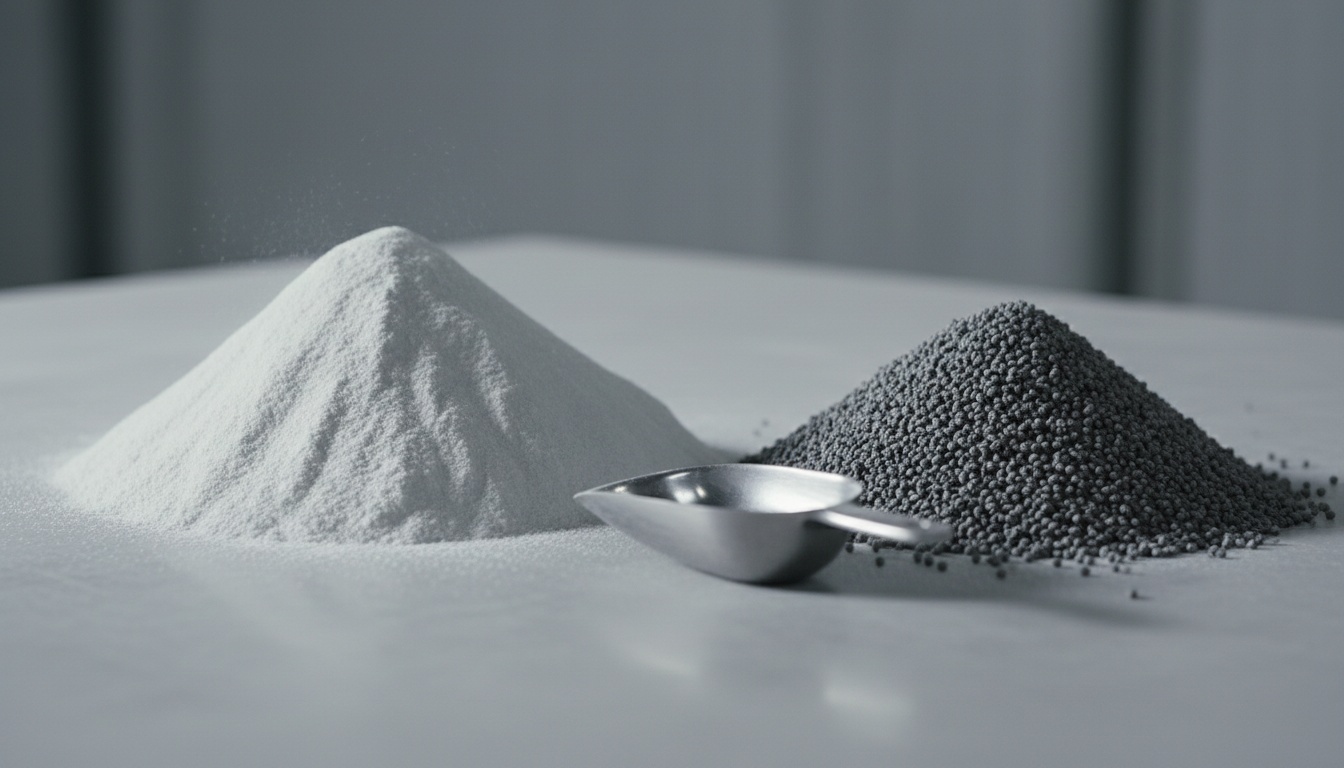
Silica fume is the ultrafine amorphous silica collected in the baghouse of a silicon or ferrosilicon furnace: primary particles around 0.15 micron, roughly a hundredth the size of a cement grain, which is why a few percent in a concrete mix fills the space between cement particles and reacts with the lime the cement liberates. The buyer specifies it on SiO₂ (85% is the ASTM C1240 floor; Chinese grades are sold as 85, 90, 92, 94 and 96%), loss on ignition and moisture, oversize on the 45 micron sieve (ASTM C1240 caps it at 10%), BET specific surface, and the accelerated pozzolanic strength activity index in which 10% of the cement is replaced and the mortar cured a day at 23 °C and six days at 65 °C. EN 13263-1 is the European specification for silica fume as a Type II addition under EN 206. The second decision is physical form. Undensified fume leaves the filter at 200–350 kg/m³, loads about 10–12 t in a 20-ft container and disperses easily, so refractory makers and dry-mix producers prefer it; densified fume is tumbled with air until it agglomerates to 500–700 kg/m³, loads 20–24 t per box and suits ready-mix and precast plants with good mixing energy. Dosage in high-performance concrete is usually 5–10% of cement weight, up to about 15% in specialised mixes. Refractory-grade microsilica for low-cement and ultra-low-cement castables is a distinct product with its own carbon and alkali limits.
Customs heading 2811.22 covers all silicon dioxide, so precipitated and fumed silica sit inside the same trade figures. UN Comtrade 2024 export declarations under HS 2811.22 total about USD 3.45 billion and 2.47 million MT across reporters; China declared 1.33 million MT at about USD 630/MT, and the origins whose tonnage and unit value point to furnace silica fume rather than chemical silica include Norway (91,000 MT at about USD 473/MT), India (86,000 MT, USD 960/MT), Malaysia (75,000 MT, USD 434/MT) and Brazil (20,000 MT). Norway's producers collect microsilica at ferrosilicon and silicon plants and sell a refractory-benchmark grade alongside concrete grades. CBIL is a commodity brokerage company and brokers silica fume from furnace operators and processors in China, Norway, India and Brazil to ready-mix, precast, shotcrete, dry-mortar, oil-well cementing and refractory buyers, against an SGS, Bureau Veritas or Intertek certificate of SiO₂, LOI, moisture, 45 micron residue, specific surface and activity index, a safety data sheet, and a certificate of origin, in 20–25 kg bags palletised or 500–1,000 kg jumbo bags in 20-ft containers, on FOB, CFR and CIF terms; bulk pneumatic parcels are quoted for plants with silo intake. There are no export bans or licence requirements on silica fume from these origins that we know of, and no CBAM listing under HS 2811. Price is agreed per MT on grade, form and pack. Send your SiO₂ floor, densified or undensified, the standard you certify to, monthly tonnage and discharge port and the enquiry is screened and worked against it.
Need the ship as well? Our chartering desk prices bulk limestone, gypsum and aggregates freight on LaycanDesk.
Excluded origins are not offered, including product re-exported, blended or re-processed through a third country. Every lot moves with a certificate of origin naming the producing plant, mine or grower country, and nothing is quoted before the seller and loading point are known.
Indicative reference
Per MT, on SiO₂ grade, form and pack USD / MT
as at September 2026
Reference level only — not an offer, and reviewed quarterly. Levels shown are as at September 2026. Firm pricing is quoted per RFQ, subject to volume, terms and inspection.
Typical Specification
Specifications are indicative and adjusted to the agreed contract and destination requirements. Final spec confirmed on COA / SGS.
Available Grades
Applications
- High-strength & high-performance concrete
- Marine & chloride-exposed structures
- Shotcrete & tunnel linings
- Grouts, dry mortars & repair mixes
- Oil-well cement slurries
- Low-cement refractory castables
Category
Industrial Minerals & Construction
Incoterms
FOB · CFR · CIF
Pricing basis
USD / MT
Inspection
SGS / Intertek at load port
Silica Fume / Microsilica (Densified & Undensified) — buyer questions
Densified or undensified silica fume — which should I order?
Undensified fume (200–350 kg/m³) disperses most easily and is what refractory and dry-mix producers usually want, but it only loads 10–12 t in a 20-ft container. Densified fume (500–700 kg/m³) loads 20–24 t per box, so the freight per tonne is roughly half, and it suits ready-mix and precast plants with enough mixing energy to break the agglomerates. Name the form in the order; the SiO₂ grade is the same either way.
What does ASTM C1240 require?
A minimum of 85% SiO₂, a maximum of 10% retained on the 45 micron sieve, and limits on moisture and loss on ignition, plus an accelerated pozzolanic strength activity index measured on mortar with 10% of the cement replaced and cured for 24 hours at 23 °C and six days at 65 °C. The certificate should report each of these; EN 13263-1 is the equivalent European specification.
Who exports silica fume?
Customs heading 2811.22 covers all silicon dioxide, so the figures include precipitated silica. Within them, UN Comtrade 2024 declarations show China at 1.33 million MT at about USD 630/MT, with Norway (91,000 MT), India (86,000 MT), Malaysia (75,000 MT) and Brazil (20,000 MT) declaring tonnage and unit values consistent with furnace silica fume.
How much silica fume goes into concrete?
Typically 5–10% of cement weight for high-performance concrete, rising to about 15% in specialised low-permeability or very high-strength mixes. Above that the water demand and superplasticiser dose climb quickly, so the mix design, not the price, sets the ceiling.
Ready to source Silica Fume?
Send your quantity, specification, preferred Incoterms and destination port. Qualified requirements receive a workable offer against verified supply.
Have Silica Fume to sell? Submit an offer — we'll match it against live buyer demand.
More in Limestone, Gypsum, Aggregates, Fluorspar & Refractory Minerals
Limestone (Flux & Crushed)
High-CaCO₃ flux lumps and crushed stone in Supramax lots
Natural Gypsum Rock
Cement- and board-grade natural gypsum, 88–95% purity
Construction Aggregates (Gabbro, Granite & Armour Rock)
Gabbro, granite and armour rock in Supramax lots
Magnesite (Raw & Calcined Magnesia)
Raw magnesite lumps and dead-burned magnesia for refractories
Steel Slag, GBFS & Mill Scale
GBFS for cement grinders, steel slag and mill scale in Supramax lots
Armour Rock & Boulders
Graded armour rock and boulders for breakwaters, in Supramax lots and on deck barges
Fluorspar (Acidspar ≥ 97% CaF₂ & Metspar)
Acidspar (CaF₂ ≥ 97%) for AHF, LiPF₆ & PVDF battery chemicals; Metspar for steel flux
Refractory Raw Materials (Calcined Bauxite, Fused Alumina, DBM)
Calcined bauxite, brown fused alumina and dead-burned magnesia by Al₂O₃, MgO, iron and density
Quicklime (Calcium Oxide, Burnt Lime)
High-calcium burnt lime by CaO, reactivity and size: lump, pebble and powder
Hydrated Lime (Calcium Hydroxide, Slaked Lime)
Calcium hydroxide powder by Ca(OH)₂ and fineness: building, water and food grade E526
Dolomitic Lime & Burnt Dolomite (Doloma)
Calcined dolomite by MgO and CaO for steel slag conditioning and refractories
Refractory Castables & Mortars (Dense, Insulating, LCC / ULCC)
Dense and insulating castables, low- and ultra-low-cement grades, gunning mixes and air-setting mortars by alumina content and service temperature
Granite Blocks (Crude & Rough-Trimmed Dimension Stone)
Quarry blocks by colour, size class and soundness for slab processors in China, Italy and the Middle East