
Ammonium Sulphate 21-0-0-24S
21% N / 24% S | Compacted granular (SGN 200–280) & caprolactam crystal for plantations
Ammonium sulphate is the nitrogen-plus-sulphur nutrient source for plantation and Rabi programmes, and CBIL brokers it direct from the production hubs: China (Tianjin, Huanghua, Qingdao and Zhanjiang, loading for Southeast Asia and India), Northwest Europe (Belgium and the Netherlands), Japan, Taiwan, and Egypt. Cargoes move in Handysize and Supramax bulk vessels (25,000–55,000 MT), 50 kg heavy-duty woven polypropylene bags with inner polyethylene liners, and 1 MT UV-stabilised jumbo bags (FIBCs), backed by SGS or Intertek load-port certification for N, S, moisture, free acid, and mechanical granule sizing.
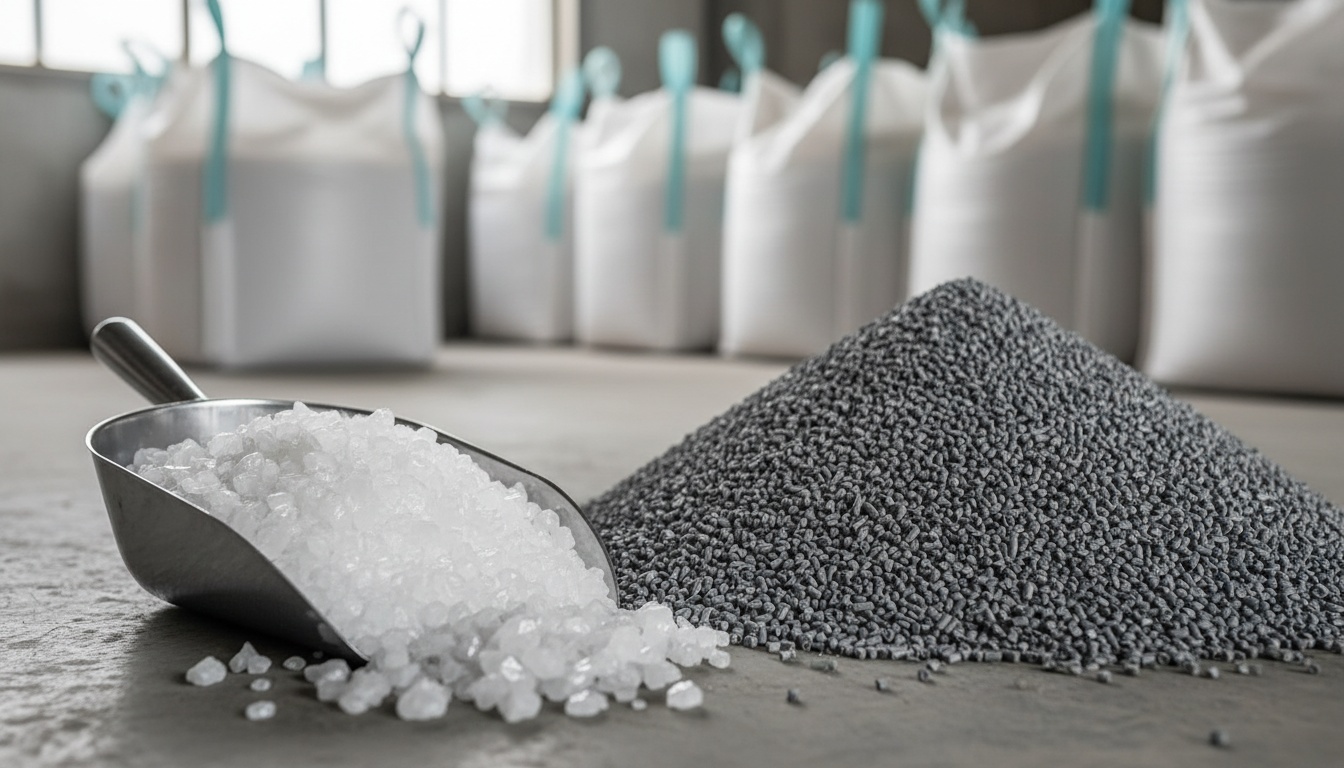
Our ammonium sulphate delivers 20.5–21.0% ammoniacal nitrogen (NH₄-N) and 24.0% water-soluble sulphate sulphur (SO₄-S), moisture ≤ 0.5% on crystal and ≤ 1.0% on granular, and free acid strictly capped at ≤ 0.05% H₂SO₄. Two distinct physical grades are supplied: White Caprolactam-Grade Crystalline AS (0.5–2.0 mm), highly purified with immediate aqueous solubility for compound NPK granulation plants and fertigation; and Compacted Granular AS 21-0-0-24S (2.0–4.0 mm, ≥ 90%), manufactured to a Size Guide Number (SGN) of 200–280 with crushing strength of 2.5–3.5 kgf (25–35 N) and anti-caking surface conditioning. This compacted granular grade is dimensionally matched to granular urea, DAP, and MOP, ensuring zero segregation in bulk blenders and enabling wide 24–36 m mechanical broadcast spreading. In plantation agriculture, ammonium sulphate is indispensable: Southeast Asian oil palm estates require high sulphur inputs alongside nitrogen to synthesise methionine and cysteine for maximum oil content in fresh fruit bunches (FFB) while preventing plantation chlorosis on leached tropical soils. In rubber estates, it enhances latex flow; in sugarcane, it boosts ratoon vegetative tillering; and in Indian Rabi oilseed cultivation (mustard and rapeseed), sulphate sulphur directly determines seed oil extraction percentage.
Need the ship as well? Our chartering desk prices bagged fertilizer freight on LaycanDesk.
Excluded origins are not offered, including product re-exported, blended or re-processed through a third country. Every lot moves with a certificate of origin naming the producing plant, mine or grower country, and nothing is quoted before the seller and loading point are known.
Indicative reference
$160–240 USD / MT
as at September 2026
Reference level only — not an offer, and reviewed quarterly. Levels shown are as at September 2026. Firm pricing is quoted per RFQ, subject to volume, terms and inspection.
Typical Specification
Specifications are indicative and adjusted to the agreed contract and destination requirements. Final spec confirmed on COA / SGS.
Available Grades
Applications
- Southeast Asian oil palm plantations (oil synthesis & chlorosis prevention)
- Rubber estate latex yield stimulation
- Sugarcane ratoon maintenance & vegetative tillering
- Indian Rabi oilseeds (mustard, rapeseed) & pulse fertilisation
- NPK compound fertilizer granulation & dry bulk blending
- Alkaline & calcareous soil acidifying nutrition
Category
Agriculture & Fertilizers
Incoterms
FOB · CFR · CIF
Pricing basis
USD / MT
Inspection
SGS / Intertek at load port
Ammonium Sulphate 21-0-0-24S — buyer questions
Why is ammonium sulphate used alongside urea?
Ammonium sulphate provides 21% ammoniacal nitrogen that does not volatilise like surface-applied urea, while supplying 24% water-soluble sulphur. It serves as a substitute or extender for urea in broadacre and plantation fertilizer programmes, and is priced per unit of nitrogen against urea.
Why is sulphate sulphur essential for oil palm and oilseed crops?
Sulphur is a structural component of essential amino acids (methionine and cysteine) required for lipid synthesis and nitrogen metabolism. In Southeast Asian oil palm, sulphur deficiency stunts frond canopy development and sharply reduces fresh fruit bunch (FFB) oil content. In Indian Rabi oilseeds (mustard, canola), each kilogram of available sulphate sulphur applied boosts seed oil recovery by up to 2–3%, making AS 21-0-0-24S high-ROI nutrition.
Compacted granular vs caprolactam crystalline: which grade should I choose?
Choose compacted granular (2.0–4.0 mm, SGN 200–280, crushing strength ≥ 2.5 kgf) for direct mechanical spinner spreading and for dry bulk blending with granular urea, DAP, and MOP; its matched granule dimensions prevent blend segregation and dust during spreading. Choose caprolactam crystalline (0.5–2.0 mm white crystals) if you operate a compound NPK granulation plant, dissolve for fertigation, or broadcast by hand in local farming markets.
Who buys ammonium sulphate in Kenya, and what changed in 2026?
Fertiliser importers and blenders at Mombasa, who sell it as a sulphur-bearing nitrogen source for tea, maize, wheat and horticulture and use it in NPK blends. Kenya imported about 65,000 MT in 2025, up from about 52,000 MT in 2024, and took 69% of it from Saudi Arabia, with China at 22%. The Strait of Hormuz has been severely restricted since 28 February 2026. Chinese caprolactam-grade and compacted granular material, and Belgian and Dutch product for buyers who want European origin, are the replacements. CBIL quotes 50 kg bagged and bulk ammonium sulphate CFR Mombasa for a named importer.
Which shipping lanes are used for ammonium sulphate?
We load bulk Supramax (45,000–55,000 MT) and Handysize vessels from major Chinese open-sea berths (Huanghua, Qingdao, Tianjin, Zhanjiang), sailing straight across the South China Sea, Malacca Strait, and Indian Ocean without touching Middle Eastern waters. We also supply containerised and breakbulk stems from Northwest Europe (Antwerp, Rotterdam) and Egypt.
Ready to source Ammonium Sulphate?
Send your quantity, specification, preferred Incoterms and destination port. Qualified requirements receive a workable offer against verified supply.
Have Ammonium Sulphate to sell? Submit an offer — we'll match it against live buyer demand.
More in Phosphate & Potash Fertilizers
DAP Fertilizer 18-46-0
DAP 18-46-0 | SGN 200–300 for Indian Rabi & plantation establishment
MAP Fertilizer 11-52-0 / 12-61-0
MAP | Granular 11-52-0 (SGN 200–300) & fully soluble 12-61-0
TSP Fertilizer 0-46-0
Triple superphosphate, granular 46% P₂O₅, no nitrogen
MOP Potash (Muriate of Potash) 0-0-60
MOP 60% K₂O | Granular (SGN 200–300) & Standard for oil palm & broadacre
SOP Potash (Sulphate of Potash) 0-0-50
Chloride-free potassium & sulphur | Granular (SGN 200–300) & fully soluble for sensitive crops
NPK 15-15-15 Compound Fertilizer
Balanced compound NPK, every granule the same analysis
Beneficiated Rock Phosphate (28–32% P₂O₅ / 68–72 BPL)
Beneficiated rock 28–32% P₂O₅ (68–72 BPL) ex-Jordan (Aqaba) & Egypt (Safaga)
Phosphoric Acid (Merchant Grade)
Merchant-grade 52–54% P₂O₅ in chemical tankers and ISO tanks
Calcium Ammonium Nitrate (CAN 27% N)
Granular CAN 27% N, nitrate and ammonium nitrogen with calcium
UAN Solution 28 / 30 / 32
Urea ammonium nitrate liquid nitrogen, tanker parcels
NPK Compound Fertilizer Grades
16-16-16, 17-17-17, 20-10-10, 12-12-17+2MgO, 20-20-0 & NPS
Single Super Phosphate (SSP)
SSP 16–20% P₂O₅ with calcium and sulphur, granular and powder
Potassium Nitrate & Calcium Nitrate
NOP 13-0-46 and calcium nitrate 15.5% N for fertigation
Water-Soluble Fertilizers: MKP, Technical MAP & 19-19-19
MKP 0-52-34, technical-grade MAP 12-61-0 and NPK 19-19-19
Micronutrient Sulphates: Zinc, Copper, Manganese & Ferrous Sulphate
Fertilizer-grade ZnSO₄, CuSO₄, MnSO₄ and FeSO₄ | mono- and heptahydrate for blenders and foliar formulators
Boron Fertilizers: Borax, Boric Acid, Granular Boron 15% & Disodium Octaborate
Borax deca/pentahydrate, boric acid, granular boron 15% B and 20.8% B octaborate | Türkiye and US origins
Magnesium Fertilizers: Kieserite, Epsom Salt & Magnesium Nitrate
Kieserite 25–27% MgO / 20% S, Epsom salt 16% MgO and magnesium nitrate | oil palm, citrus and fertigation