
Barni Dates
Semi-dry Madinah date — Grade 1/2, Al-Ais provenance
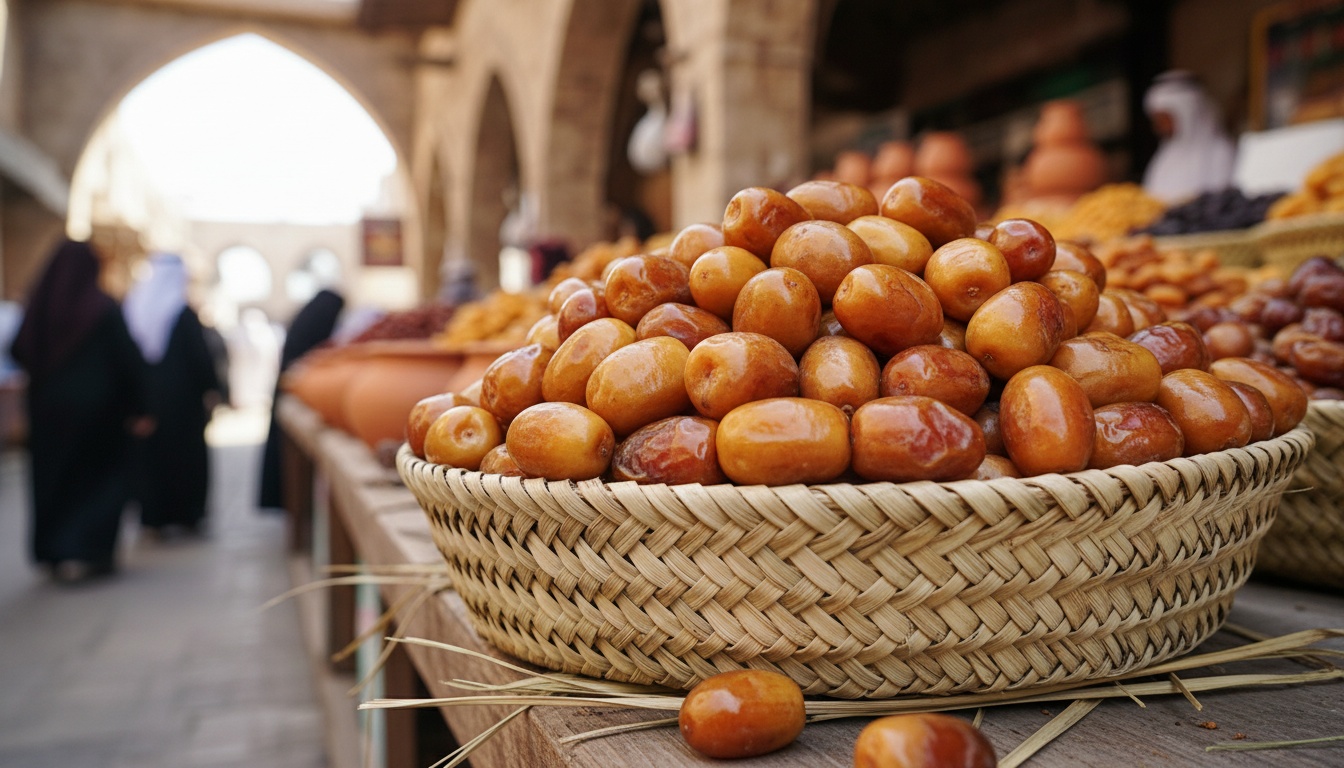
Barni is the everyday date of Madinah, and understanding that is the key to buying it well. The fruit is cylindrical to oval, yellow at the khalal stage, and cures to a light golden-brown with a paler, amber-shaded tip — Barni is one of the few commercial varieties where colour genuinely varies within a single sound lot, and a colour-uniformity clause copied across from an Ajwa or Safawi contract will reject fruit that is perfectly good. The flesh is firm, chewy and notably low in fibre, with moderate sweetness and almost no astringency: this is the Madinah date bought by consumers who find Sukkari cloying and Ajwa too rich, and that mild profile is its commercial identity, not a defect. It classes as semi-dry — moisture typically 14–18% — so it is ambient-stable and needs no cold chain. The palm is grown across the Madinah oases, with the acknowledged premium provenance being Al-Ais (Wadi al-Ais), north-west of the city, where the variety keeps a brightness of colour it loses elsewhere; Barni Al-Ais trades as its own line. Harvest runs from late summer into early autumn, with fresh rutab moving locally and cured fruit packed for export from October. CBIL contracts Barni on export Grade 1 and Grade 2, size count per kg, moisture, skin condition and foreign matter, with SGS or Intertek pre-shipment inspection and Halal, phytosanitary and Saudi certificate-of-origin documentation as standard.
Barni is the value entry into genuine Madinah provenance, and that is how it should be bought. In the Madinah range it prices well below Ajwa and Mabroom and a step under Safawi, above only Khudri, which makes it the working choice for iftar bulk programmes, mosque and community supply, mixed gifting assortments where one premium variety carries the box, and the South Asian khajoor trade, where a mild, chewy, ambient-stable date at a sharp price is exactly the specification. The buying decisions are two. First, provenance tier: Barni Al-Ais commands a real premium and earns it on retail packs where the origin story is printed and sold — paying Al-Ais money for fruit destined for a 10 kg iftar carton is wasted spec. Second, grade: Grade 2 fruit with more colour variation and looser sizing does the same job in bulk catering at a meaningful discount, so reserve Grade 1 for retail-facing packs. Storage and shipping are straightforward — cool, dry ambient gives around twelve months of shelf life, chilled storage extends it, and the fruit ships in standard dry containers with no reefer cost, which flatters its landed price against soft varieties. The one calendar point that catches new buyers: Ramadan demand empties the Madinah packers early, so contract post-harvest, October to December, for Ramadan positions rather than buying into the pre-Ramadan spot market, where premiums on all Madinah varieties are at their steepest.
Excluded origins are not offered, including product re-exported, blended or re-processed through a third country. Every lot moves with a certificate of origin naming the producing plant, mine or grower country, and nothing is quoted before the seller and loading point are known.
Indicative reference
$1,800–3,000 USD / MT
as at September 2026
Reference level only — not an offer, and reviewed quarterly. Levels shown are as at September 2026. Firm pricing is quoted per RFQ, subject to volume, terms and inspection.
Typical Specification
Specifications are indicative and adjusted to the agreed contract and destination requirements. Final spec confirmed on COA / SGS.
Available Grades
Applications
- Ramadan & iftar bulk programmes
- Retail packing (500 g – 2 kg)
- Mixed Madinah gifting assortments
- South Asian khajoor wholesale
- Mosque & community supply
Category
Agri-Foods, Spices & Nuts
Incoterms
FOB · CFR · CIF
Pricing basis
USD / MT
Inspection
SGS / Intertek at load port
Barni Dates — buyer questions
Where does Barni sit in the Madinah price range?
At the value end of genuine Madinah provenance. It prices well below Ajwa and Mabroom, a step under Safawi, and above Khudri, the volume date. What you are buying is Madinah origin, a mild low-astringency profile and ambient stability at a fraction of premium-variety money. It is the correct specification for iftar bulk, community supply and mixed assortments — and the wrong one only if your customer is expecting the dark colour and soft bite of Ajwa.
Is the Barni Al-Ais premium worth paying?
Only when the provenance is visible at the point of sale. Al-Ais fruit keeps a brightness of colour the variety loses when grown elsewhere, and retail packs that print the origin earn the difference back. Fruit destined for a 10 kg catering carton does not — standard Madinah Barni Grade 2 does the identical job in an iftar programme. Decide where the date will be seen and named, and pay for Al-Ais only there.
Why does colour vary within a Barni lot?
Because it is a varietal trait, not a defect. Barni cures from yellow khalal fruit to a golden-brown date with a paler, amber-shaded tip, and the shading varies piece to piece even in well-graded lots. A colour-uniformity clause copied from an Ajwa or Safawi contract will fail sound Barni at inspection and hand the packer a dispute. We write Barni specifications around moisture, count, skin condition and foreign matter, with colour described as a range rather than a single standard.
Does Barni need a cold chain, and when should I book for Ramadan?
No cold chain. At 14–18% moisture Barni is semi-dry and ambient-stable: cool, dry storage gives around twelve months, chilled storage extends it, and it ships in standard dry containers — one reason its landed cost undercuts soft varieties so heavily. On timing, contract in October–December once the new harvest is packed. Ramadan demand drains the Madinah packers months in advance, and the pre-Ramadan spot market carries the steepest premiums of the year on every Madinah variety, Barni included.
Ready to source Barni?
Send your quantity, specification, preferred Incoterms and destination port. Qualified requirements receive a workable offer against verified supply.
Have Barni to sell? Submit an offer — we'll match it against live buyer demand.
More in Saudi Dates
Ajwa Dates
Madinah-only origin — graded by count, skin & provenance
Ajwa Al Aaliya Dates
Named-farm Ajwa from Madinah's Al-Aaliya basalt belt
Anbara (Amber) Dates
Madinah's largest date — graded on count, priced on size
Safawi Dates
Madinah semi-dry, near-black, ambient-stable · FOB Jeddah
Mabroom Dates
Madinah's long date — graded on length, sold on looks
Sagai Dates
Two-tone Najd semi-dry — graded by piece weight & count
Sukkari Dates
Qassim golden Sukkari — soft (rutab) & mufattal, by count
Khalas Dates
Al-Ahsa amber semi-dry, 60–90 count, ambient-stable
Khudri Dates
Semi-dry Saudi volume date — size-graded, year-round FCL
Saudi Medjool Dates
AlUla & Al-Jouf Medjool by calibre and skin grade
Shalabi Dates
Scarce Madinah variety — lot-certified, part-load supply
Rabia Dates
Madinah value date graded on count, moisture and defects
Mashrooq Dates
Mid-tier Madinah date — caramel-sweet, sold by count band
Stuffed & Chocolate Dates
Stuffed & enrobed OEM lines · 18–20°C chocolate cool chain