
Safawi Dates
Madinah semi-dry, near-black, ambient-stable · FOB Jeddah
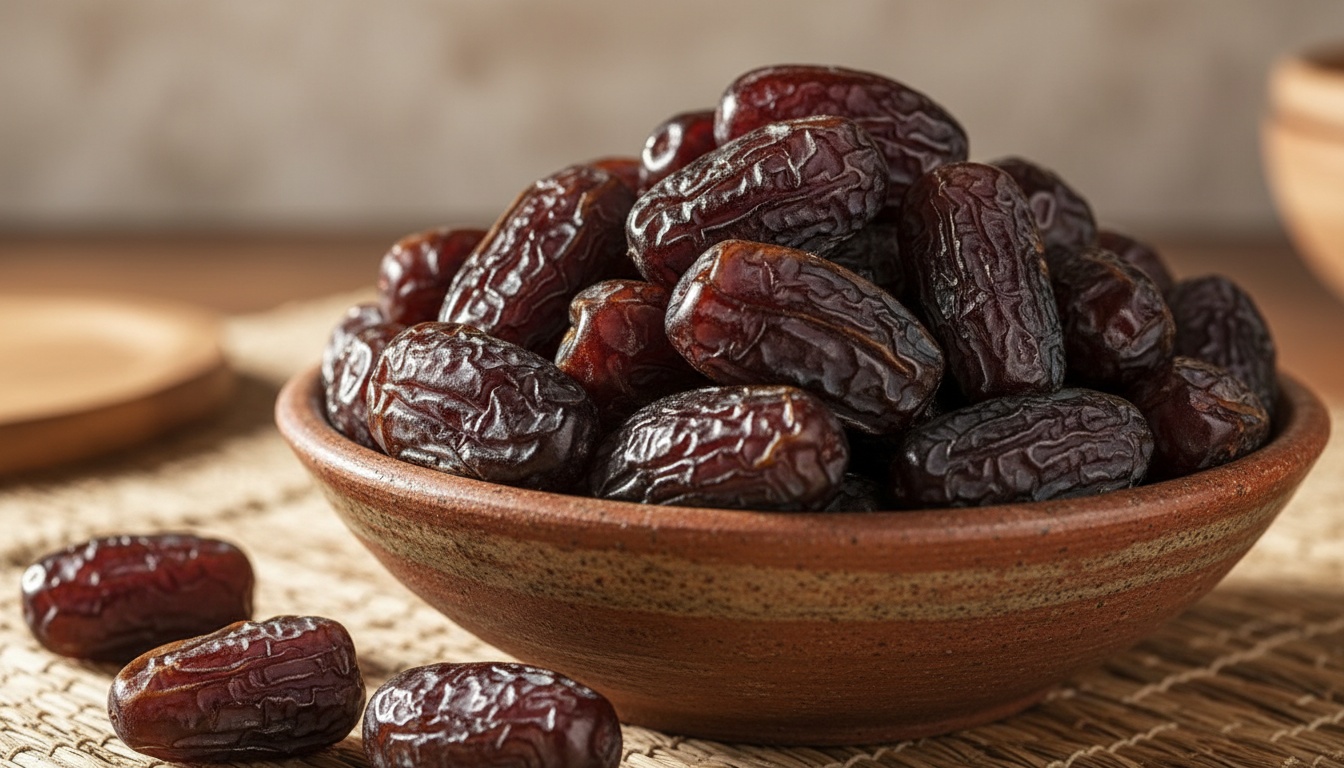
Safawi is Madinah's workhorse dark date — the variety that fills containers while Ajwa fills gift boxes. It is a semi-dry cultivar grown in the oasis farms of Al-Madinah Al-Munawwarah, harvested from August through October, with a glossy near-black skin, an elongated body and flesh that is dry to the touch outside and soft-chewy within. That moisture class is the commercially important fact: at roughly 16–20% moisture Safawi sits in the semi-dry band, which means it holds condition at ambient temperature for a year or more where a soft date would ferment. The Safawi palm is also unusually productive, so unlike thin-crop varieties the fruit is genuinely available year-round rather than only in the weeks after harvest. Export grading is by count: Jumbo, Large and Medium at roughly 60–100 pieces per kilogram depending on grade, and the count belongs on the contract, not in the packer's discretion — a carton sold as Jumbo and packed as Medium is the most common quiet margin-taker in this trade. A serious Madinah packhouse will supply SFDA export registration, HACCP or ISO 22000 certification, halal certification and a fumigation certificate as standard; treat the absence of any of these as a reason to walk away, not a point to negotiate.
Buy Safawi when the requirement is the Madinah profile at a retail-friendly price. On the Madinah market it trades at less than half the price of top-grade Ajwa — the retail anchor is roughly SAR 22 per kilogram against SAR 50 for Ajwa Al Aaliya — and the wholesale FOB spread is proportionate. For value retail packs, everyday consumption lines and Ramadan volume programmes into India, Pakistan, Bangladesh, Malaysia and Indonesia, that spread is the whole argument: the consumer gets a dark, elongated Madinah date and the importer keeps margin that Ajwa would consume. Where the substitution fails is religious gifting. Ajwa's standing in Islamic tradition is specific to Ajwa; a Safawi packed into an Ajwa-style gift box is a reputational error, not a saving, and the Hajj and Umrah gifting trade will reject it. Shipping is where Safawi quietly earns its keep: the semi-dry flesh travels in standard dry containers for most of the year, saving the reefer premium a soft date demands, though we still recommend reefer for summer Red Sea loadings. Store below 15°C and under 60% relative humidity for maximum life; even at ambient, a properly dried lot holds twelve months.
Excluded origins are not offered, including product re-exported, blended or re-processed through a third country. Every lot moves with a certificate of origin naming the producing plant, mine or grower country, and nothing is quoted before the seller and loading point are known.
Indicative reference
$1,800–3,200 USD / MT
as at September 2026
Reference level only — not an offer, and reviewed quarterly. Levels shown are as at September 2026. Firm pricing is quoted per RFQ, subject to volume, terms and inspection.
Typical Specification
Specifications are indicative and adjusted to the agreed contract and destination requirements. Final spec confirmed on COA / SGS.
Available Grades
Applications
- Retail value packs
- Ramadan volume programmes
- Wholesale and cash-and-carry
- Foodservice and catering
- Ingredient use — date paste and chopped dates
Category
Agri-Foods, Spices & Nuts
Incoterms
FOB · CFR · CIF
Pricing basis
USD / MT
Inspection
SGS / Intertek at load port
Safawi Dates — buyer questions
How do I verify I am getting genuine Madinah Safawi and not a look-alike?
Genuine Safawi is elongated, glossy and near-black with semi-dry flesh — but so are cheaper dark dates from Egypt and the Gulf, and relabelling is common. The controls are documentary, not visual: the phytosanitary certificate should show Saudi origin, the packhouse should hold SFDA export registration, and a serious supplier will name the Madinah farms it draws from. For first shipments, commission a pre-shipment inspection with varietal verification and hold payment terms against it. A quote materially below the Madinah market is usually a different date wearing Safawi's name.
Can Safawi ship in a standard dry container, or do I need a reefer?
For most of the year, yes — this is Safawi's structural advantage. At 16–20% moisture the fruit resists fermentation and mould, and lots dried to the lower end of that band travel well in a dry container with desiccants and kraft-lined cartons. We still specify reefer at 10–15°C for June-to-September loadings out of Jeddah and for long transits into humid Southeast Asian ports, because heat accelerates sugar migration and darkening. Fix maximum moisture on the contract; it is the single number that decides whether ambient shipment is safe.
When should I buy Safawi instead of Ajwa — and when must I not?
Buy Safawi for value retail packs, everyday consumption lines and Ramadan volume programmes: the consumer gets a dark, elongated Madinah date at less than half Ajwa's price, and the margin survives. Do not substitute it where the buyer is purchasing Ajwa's religious significance — Hajj and Umrah gifting, mosque distributions and premium Ramadan gift boxes demand genuine Ajwa, and passing Safawi off as Ajwa is mislabelling that will end a trading relationship and, in most import markets, breach labelling law. The two varieties are complements in a range, not substitutes in a box.
What is the minimum order quantity, and what drives the FOB price?
The practical MOQ for export is a full 20-foot container, roughly 12–13 tonnes, though most Madinah packers will load mixed varieties or mixed grades to make up the volume. Within Safawi, price moves first on count per kilogram — Jumbo commands a clear premium over Medium — then on harvest timing, whole versus pitted, and packaging format, since retail-ready packs carry a co-packing charge over bulk cartons. Expect firm pricing in the four months before Ramadan; buyers with ambient warehousing do better contracting shortly after the October harvest.
Ready to source Safawi?
Send your quantity, specification, preferred Incoterms and destination port. Qualified requirements receive a workable offer against verified supply.
Have Safawi to sell? Submit an offer — we'll match it against live buyer demand.
More in Saudi Dates
Ajwa Dates
Madinah-only origin — graded by count, skin & provenance
Ajwa Al Aaliya Dates
Named-farm Ajwa from Madinah's Al-Aaliya basalt belt
Anbara (Amber) Dates
Madinah's largest date — graded on count, priced on size
Mabroom Dates
Madinah's long date — graded on length, sold on looks
Sagai Dates
Two-tone Najd semi-dry — graded by piece weight & count
Sukkari Dates
Qassim golden Sukkari — soft (rutab) & mufattal, by count
Khalas Dates
Al-Ahsa amber semi-dry, 60–90 count, ambient-stable
Khudri Dates
Semi-dry Saudi volume date — size-graded, year-round FCL
Saudi Medjool Dates
AlUla & Al-Jouf Medjool by calibre and skin grade
Barni Dates
Semi-dry Madinah date — Grade 1/2, Al-Ais provenance
Shalabi Dates
Scarce Madinah variety — lot-certified, part-load supply
Rabia Dates
Madinah value date graded on count, moisture and defects
Mashrooq Dates
Mid-tier Madinah date — caramel-sweet, sold by count band
Stuffed & Chocolate Dates
Stuffed & enrobed OEM lines · 18–20°C chocolate cool chain