
Shalabi Dates
Scarce Madinah variety — lot-certified, part-load supply
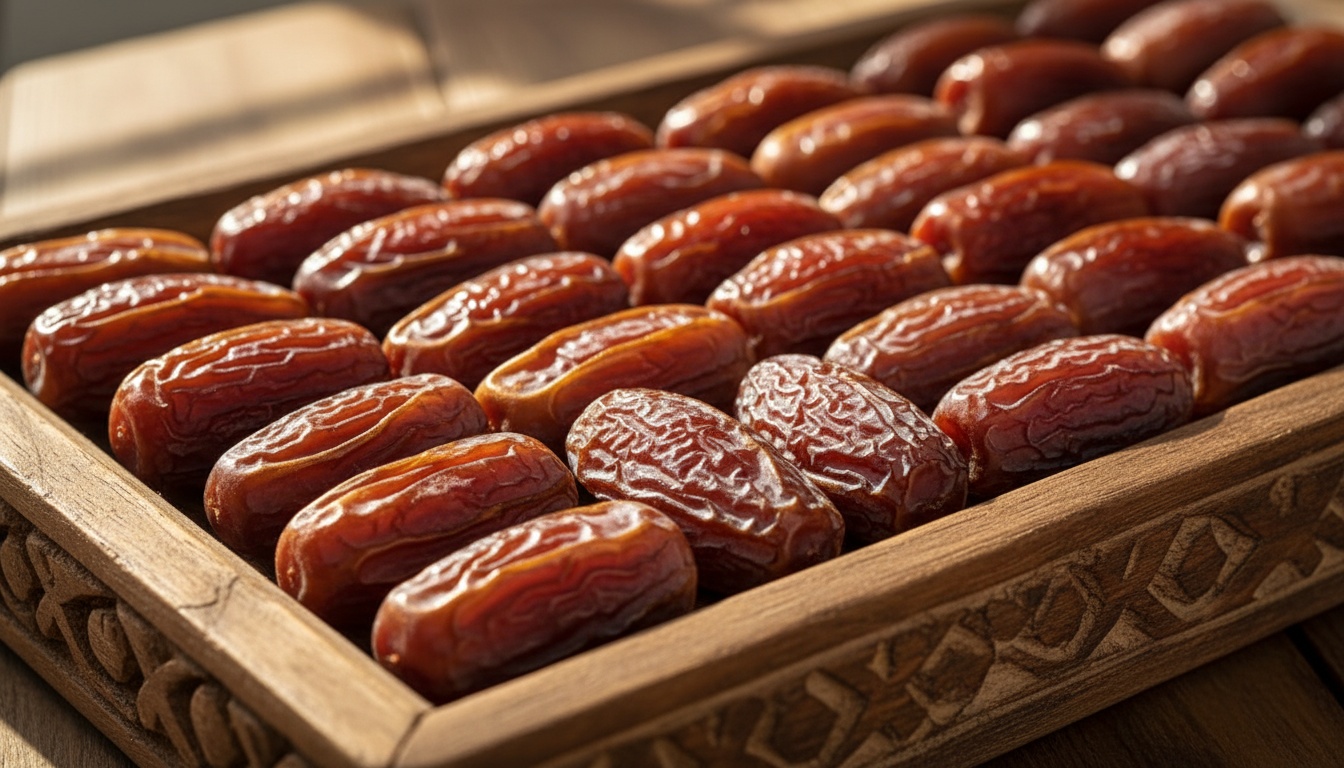
Shalabi — the trade also spells it Shalaby and, on some UK retail packs, Shelby — is one of the scarcer commercial varieties of Madinah, and scarcity is the fact around which every contract for it is written. The fruit is conical to oval with a silhouette close enough to Ajwa that souq traders in Madinah sell the two side by side and buyers routinely compare them; the resemblance is in the shape, not the fruit, because Shalabi cures to a lighter brown, with firm, chewy, semi-dry flesh and a moderate, restrained sweetness rather than Ajwa's dark colour and soft bite. Production is confined to Madinah and its surrounding oases and volumes are a fraction of Safawi or Khudri, so the variety does not trade on a standardised export grade ladder the way volume dates do. CBIL therefore contracts it at lot level: named packer, farm or district provenance documented on the certificate of origin, size count per kg, moisture and skin condition agreed against a retained pre-shipment sample, with SGS or Intertek inspection and Halal and phytosanitary documentation as standard. Moisture typically runs 14–17%, which classes the fruit as semi-dry and ambient-stable, and harvest follows the general Madinah cycle from late summer, with cured export fruit available from autumn.
Shalabi is a premium-to-mid Madinah date: it prices comfortably above Safawi and the volume varieties, at the top of the Sagai–Sukkari tier and approaching Mabroom, and below Ajwa — with the caveat that on a scarce variety availability moves price more than grade does, and a short crop year can lift offers with no change in fruit quality. The buyers it suits are premium ethnic retailers in the UK and Europe, where Shalabi already sells through in 450 g and 1 kg packs to a customer base that knows the name; gifting houses building Madinah assortments, where it adds genuine breadth beyond the Ajwa–Safawi default; and importers serving Ramadan, Hajj and Umrah gifting demand. The commercial risk to manage is substitution: a scarce variety with a recognised name and a premium look-alike neighbour is exactly the profile that attracts passing-off, and no laboratory test will identify a date variety after the fact. The protection is structural — buy against documented Madinah provenance, from packers with named farm relationships, with the shipment inspected against a sealed reference sample — which is how CBIL writes these contracts. Be realistic on volume: full-container single-variety Shalabi is rarely available, and it ships as 1–5 MT part-consignments within mixed Madinah loads, which also spreads the buyer's range risk. Ambient storage in cool, dry conditions holds the fruit for around twelve months, and it travels in standard dry containers alongside the rest of the Madinah range.
Excluded origins are not offered, including product re-exported, blended or re-processed through a third country. Every lot moves with a certificate of origin naming the producing plant, mine or grower country, and nothing is quoted before the seller and loading point are known.
Indicative reference
$2,600–4,200 USD / MT
as at September 2026
Reference level only — not an offer, and reviewed quarterly. Levels shown are as at September 2026. Firm pricing is quoted per RFQ, subject to volume, terms and inspection.
Typical Specification
Specifications are indicative and adjusted to the agreed contract and destination requirements. Final spec confirmed on COA / SGS.
Available Grades
Applications
- Premium ethnic retail (UK & EU)
- Madinah gifting assortments
- Ramadan, Hajj & Umrah gifting trade
- Speciality date ranges & samplers
Category
Agri-Foods, Spices & Nuts
Incoterms
FOB · CFR · CIF
Pricing basis
USD / MT
Inspection
SGS / Intertek at load port
Shalabi Dates — buyer questions
Is Shalabi the same as Ajwa?
No — the resemblance is in the silhouette, not the fruit. Shalabi shares Ajwa's conical-oval shape closely enough that the two sell side by side in the Madinah souq, but it cures to a lighter brown, with firm semi-dry flesh and a more restrained sweetness, and it prices below Ajwa. Buy it as a distinct Madinah variety with its own following — particularly in UK and South Asian retail — not as a substitute for Ajwa, and never accept it invoiced as one.
How do I know the fruit is genuine Shalabi?
Structurally, not analytically — no laboratory test identifies a date variety after shipment, and a scarce name with a premium look-alike neighbour is exactly the profile that attracts passing-off. The protection is written into the contract: a named Madinah packer with documented farm or district provenance on the certificate of origin, a sealed reference sample agreed at contract, and SGS or Intertek inspection of the packed lot against it before loading. That is how CBIL contracts every Shalabi shipment.
What volume of Shalabi can I realistically contract?
Think in part-consignments, not containers. Madinah production of Shalabi is a fraction of Safawi or Khudri, and full-container single-variety supply is rarely available at any price. The workable pattern is 1–5 MT of Shalabi shipped within a mixed Madinah load alongside Ajwa, Safawi and Sukkari — which most retail buyers prefer anyway, since it spreads range risk and lets the scarcer variety anchor the premium end of an assortment without over-committing to it.
What actually moves the Shalabi price?
Availability, before grade. On volume varieties, grade and count drive the price ladder; on a scarce variety, the size of the Madinah crop and the strength of Ramadan, Hajj and Umrah gifting demand set the level, and a short year lifts offers with no change in fruit quality. Positionally it trades above Safawi, at the top of the Sagai–Sukkari tier and approaching Mabroom, and below Ajwa. Book early against the autumn harvest — waiting for the pre-Ramadan market on a scarce variety compounds both premiums.
Ready to source Shalabi?
Send your quantity, specification, preferred Incoterms and destination port. Qualified requirements receive a workable offer against verified supply.
Have Shalabi to sell? Submit an offer — we'll match it against live buyer demand.
More in Saudi Dates
Ajwa Dates
Madinah-only origin — graded by count, skin & provenance
Ajwa Al Aaliya Dates
Named-farm Ajwa from Madinah's Al-Aaliya basalt belt
Anbara (Amber) Dates
Madinah's largest date — graded on count, priced on size
Safawi Dates
Madinah semi-dry, near-black, ambient-stable · FOB Jeddah
Mabroom Dates
Madinah's long date — graded on length, sold on looks
Sagai Dates
Two-tone Najd semi-dry — graded by piece weight & count
Sukkari Dates
Qassim golden Sukkari — soft (rutab) & mufattal, by count
Khalas Dates
Al-Ahsa amber semi-dry, 60–90 count, ambient-stable
Khudri Dates
Semi-dry Saudi volume date — size-graded, year-round FCL
Saudi Medjool Dates
AlUla & Al-Jouf Medjool by calibre and skin grade
Barni Dates
Semi-dry Madinah date — Grade 1/2, Al-Ais provenance
Rabia Dates
Madinah value date graded on count, moisture and defects
Mashrooq Dates
Mid-tier Madinah date — caramel-sweet, sold by count band
Stuffed & Chocolate Dates
Stuffed & enrobed OEM lines · 18–20°C chocolate cool chain