
Sukkari Dates
Qassim golden Sukkari — soft (rutab) & mufattal, by count
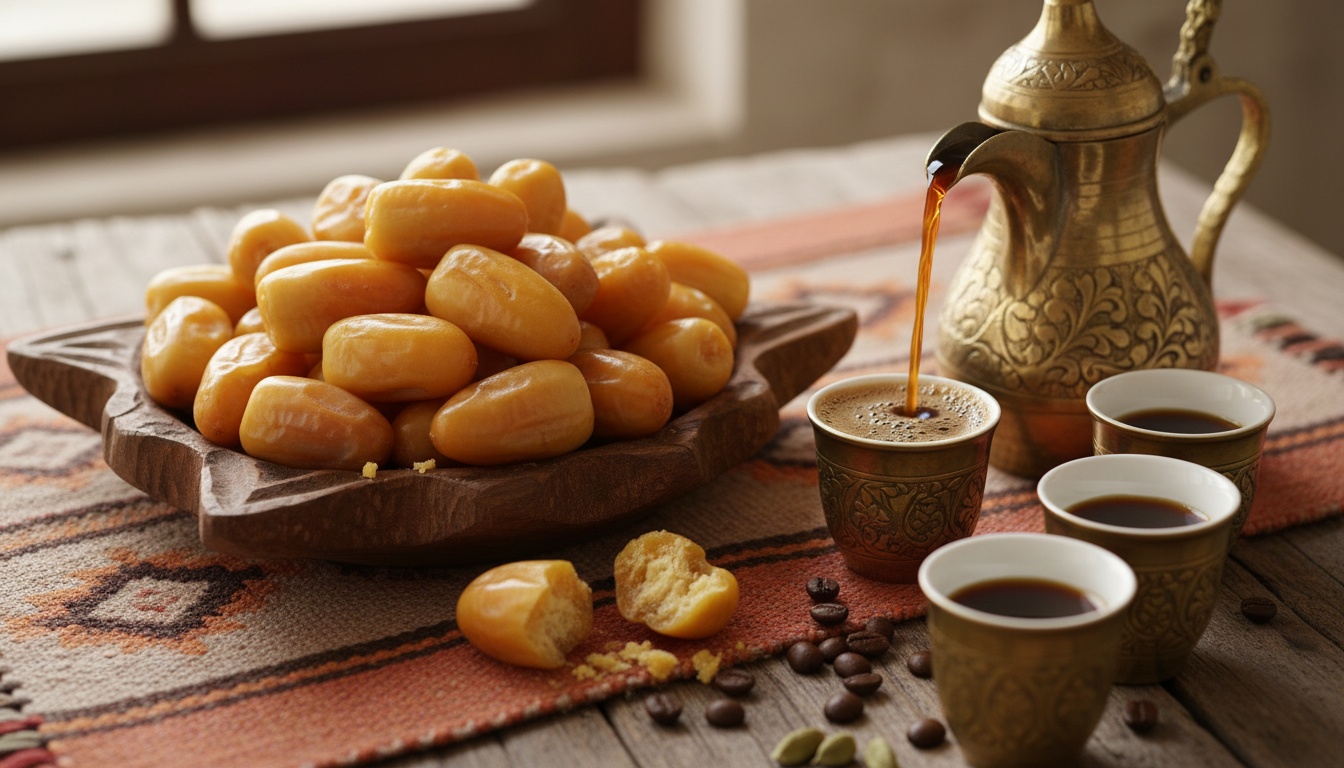
Sukkari — from sukkar, sugar — is the signature date of Al-Qassim in central Saudi Arabia, and commercially it belongs to Buraydah the way Ajwa belongs to Madinah. Al-Qassim holds more than eight million palms, and Buraydah's date market and annual carnival are the largest in the world, clearing on the order of 300,000 tonnes a season; Sukkari is the variety that dominates those halls and the one Gulf consumers eat daily rather than reserve for gifting. The fruit is golden-blond to light amber, conical, mid-sized at roughly 8–15 grams, and distinctly sweeter than almost any other commercial variety. The critical commercial fact is that 'Sukkari' names two different products. Soft Sukkari — rutab-style, harvested at high moisture and chilled quickly — is the premium form: melt-in-the-mouth, sold from refrigerated cabinets across the Gulf, and moved under an unbroken cold chain. Mufattal (firm or dry) Sukkari is cured to a much lower moisture, slightly crisp at the skin with a fudgy interior, ambient-stable and materially cheaper. Grading within each form runs on size and count per kilogram — Regular, Jumbo, Super Jumbo, with VIP or Premium selections on colour uniformity and skin condition — and lots ship against SGS or Intertek certification of moisture, count, foreign matter, insect damage and mould, with Halal, certificate-of-origin and phytosanitary documentation as standard. Harvest runs August to November, and soft-grade availability is tightest the further you buy from that window.
The spec error on this variety is writing 'Sukkari' on a contract without stating the form. Soft and mufattal are not grades of one product; they are separate products with separate logistics and a meaningful price gap, and a buyer who prices against a soft-grade quotation and receives mufattal — or worse, the reverse, with soft fruit loaded into a dry container — has a dispute, not a delivery. Specify the form first, then the count grade, then the temperature regime, in that order. Soft Sukkari is the right buy for Gulf-style chilled retail, premium supermarkets, coffee shops and HORECA service where the date is eaten fresh from the cabinet: it wants reefer shipment at 0–5 °C, holds months chilled and a year or more frozen, and commands the top of the band. Mufattal is the working form — snack packs, ambient retail shelves, mixed gift assortments — shipping in dry containers with none of the cold-chain cost. On price, Sukkari sits mid-ladder among Saudi varieties: well below Ajwa and Madinah premium dates such as Mabroom, broadly alongside Safawi and Sagai, and above Khalas and Khudri, the volume dates. That makes it the strongest value position in Saudi dates for a retailer — it is the Gulf's best-selling daily date, so it carries genuine consumer pull without Madinah-provenance pricing. Book Ramadan volumes early; Qassim packers sell forward from harvest and soft-grade allocation tightens first.
Excluded origins are not offered, including product re-exported, blended or re-processed through a third country. Every lot moves with a certificate of origin naming the producing plant, mine or grower country, and nothing is quoted before the seller and loading point are known.
Indicative reference
$2,300–4,200 USD / MT
as at September 2026
Reference level only — not an offer, and reviewed quarterly. Levels shown are as at September 2026. Firm pricing is quoted per RFQ, subject to volume, terms and inspection.
Typical Specification
Specifications are indicative and adjusted to the agreed contract and destination requirements. Final spec confirmed on COA / SGS.
Available Grades
Applications
- Gulf-style chilled retail programmes
- Ramadan & festive gifting
- Snack packs & ambient retail
- HORECA & coffee-shop service
- Date paste & bakery (mufattal seconds)
Category
Agri-Foods, Spices & Nuts
Incoterms
FOB · CFR · CIF
Pricing basis
USD / MT
Inspection
SGS / Intertek at load port
Sukkari Dates — buyer questions
What is the difference between soft Sukkari and Sukkari mufattal, and which should I order?
They are two commercial products from the same palm. Soft Sukkari is harvested rutab-style at high moisture, chilled immediately, melts in the mouth and must stay under a cold chain — it is the premium form and the one Gulf consumers buy daily. Mufattal is cured firmer and drier, slightly crisp outside, ambient-stable and noticeably cheaper. Order soft for chilled retail cabinets and HORECA; order mufattal for ambient shelves, snack packs and ingredient use. Never contract 'Sukkari' without naming the form — that omission is the commonest cause of dispute on this variety.
Does soft Sukkari really need a reefer container, and how long does it keep?
Yes. Soft Sukkari carries far more moisture than an ambient-stable date, and in a dry container over a three-week voyage it will ferment, weep syrup and darken — the golden colour that sells the fruit is the first thing lost. Ship it at 0–5 °C, hold it chilled at destination, and expect several months of shelf life; frozen at −18 °C it holds a year or more with little texture penalty, which is how Gulf retailers bridge between harvests. Mufattal, by contrast, travels in a standard dry container and stores at cool ambient for around twelve months.
How is Sukkari graded, and what actually moves the price?
Form first — soft against mufattal is the largest single price step. Within a form, price runs on size, expressed as count per kilogram, with Jumbo and Super Jumbo selections commanding a premium, and then on visual grade: colour uniformity and skin condition, because Sukkari sells loose from cabinets where the consumer inspects every piece. Season matters too — soft-grade prices firm as the August–November harvest recedes and chilled stocks draw down towards Ramadan. A quotation that says only 'Sukkari, Grade A' has told you almost nothing; insist on form, count and colour tolerance.
How do I verify Qassim origin, and what is the minimum order?
Sukkari is grown almost exclusively in Al-Qassim, so the fraud risk is less about region than variety — cheaper golden dates passed off under the name. We broker from established Qassim packers, and every lot ships with a certificate of origin, phytosanitary certificate, Halal documentation and packer traceability back to Buraydah or Unaizah; independent SGS or Intertek inspection before loading is recommended on first shipments. Practical minimum is around 5 MT as LCL for mufattal, while soft grades are best moved as a full reefer container to justify the cold chain. Book Ramadan positions from harvest onward.
Ready to source Sukkari?
Send your quantity, specification, preferred Incoterms and destination port. Qualified requirements receive a workable offer against verified supply.
Have Sukkari to sell? Submit an offer — we'll match it against live buyer demand.
More in Saudi Dates
Ajwa Dates
Madinah-only origin — graded by count, skin & provenance
Ajwa Al Aaliya Dates
Named-farm Ajwa from Madinah's Al-Aaliya basalt belt
Anbara (Amber) Dates
Madinah's largest date — graded on count, priced on size
Safawi Dates
Madinah semi-dry, near-black, ambient-stable · FOB Jeddah
Mabroom Dates
Madinah's long date — graded on length, sold on looks
Sagai Dates
Two-tone Najd semi-dry — graded by piece weight & count
Khalas Dates
Al-Ahsa amber semi-dry, 60–90 count, ambient-stable
Khudri Dates
Semi-dry Saudi volume date — size-graded, year-round FCL
Saudi Medjool Dates
AlUla & Al-Jouf Medjool by calibre and skin grade
Barni Dates
Semi-dry Madinah date — Grade 1/2, Al-Ais provenance
Shalabi Dates
Scarce Madinah variety — lot-certified, part-load supply
Rabia Dates
Madinah value date graded on count, moisture and defects
Mashrooq Dates
Mid-tier Madinah date — caramel-sweet, sold by count band
Stuffed & Chocolate Dates
Stuffed & enrobed OEM lines · 18–20°C chocolate cool chain